


Transmission Ecology of Sin Nombre Hantavirus in Naturally Infected North American Deermouse Populations in Outdoor Enclosures
Supporting Files
Public Domain

-
Oct 26 2012
-
File Language:
English
Details
-
Alternative Title:PLoS One
-
Personal Author:
-
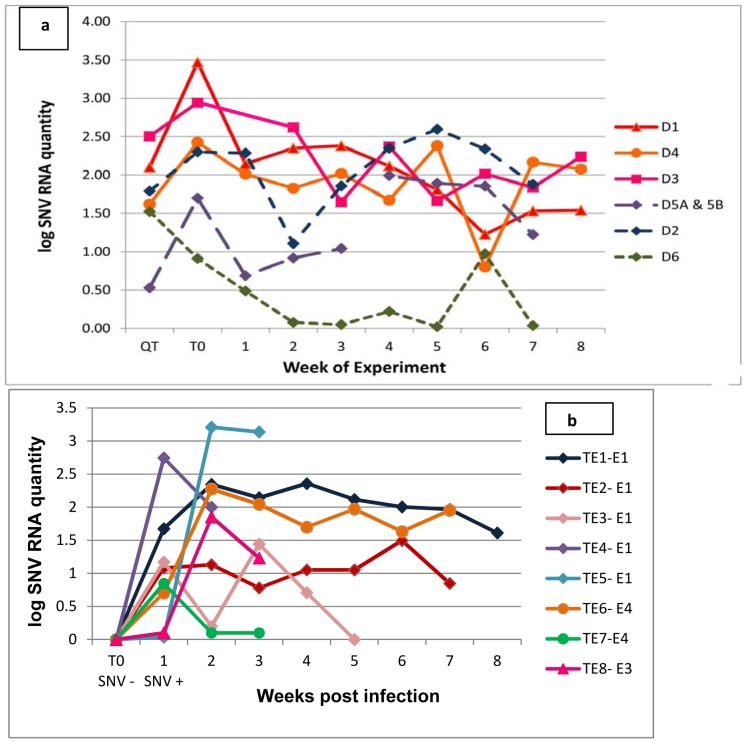
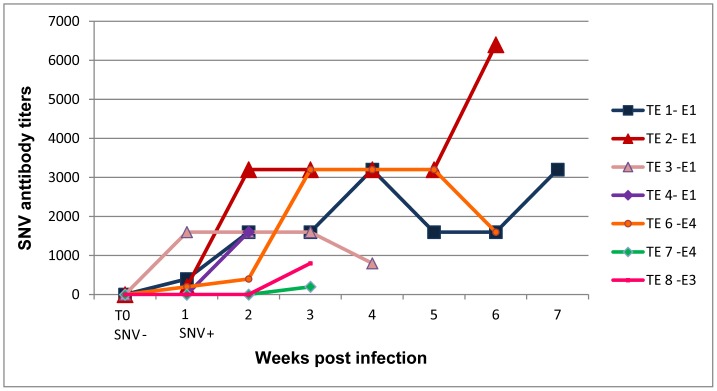
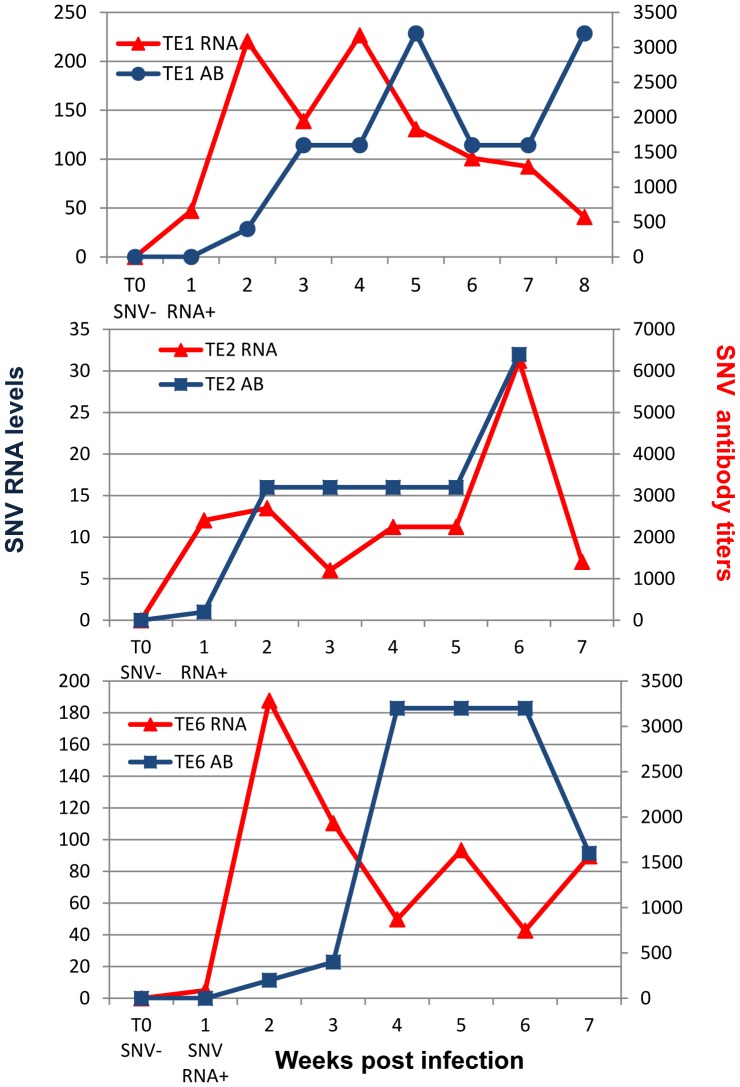
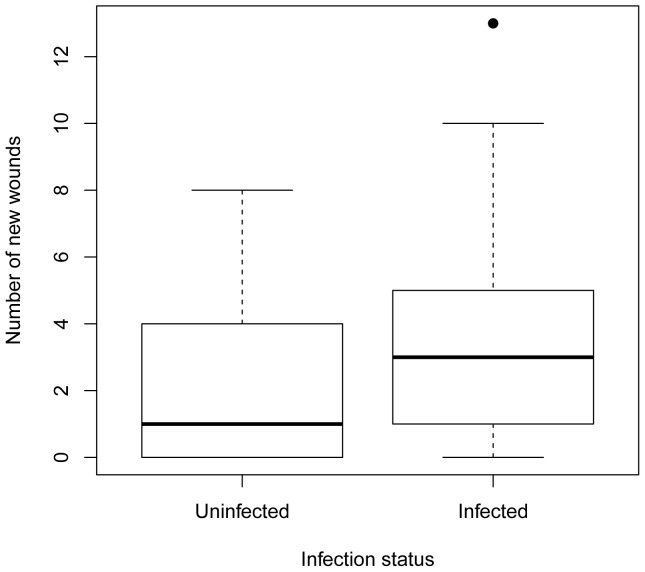
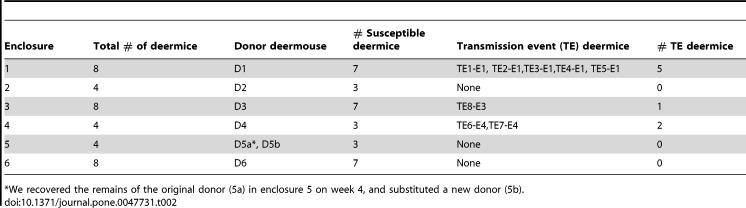
Description:Sin Nombre hantavirus (SNV), hosted by the North American deermouse (Peromyscus maniculatus), causes hantavirus pulmonary syndrome (HPS) in North America. Most transmission studies in the host were conducted under artificial conditions, or extrapolated information from mark-recapture data. Previous studies using experimentally infected deermice were unable to demonstrate SNV transmission. We explored SNV transmission in outdoor enclosures using naturally infected deermice. Deermice acquiring SNV in enclosures had detectable viral RNA in blood throughout the acute phase of infection and acquired significantly more new wounds (indicating aggressive encounters) than uninfected deermice. Naturally-infected wild deermice had a highly variable antibody response to infection, and levels of viral RNA sustained in blood varied as much as 100-fold, even in individuals infected with identical strains of virus. Deermice that infected other susceptible individuals tended to have a higher viral RNA load than those that did not infect other deermice. Our study is a first step in exploring the transmission ecology of SNV infection in deermice and provides new knowledge about the factors contributing to the increase of the prevalence of a zoonotic pathogen in its reservoir host and to changes in the risk of HPS to human populations. The techniques pioneered in this study have implications for a wide range of zoonotic disease studies.
-
Subjects:
-
Source:PLoS One. 2012; 7(10).
-
Document Type:
-
Place as Subject:
-
Volume:7
-
Issue:10
-
Collection(s):
-
Main Document Checksum:urn:sha256:e8c1477772c1158204ec3da894721c846d0e0781a1cca5636795518bb0bc393e
-
Download URL:
-
File Type:
 [PDF
- 555.62 KB
]
[PDF
- 555.62 KB
]
Supporting Files


File Language:
English
ON THIS PAGE










CDC STACKS serves as an archival repository of CDC-published products including
scientific findings,
journal articles, guidelines, recommendations, or other public health information authored or
co-authored by CDC or funded partners.
As a repository, CDC STACKS retains documents in their original published format to ensure public access to scientific information.
As a repository, CDC STACKS retains documents in their original published format to ensure public access to scientific information.
You May Also Like
COLLECTION
CDC Public Access