



Association Between Buprenorphine for Opioid Use Disorder and Mortality Risk
Supporting Files

-
9 2021 ; 9-2021
-
Available in CDC Stacks on 2021-09-01T00:00:00Z
File Language:
English
Details
-
Alternative Title:Am J Prev Med
-
Personal Author:
-
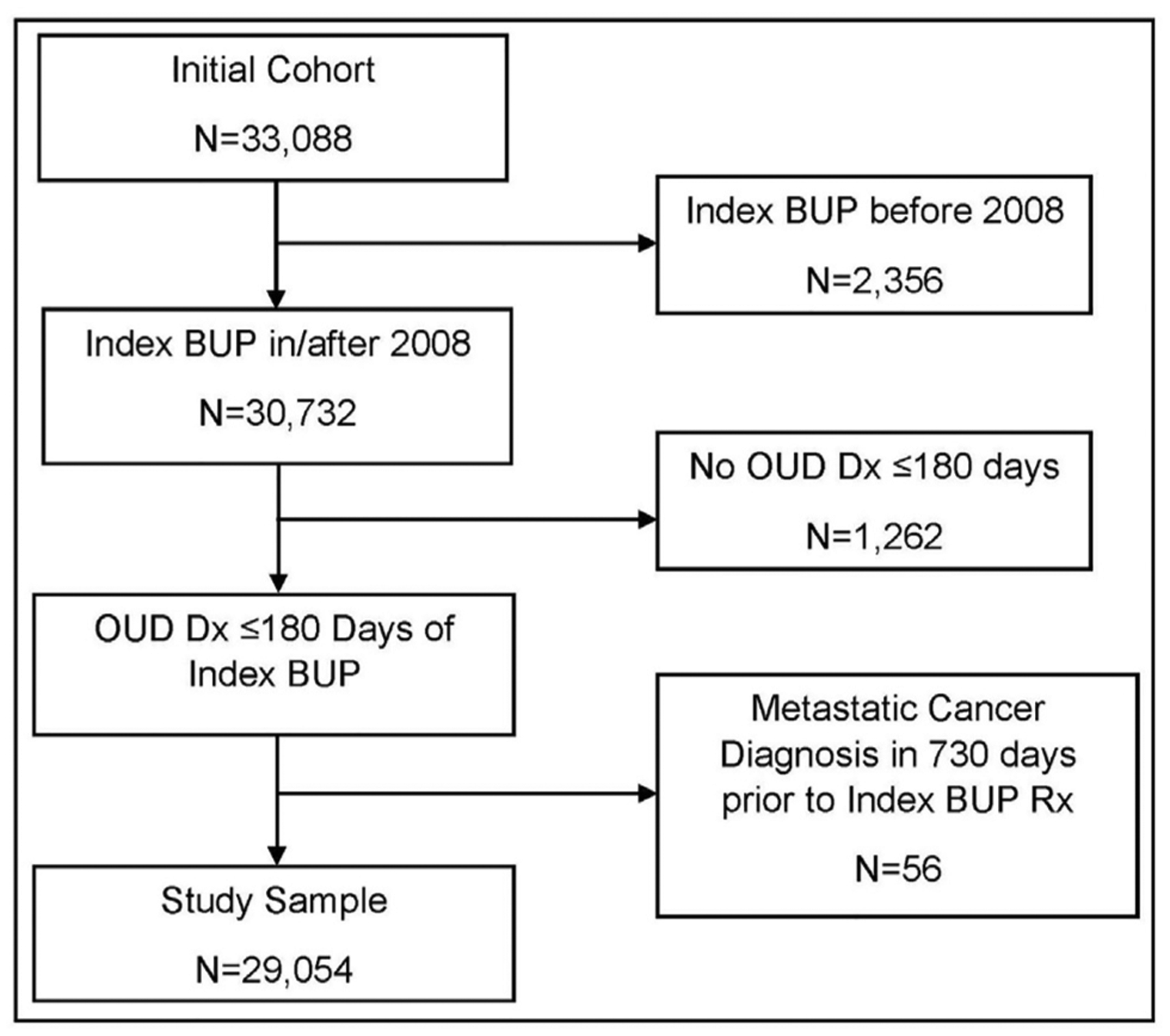
Description:Introduction: ; Veterans with opioid use disorder have an increased risk of suicide and overdose compared with the general population. Buprenorphine, a U.S. Food and Drug Administration–approved medication to treat opioid use disorder, has shown benefits, including decreased risk of illicit drug use and overdose. This study assesses the mortality outcomes with buprenorphine pharmacotherapy among Veterans up to 5 years from treatment initiation. ; Methods: ; This was a retrospective cohort study of Veterans receiving buprenorphine (2008–2017) across any Veterans Health Administration facility. Buprenorphine pharmacotherapy was evaluated as a time-varying covariate. The primary outcome was death up to 5 years from treatment initiation by suicide and overdose combined; secondary outcomes included suicide, overdose, opioid-specific overdose, and all-cause death. Secondary analyses included evaluating the risk of mortality in recent discontinuation and effect modification by select characteristics. All analyses were conducted in 2020. ; Results: ; Veterans who were not receiving buprenorphine were 4.33 (adjusted hazard ratio; 95% CI=3.60, 5.21) times more likely to die by suicide/overdose than those receiving buprenorphine pharmacotherapy on any given day, with similar protective associations with treatment across secondary outcomes. The risk of suicide/overdose was highest 8–14 days from treatment discontinuation (adjusted hazard ratio=6.54, 95% CI=4.32, 9.91) than in currently receiving buprenorphine pharmacotherapy. There was no evidence of effect modification by the selected covariates. ; Conclusions: ; Mortality risk was greater among Veterans who were not receiving buprenorphine pharmacotherapy than among those who were. Providers should consider whether buprenorphine pharmacotherapy, either intermittent or continuous, may provide health benefits for their patients and prevent mortality.
-
Keywords:
-
Source:Am J Prev Med. 61(3):418-427
-
Pubmed ID:34023160
-
Pubmed Central ID:PMC8384722
-
Document Type:
-
Funding:
-
Volume:61
-
Issue:3
-
Download URL:
-
File Type:
 [PDF - 277.23 KB]
 -
Collection(s):
-
Main Document Checksum:urn:sha256:c05c941a285c5ab2b67fb2cbcfdfd462c82e118e4217f30f510dc69f7ced51cc
Supporting Files


File Language:
English
 Was this page helpful?
 Found an issue?

CDC STACKS serves as an archival repository of CDC-published products including
scientific findings, journal articles, guidelines, recommendations, or other public health information authored or
co-authored by CDC or funded partners.
As a repository, CDC STACKS retains documents in their original published format to ensure public access to scientific information.
As a repository, CDC STACKS retains documents in their original published format to ensure public access to scientific information.
You May Also Like
COLLECTION
CDC Public Access