


Psychological Distress, Depression, Anxiety, and Burnout among International Humanitarian Aid Workers: A Longitudinal Study
Supporting Files
Public Domain

-
Sep 12 2012
File Language:
English
Details
-
Alternative Title:PLoS One
-
Personal Author:
-
Description:Background
International humanitarian aid workers providing care in emergencies are subjected to numerous chronic and traumatic stressors.
Objectives
To examine consequences of such experiences on aid workers' mental health and how the impact is influenced by moderating variables.
Methodology
We conducted a longitudinal study in a sample of international non-governmental organizations. Study outcomes included anxiety, depression, burnout, and life and job satisfaction. We performed bivariate regression analyses at three time points. We fitted generalized estimating equation multivariable regression models for the longitudinal analyses.
Results
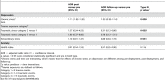
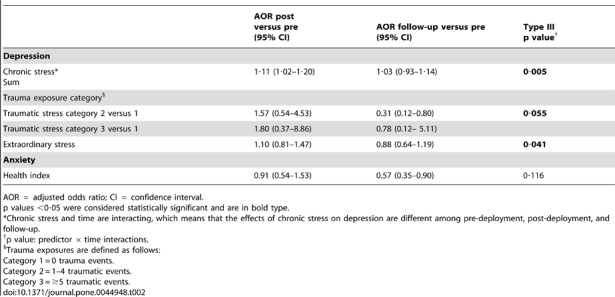
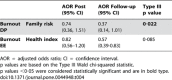
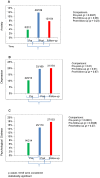
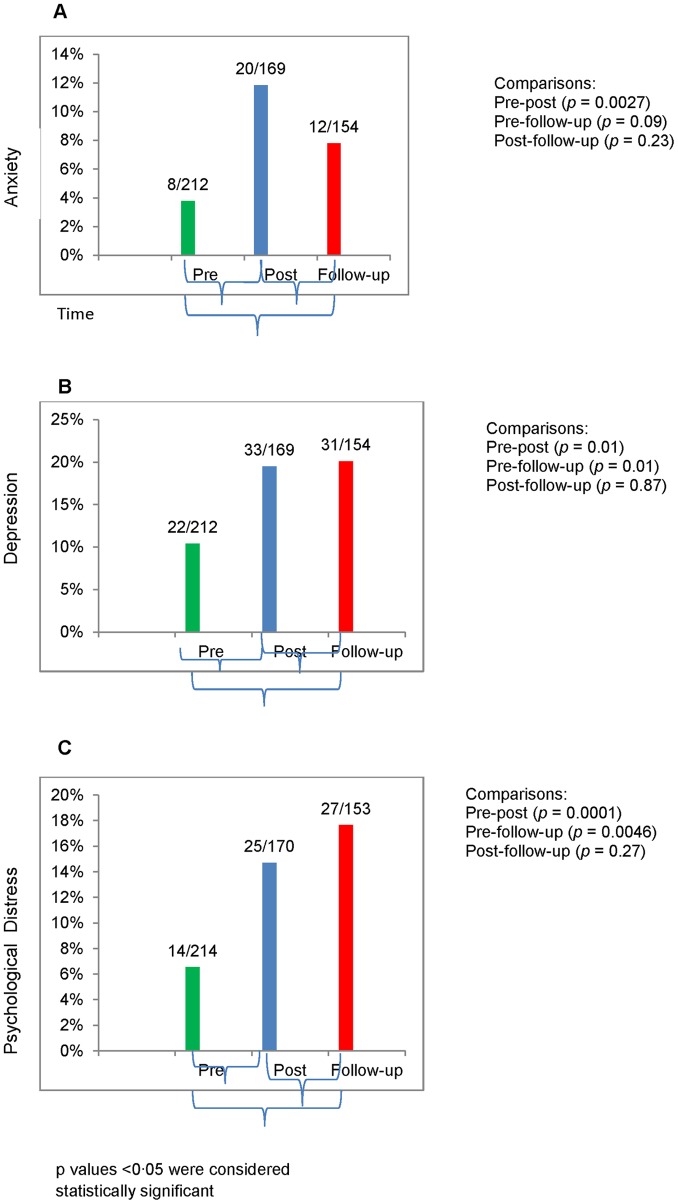
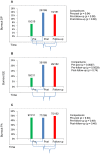
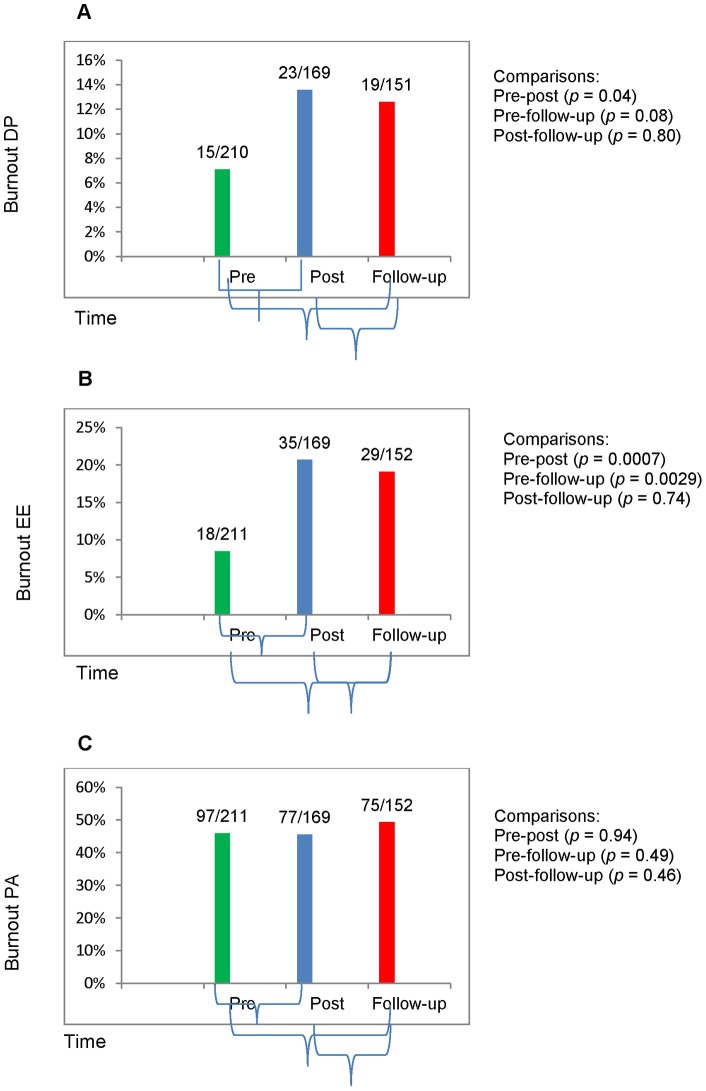
Study participants from 19 NGOs were assessed at three time points: 212 participated at pre-deployment; 169 (80%) post-deployment; and 154 (73%) within 3–6 months after deployment. Prior to deployment, 12 (3.8%) participants reported anxiety symptoms, compared to 20 (11.8%) at post-deployment (p = 0·0027); 22 (10.4%) reported depression symptoms, compared to 33 (19.5%) at post-deployment (p = 0·0117) and 31 (20.1%) at follow-up (p = .00083). History of mental illness (adjusted odds ratio [AOR] 4.2; 95% confidence interval [CI] 1·45–12·50) contributed to an increased risk for anxiety. The experience of extraordinary stress was a contributor to increased risk for burnout depersonalization (AOR 1.5; 95% CI 1.17–1.83). Higher levels of chronic stress exposure during deployment were contributors to an increased risk for depression (AOR 1·1; 95% CI 1·02–1.20) comparing post- versus pre-deployment, and increased risk for burnout emotional exhaustion (AOR 1.1; 95% CI 1.04–1.19). Social support was associated with lower levels of depression (AOR 0·9; 95% CI 0·84–0·95), psychological distress (AOR = 0.9; [CI] 0.85–0.97), burnout lack of personal accomplishment (AOR 0·95; 95% CI 0·91–0·98), and greater life satisfaction (p = 0.0213).
Conclusions
When recruiting and preparing aid workers for deployment, organizations should consider history of mental illness and take steps to decrease chronic stressors, and strengthen social support networks.
-
Subjects:
-
Source:PLoS One. 2012; 7(9).
-
Document Type:
-
Volume:7
-
Issue:9
-
Collection(s):
-
Main Document Checksum:urn:sha256:40a3931e2065603e0f89d025f78227874a5bf99c96cd45ce0ad70596b91c507e
-
Download URL:
-
File Type:
 [PDF
- 480.07 KB
]
[PDF
- 480.07 KB
]
Supporting Files


File Language:
English
ON THIS PAGE







CDC STACKS serves as an archival repository of CDC-published products including
scientific findings,
journal articles, guidelines, recommendations, or other public health information authored or
co-authored by CDC or funded partners.
As a repository, CDC STACKS retains documents in their original published format to ensure public access to scientific information.
As a repository, CDC STACKS retains documents in their original published format to ensure public access to scientific information.
You May Also Like
COLLECTION
CDC Public Access