


Anatomic Sites of Patient Colonization and Environmental Contamination with Klebsiella pneumoniae Carbapenemase–Producing Enterobacteriaceae at Long-Term Acute Care Hospitals
Supporting Files

-
Jan 2013
-
File Language:
English
Details
-
Alternative Title:Infect Control Hosp Epidemiol
-
Personal Author:
-
Corporate Authors:
-
Description:OBJECTIVE.
To determine anatomic sites of colonization in patients and to assess environmental contamination with Klebsiella pneumoniae carbapenemase (KPC)–producing Enterobacteriaceae.
DESIGN, SETTING, AND PATIENTS.
We conducted a cross-sectional microbiologic survey of 33 patients and their environments at 6 long-term acute care hospitals (LTACHs) in metropolitan Chicago. Swab samples of anatomic sites and inanimate surfaces in patients’ rooms and common areas were cultured. blaKPC was verified by polymerase chain reaction. Patient charts were reviewed for covariates known to be associated with colonization and environmental contamination.
RESULTS.
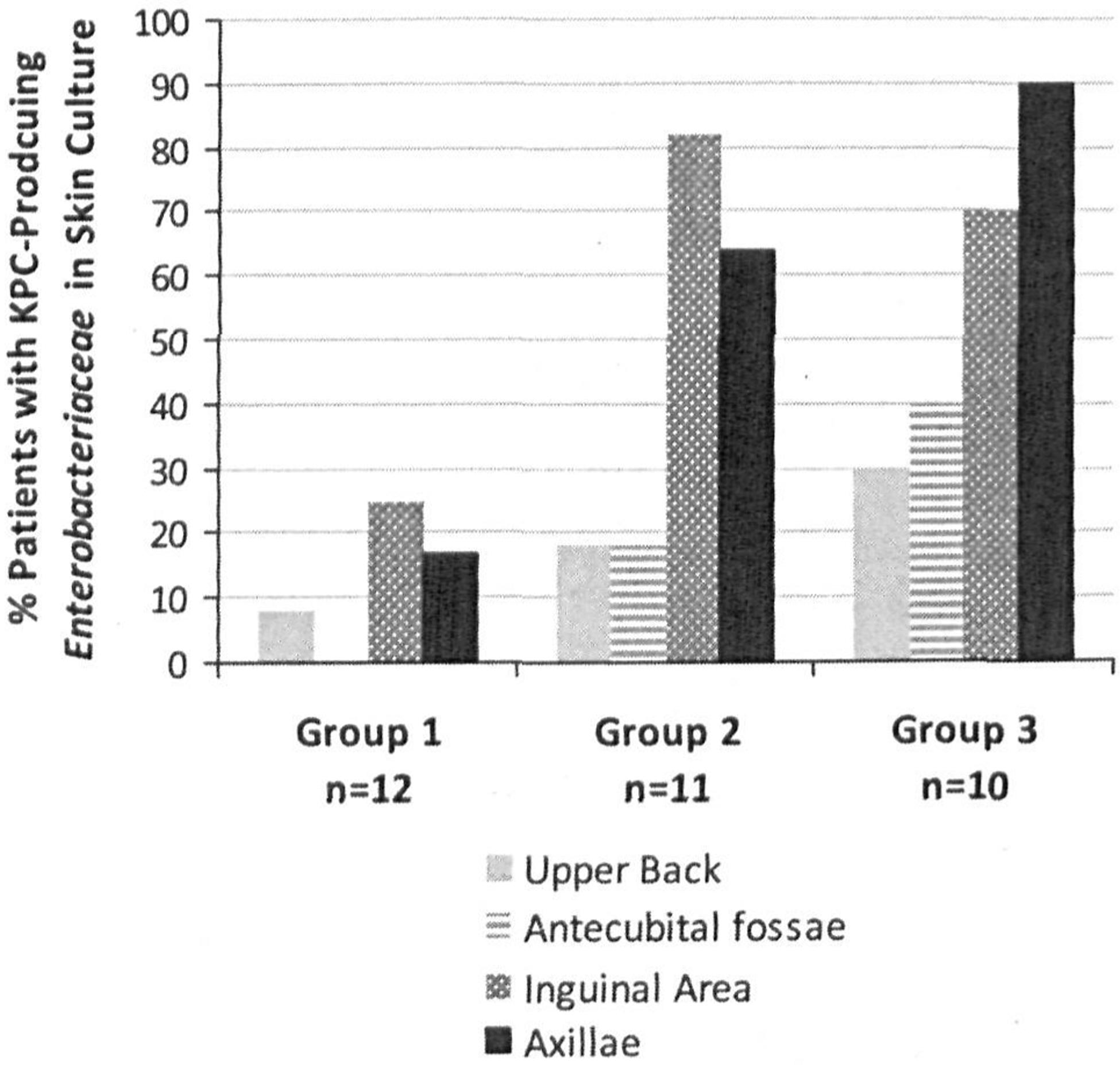
Mean age was 66 years. Median length of stay prior to surveillance was 50 days. Thirty (91%) patients were mechanically ventilated, 32 (97%) were bedbound, and 27 (82%) had fecal incontinence. Of the 24 patients with KPC-producing Enterobacteriaceae recovered from 1 or more anatomic sites, 23 (96%) had KPC-producing Enterobacteriaceae detected at 1 or more skin sites. Skin colonization was more common in patients with positive rectal/stool swab cultures or positive clinical cultures (P < .001). Rectal/stool swab was the single most sensitive specimen for detecting KPC-producing Enterobacteriaceae colonization (sensitivity, 88%; 95% confidence interval [CI], 68%−97%); addition of inguinal skin swab culture resulted in detection of all colonized patients (sensitivity, 100%; 95% CI, 86%−100%). Only 2 (0.5%) of 371 environmental specimens grew KPC-producing Enterobacteriaceae.
CONCLUSIONS.
Culture of more than 1 anatomic site was required to detect all KPC-producing Enterobacteriaceae-colonized patients. Skin colonization was common, but environmental contamination was rare. These results can guide development of multimodal interventions for control of KPC-producing Enterobacteriaceae in LTACHs.
-
Subjects:
-
Source:Infect Control Hosp Epidemiol. 34(1):56-61
-
Pubmed ID:23221193
-
Pubmed Central ID:PMC8376186
-
Document Type:
-
Funding:
-
Place as Subject:
-
Volume:34
-
Issue:1
-
Collection(s):
-
Main Document Checksum:urn:sha256:843236cefbe81f85789fef1391961aacf29e3d3074e05259f67ab31d96b8249f
-
Download URL:
-
File Type:
 [PDF
- 294.43 KB
]
[PDF
- 294.43 KB
]
Supporting Files


File Language:
English
ON THIS PAGE

CDC STACKS serves as an archival repository of CDC-published products including
scientific findings,
journal articles, guidelines, recommendations, or other public health information authored or
co-authored by CDC or funded partners.
As a repository, CDC STACKS retains documents in their original published format to ensure public access to scientific information.
As a repository, CDC STACKS retains documents in their original published format to ensure public access to scientific information.
You May Also Like
COLLECTION
CDC Public Access