


Estimation of the Burden of Pandemic(H1N1)2009 in Developing Countries: Experience from a Tertiary Care Center in South India
Supporting Files

-
Sep 05 2012
-
File Language:
English
Details
-
Alternative Title:PLoS One
-
Personal Author:Moorthy, Mahesh ; Samuel, Prasanna ; Peter, John Victor ; Vijayakumar, Saranya ; Sekhar, Dipika ; Verghese, Valsan P. ; Agarwal, Indira ; Moses, Prabhakar D. ; Ebenezer, Kala ; Abraham, Ooriapadickal Cherian ; Thomas, Kurien ; Mathews, Prasad ; Mishra, Akhilesh C. ; Lal, Renu ; Muliyil, Jayaprakash ; Abraham, Asha Mary
-
Description:Background
The burden of the pandemic (H1N1) 2009 influenza might be underestimated if detection of the virus is mandated to diagnose infection. Using an alternate approach, we propose that a much higher pandemic burden was experienced in our institution.
Methodology/Principal Findings
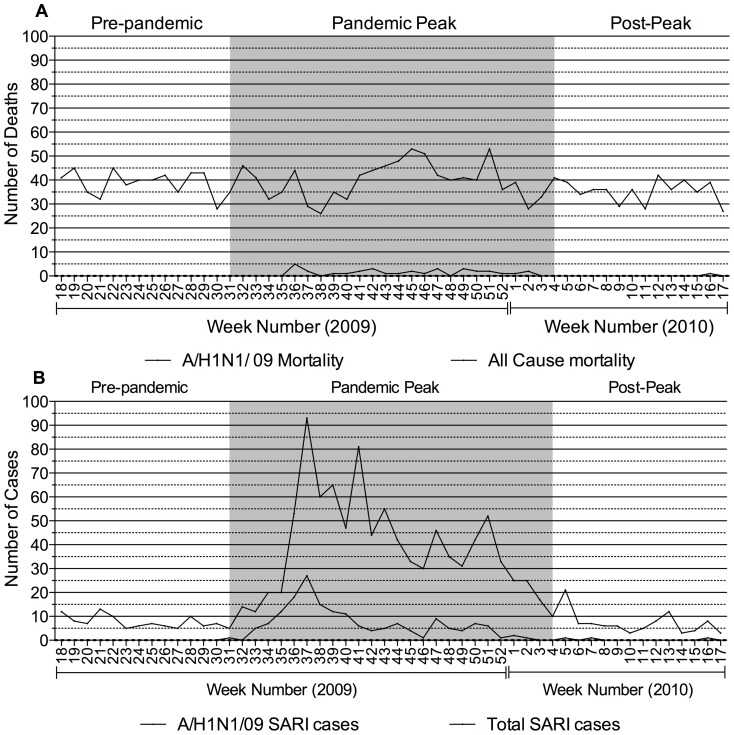
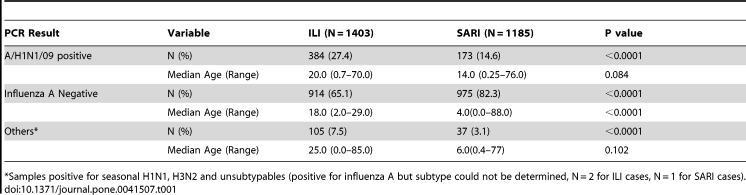
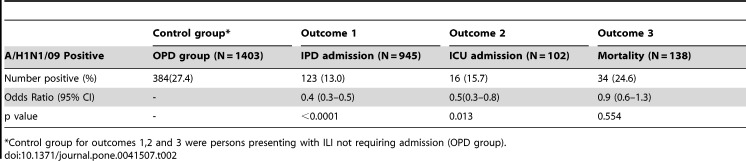
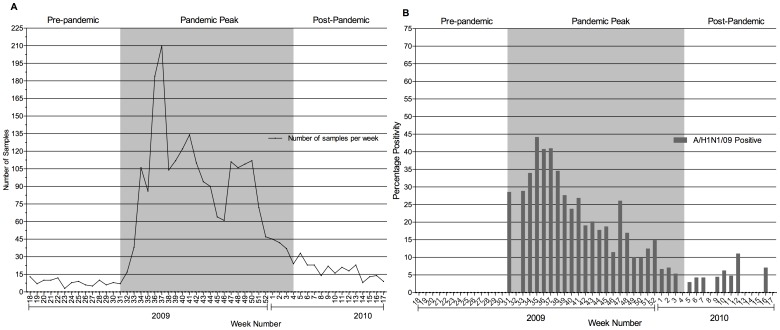
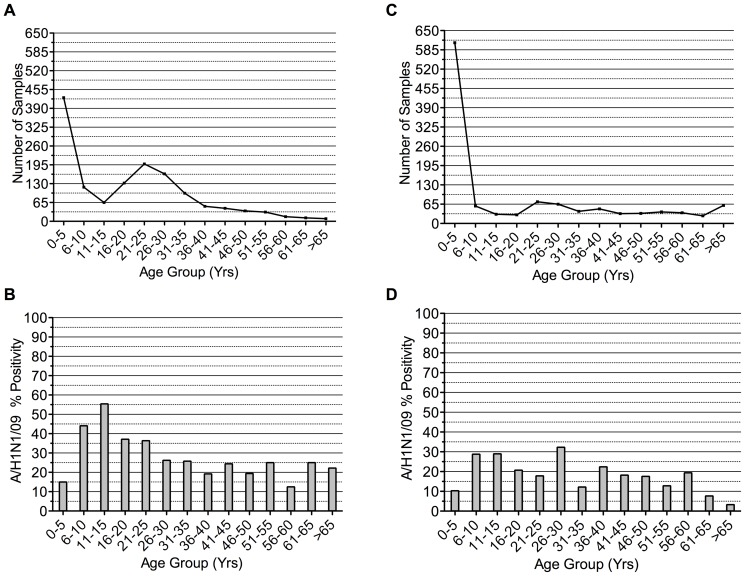
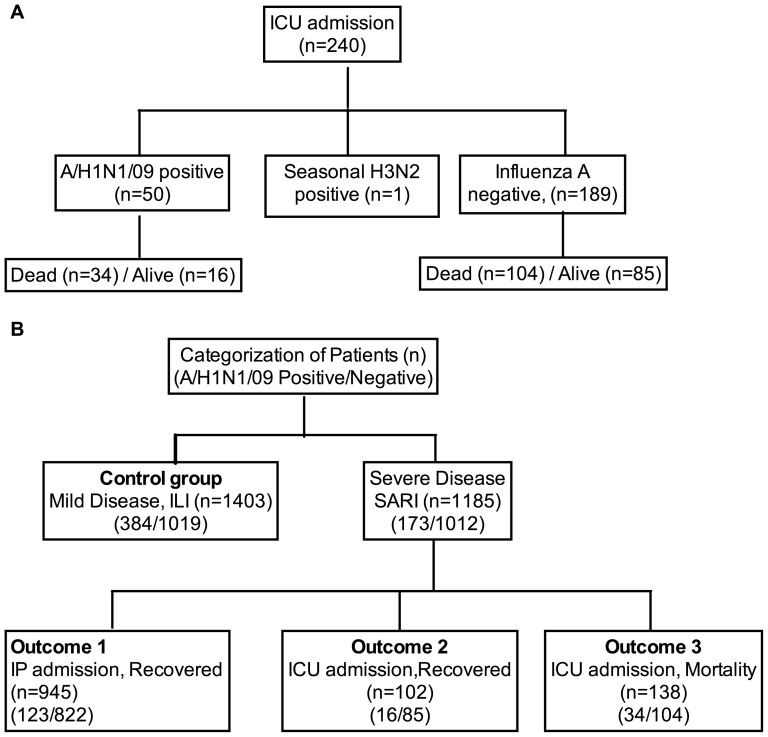
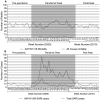
Consecutive patients (n = 2588) presenting to our hospital with influenza like illness (ILI) or severe acute respiratory infection (SARI) during a 1-year period (May 2009–April 2010) were prospectively recruited and tested for influenza A by real-time RT-PCR. Analysis of weekly trends showed an 11-fold increase in patients presenting with ILI/SARI during the peak pandemic period when compared with the pre-pandemic period and a significant (P<0.001) increase in SARI admissions during the pandemic period (30±15.9 admissions/week) when compared with pre-pandemic (7±2.5) and post-pandemic periods (5±3.8). However, Influenza A was detected in less than one-third of patients with ILI/SARI [699 (27.0%)]; a majority of these (557/699, 79.7%) were Pandemic (H1N1)2009 virus [A/H1N1/09]. An A/H1N1/09 positive test was correlated with shorter symptom duration prior to presentation (p = 0.03). More ILI cases tested positive for A/H1N1/09 when compared with SARI (27.4% vs. 14.6%, P = 0.037). When the entire study population was considered, A/H1N1/09 positivity was associated with lower risk of hospitalization (p<0.0001) and ICU admission (p = 0.013) suggesting mild self-limiting illness in a majority.
Conclusion/Significance
Analysis of weekly trends of ILI/SARI suggest a higher burden of the pandemic attributable to A/H1N1/09 than estimates assessed by a positive PCR test alone. The study highlights methodological consideration in the estimation of burden of pandemic influenza in developing countries using hospital-based data that may help assess the impact of future outbreaks of respiratory illnesses.
-
Subjects:
-
Source:PLoS One. 2012; 7(9).
-
Pubmed ID:22957015
-
Pubmed Central ID:PMC3434194
-
Document Type:
-
Funding:
-
Place as Subject:
-
Volume:7
-
Issue:9
-
Collection(s):
-
Main Document Checksum:urn:sha256:ca5fab506ce4e1e0fd98939b5c21b127992db5c0f570325ae577dd6b57652d0c
-
Download URL:
-
File Type:
 [PDF
- 694.44 KB
]
[PDF
- 694.44 KB
]
Supporting Files


File Language:
English
ON THIS PAGE

CDC STACKS serves as an archival repository of CDC-published products including
scientific findings,
journal articles, guidelines, recommendations, or other public health information authored or
co-authored by CDC or funded partners.
As a repository, CDC STACKS retains documents in their original published format to ensure public access to scientific information.
As a repository, CDC STACKS retains documents in their original published format to ensure public access to scientific information.
You May Also Like
COLLECTION
CDC Public Access