


Information systems on human resources for health: a global review
Supporting Files
Public Domain

-
Apr 30 2012
-
Details
-
Alternative Title:Hum Resour Health
-
Personal Author:
-
Description:Background
Although attainment of the health-related Millennium Development Goals relies on countries having adequate numbers of human resources for health (HRH) and their appropriate distribution, global understanding of the systems used to generate information for monitoring HRH stock and flows, known as human resources information systems (HRIS), is minimal. While HRIS are increasingly recognized as integral to health system performance assessment, baseline information regarding their scope and capability around the world has been limited. We conducted a review of the available literature on HRIS implementation processes in order to draw this baseline.
Methods
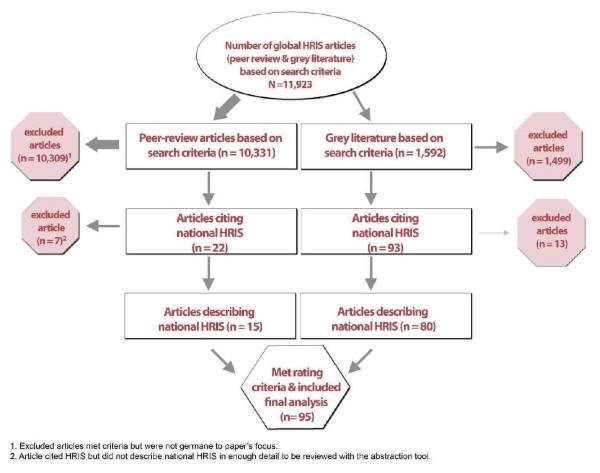
Our systematic search initially retrieved 11 923 articles in four languages published in peer-reviewed and grey literature. Following the selection of those articles which detailed HRIS implementation processes, reviews of their contents were conducted using two-person teams, each assigned to a national system. A data abstraction tool was developed and used to facilitate objective assessment.
Results
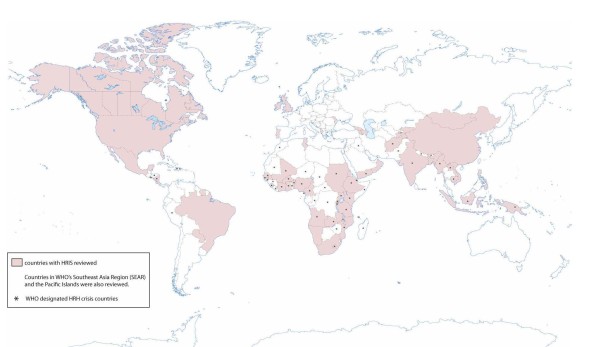
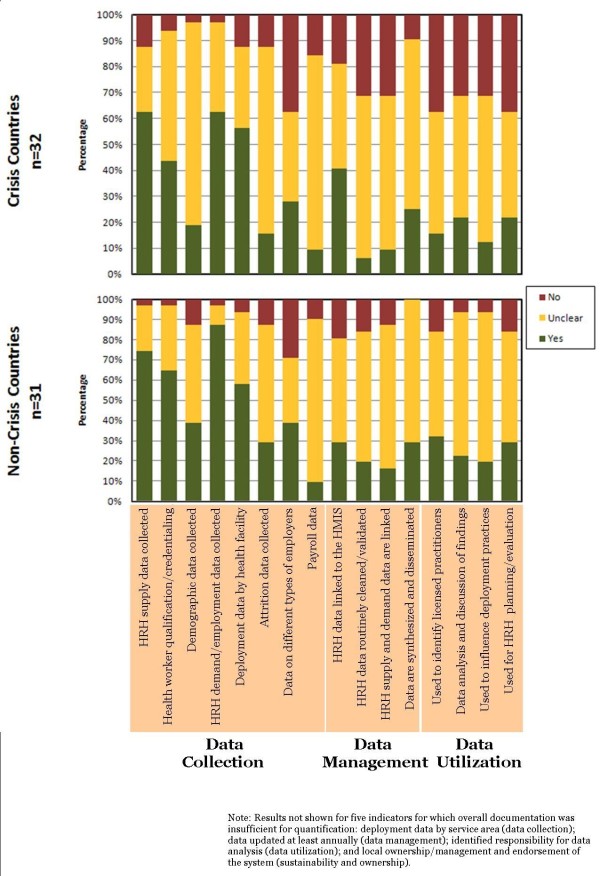
Ninety-five articles with relevant HRIS information were reviewed, mostly from the grey literature, which comprised 84 % of all documents. The articles represented 63 national HRIS and two regionally integrated systems. Whereas a high percentage of countries reported the capability to generate workforce supply and deployment data, few systems were documented as being used for HRH planning and decision-making. Of the systems examined, only 23 % explicitly stated they collect data on workforce attrition. The majority of countries experiencing crisis levels of HRH shortages (56 %) did not report data on health worker qualifications or professional credentialing as part of their HRIS.
Conclusion
Although HRIS are critical for evidence-based human resource policy and practice, there is a dearth of information about these systems, including their current capabilities. The absence of standardized HRIS profiles (including documented processes for data collection, management, and use) limits understanding of the availability and quality of information that can be used to support effective and efficient HRH strategies and investments at the national, regional, and global levels.
-
Subjects:
-
Source:Hum Resour Health. 2012; 10:7.
-
Document Type:
-
Volume:10
-
Collection(s):
-
Main Document Checksum:urn:sha256:f5ad457808ccec9f4fd54086504996a9f0617ca13a3f66cf71213f132b161b8b
-
Download URL:
-
File Type:
 [PDF
- 1.73 MB
]
[PDF
- 1.73 MB
]
Supporting Files


ON THIS PAGE




CDC STACKS serves as an archival repository of CDC-published products including
scientific findings,
journal articles, guidelines, recommendations, or other public health information authored or
co-authored by CDC or funded partners.
As a repository, CDC STACKS retains documents in their original published format to ensure public access to scientific information.
As a repository, CDC STACKS retains documents in their original published format to ensure public access to scientific information.
You May Also Like
COLLECTION
CDC Public Access