


Gene delivery to the hypoglossal motor system: preclinical studies and translational potential
Supporting Files

-
Aug 2021
-
File Language:
English
Details
-
Alternative Title:Gene Ther
-
Personal Author:
-
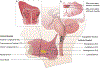
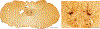
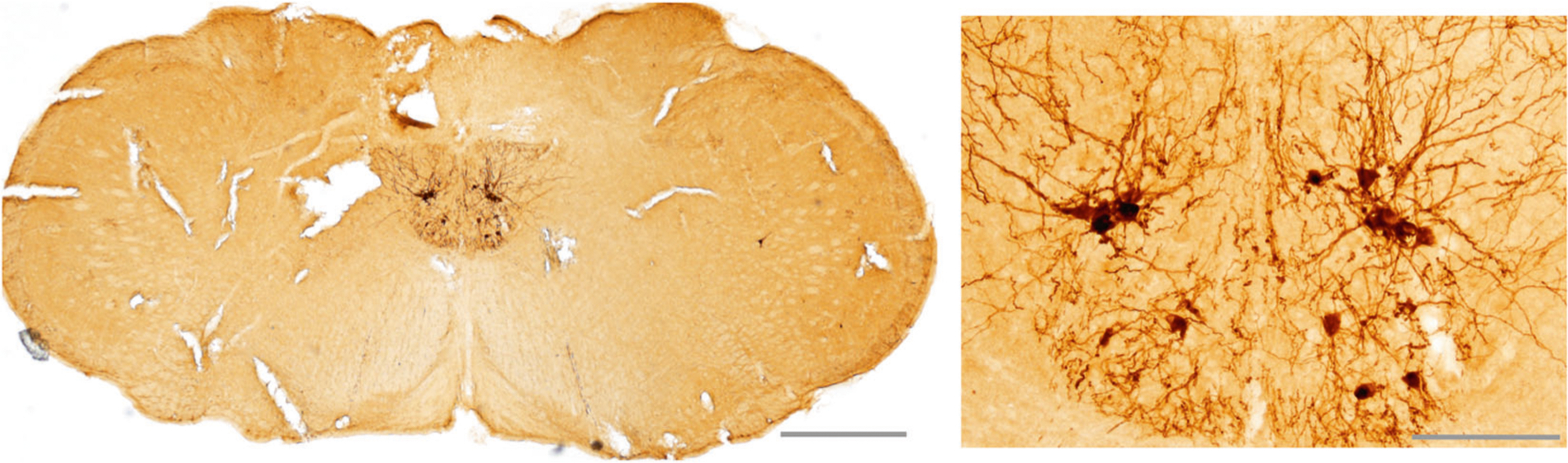
Description:Dysfunction and/or reduced activity in the tongue muscles contributes to conditions such as dysphagia, dysarthria, and sleep disordered breathing. Current treatments are often inadequate, and the tongue is a readily accessible target for therapeutic gene delivery. In this regard, gene therapy specifically targeting the tongue motor system offers two general strategies for treating lingual disorders. First, correcting tongue myofiber and/or hypoglossal (XII) motoneuron pathology in genetic neuromuscular disorders may be readily achieved by intralingual delivery of viral vectors. The retrograde movement of viral vectors such as adeno-associated virus (AAV) enables targeted distribution to XII motoneurons via intralingual viral delivery. Second, conditions with impaired or reduced tongue muscle activation can potentially be treated using viral-driven chemo- or optogenetic approaches to activate or inhibit XII motoneurons and/or tongue myofibers. Further considerations that are highly relevant to lingual gene therapy include (1) the diversity of the motoneurons which control the tongue, (2) the patterns of XII nerve branching, and (3) the complexity of tongue muscle anatomy and biomechanics. Preclinical studies show considerable promise for lingual directed gene therapy in neuromuscular disease, but the potential of such approaches is largely untapped.
-
Subjects:
-
Source:Gene Ther. 28(7-8):402-412
-
Pubmed ID:33574581
-
Pubmed Central ID:PMC8355248
-
Document Type:
-
Funding:R01HL128970/U.S. Department of Health & Human Services ; NIH ; National Heart, Lung, and Blood Institute (NHLBI)/ ; R01 HL138932/HL/NHLBI NIH HHSUnited States/ ; OT2 OD023854/CD/ODCDC CDC HHSUnited States/ ; R01HL138932/U.S. Department of Health & Human Services ; 2R01HD052682-11A1/U.S. Department of Health & Human Services ; Eunice Kennedy Shriver National Institute of Child Health and Human Development (NICHD)/ ; R01 HL128970/HL/NHLBI NIH HHSUnited States/ ; R01 HD052682/HD/NICHD NIH HHSUnited States/ ; OT2 OD023854/OD/NIH HHSUnited States/ ; NICHD ; National Center for Medical Rehabilitation Research (NCMRR)/ ; R61 HL156240/HL/NHLBI NIH HHSUnited States/ ; R01 HL133100/HL/NHLBI NIH HHSUnited States/
-
Volume:28
-
Collection(s):
-
Main Document Checksum:urn:sha256:ebaf94d6eecf9ec28fa145d5de416aad53f8a72f67b9ed3221649dbfc8fc4e1b
-
Download URL:
-
File Type:
 [PDF
- 1012.19 KB
]
[PDF
- 1012.19 KB
]
Supporting Files


File Language:
English
ON THIS PAGE





CDC STACKS serves as an archival repository of CDC-published products including
scientific findings,
journal articles, guidelines, recommendations, or other public health information authored or
co-authored by CDC or funded partners.
As a repository, CDC STACKS retains documents in their original published format to ensure public access to scientific information.
As a repository, CDC STACKS retains documents in their original published format to ensure public access to scientific information.
You May Also Like
COLLECTION
CDC Public Access