


In Vitro Reassortment between Endemic H1N2 and 2009 H1N1 Pandemic Swine Influenza Viruses Generates Attenuated Viruses
Supporting Files
Public Domain

-
Jun 13 2012
-
File Language:
English
Details
-
Alternative Title:PLoS One
-
Personal Author:
-
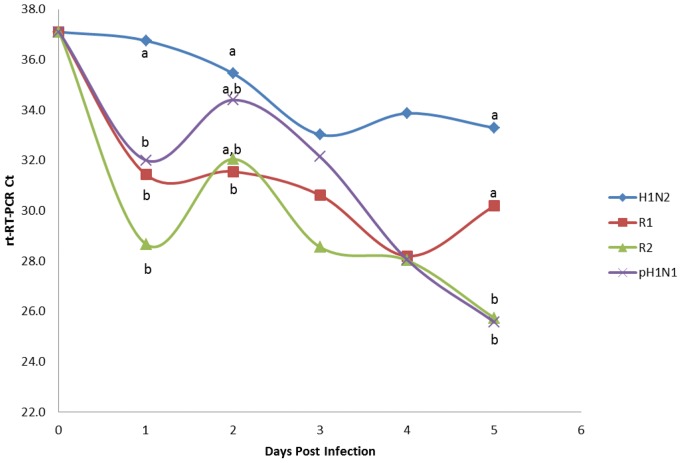
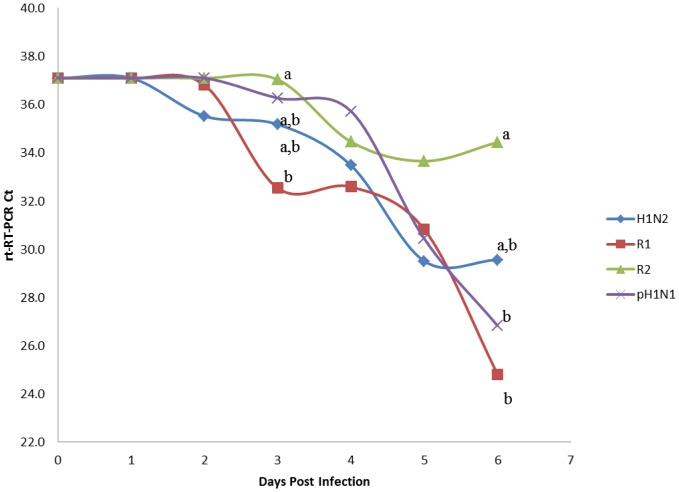
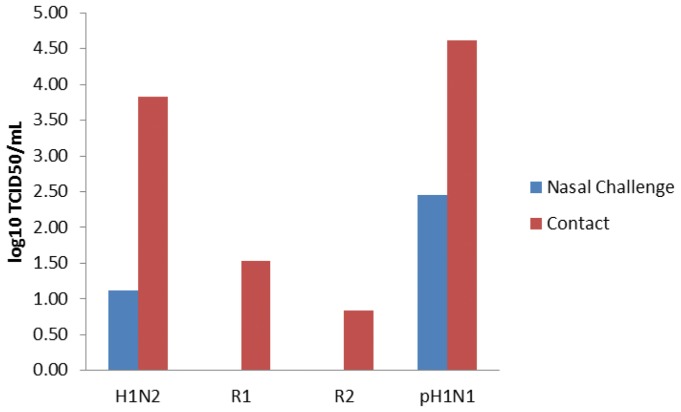
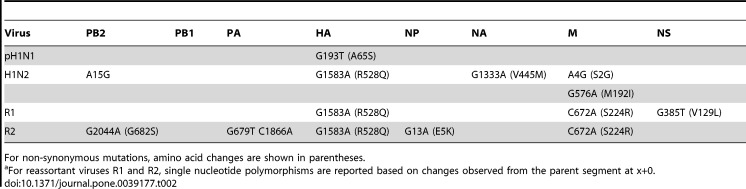
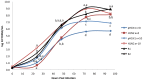
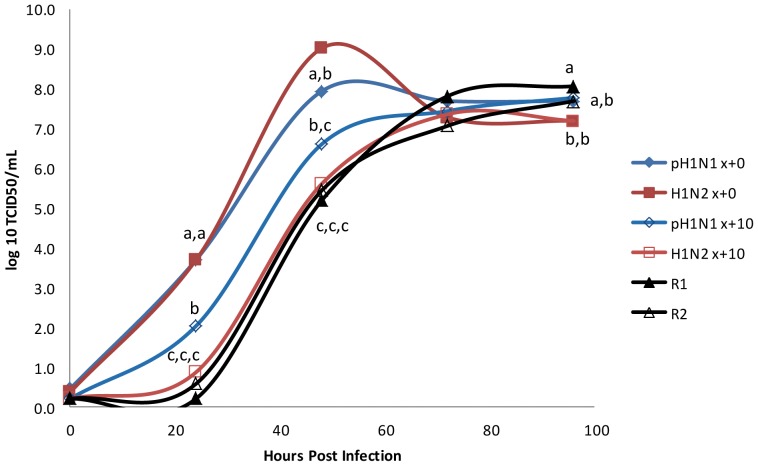
Description:The pandemic H1N1 (pH1N1) influenza virus was first reported in humans in the spring of 2009 and soon thereafter was identified in numerous species, including swine. Reassortant viruses, presumably arising from the co-infection of pH1N1 and endemic swine influenza virus (SIV), were subsequently identified from diagnostic samples collected from swine. In this study, co-infection of swine testicle (ST) cells with swine-derived endemic H1N2 (MN745) and pH1N1 (MN432) yielded two reassortant H1N2 viruses (R1 and R2), both possessing a matrix gene derived from pH1N1. In ST cells, the reassortant viruses had growth kinetics similar to the parental H1N2 virus and reached titers approximately 2 log(10) TCID(50)/mL higher than the pH1N1 virus, while in A549 cells these viruses had similar growth kinetics. Intranasal challenge of pigs with H1N2, pH1N1, R1 or R2 found that all viruses were capable of infecting and transmitting between direct contact pigs as measured by real time reverse transcription PCR of nasal swabs. Lung samples were also PCR-positive for all challenge groups and influenza-associated microscopic lesions were detected by histology. Interestingly, infectious virus was detected in lung samples for pigs challenged with the parental H1N2 and pH1N1 at levels significantly higher than either reassortant virus despite similar levels of viral RNA. Results of our experiment suggested that the reassortant viruses generated through in vitro cell culture system were attenuated without gaining any selective growth advantage in pigs over the parental lineages. Thus, reassortant influenza viruses described in this study may provide a good system to study genetic basis of the attenuation and its mechanism.
-
Subjects:
-
Source:PLoS One. 2012; 7(6).
-
Document Type:
-
Volume:7
-
Issue:6
-
Collection(s):
-
Main Document Checksum:urn:sha256:39fb1776f118b30ff5ed4f1be30101cdf0adf35dca6e97c439839a111075d219
-
Download URL:
-
File Type:
 [PDF
- 1.55 MB
]
[PDF
- 1.55 MB
]
Supporting Files


File Language:
English
ON THIS PAGE








CDC STACKS serves as an archival repository of CDC-published products including
scientific findings,
journal articles, guidelines, recommendations, or other public health information authored or
co-authored by CDC or funded partners.
As a repository, CDC STACKS retains documents in their original published format to ensure public access to scientific information.
As a repository, CDC STACKS retains documents in their original published format to ensure public access to scientific information.
You May Also Like
COLLECTION
CDC Public Access