


United States, 2016–2017
Supporting Files

-
10/14/2020
-
File Language:
English
Details
-
Alternative Title:Clin Infect Dis
-
Personal Author:
-
Description:Background:
Blastomycosis, coccidioidomycosis, and histoplasmosis cause various symptoms and syndromes, which may present similarly to other infections such as bacterial or viral community-acquired pneumonia, influenza, and tuberculosis.
Methods:
We used the IBM® MarketScan® Research Databases to identify adult outpatients with International Classification of Diseases, Tenth Revision, Clinical Modification (ICD-10-CM) diagnosis codes during 2016–2017 for blastomycosis; coccidioidomycosis; histoplasmosis; pneumonia (viral, bacterial, Streptococcus pneumoniae, and unspecified pneumonia); influenza; tuberculosis; and other lower and upper respiratory infections. We compared symptoms on and in the 90 days before diagnosis between patients with these diagnosis codes.
Results:
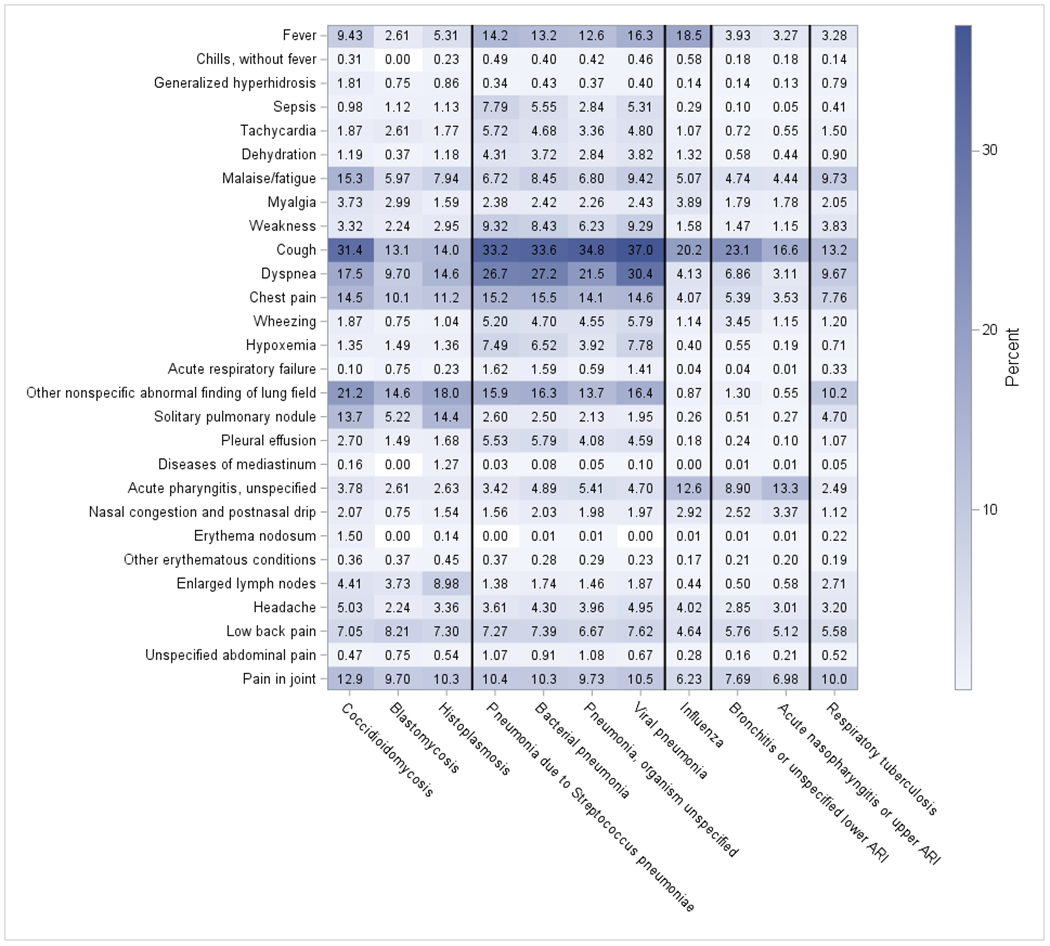
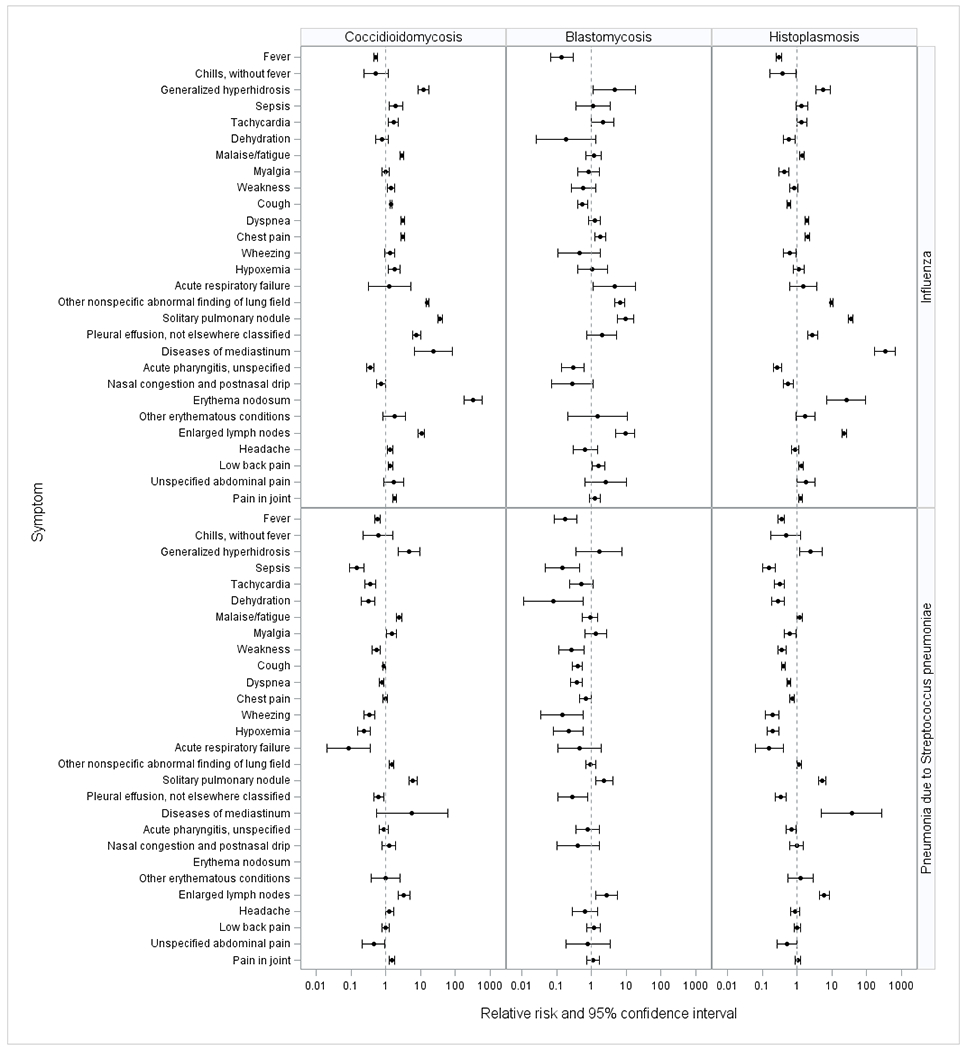
Fever was less common in blastomycosis (2.6%), histoplasmosis (5.3%) and coccidioidomycosis (9.4%) than in influenza (18.5%) or pneumonia (12.6%–16.3%) patients. Fungal diseases resembled bacterial, viral, and unspecified pneumonias for many pulmonary symptoms. However, cough was more common with coccidioidomycosis (31.4%) and less common with histoplasmosis (14.0%) and blastomycosis (13.1%) vs. influenza (20.2%). Although less frequent, solitary pulmonary nodule (5.2%–14.4%), enlarged lymph nodes (3.7%–9.0%), hyperhidrosis (<2%), and erythema nodosum (<2%) were particularly suggestive of fungal diseases.
Conclusions:
Despite limitations inherent in administrative coding, this analysis of symptom codes across disease types suggests that fungal diseases may be difficult to clinically distinguish from other causes of pneumonia except when certain uncommon symptoms are present. Healthcare providers caring for patients with pneumonia, especially if non-responsive to conventional treatment, should consider fungal diseases as possible etiologies.
-
Subjects:
-
Source:Clin Infect Dis.
-
Pubmed ID:33053180
-
Pubmed Central ID:PMC8340310
-
Document Type:
-
Funding:
-
Place as Subject:
-
Collection(s):
-
Main Document Checksum:urn:sha256:155d6e367b1d0e3b6d92669334c15753653c04ddd19dfeb1449815f455dbbd76
-
Download URL:
-
File Type:
 [PDF
- 395.84 KB
]
[PDF
- 395.84 KB
]
Supporting Files


File Language:
English
ON THIS PAGE

CDC STACKS serves as an archival repository of CDC-published products including
scientific findings,
journal articles, guidelines, recommendations, or other public health information authored or
co-authored by CDC or funded partners.
As a repository, CDC STACKS retains documents in their original published format to ensure public access to scientific information.
As a repository, CDC STACKS retains documents in their original published format to ensure public access to scientific information.
You May Also Like
COLLECTION
CDC Public Access