


Short-Term Outcomes and Lessons Learned From the Federal HIV Health Improvement Affinity Group for State Medicaid/Children’s Health Insurance Program Agencies and State Health Departments
Supporting Files

-
September 01 2019
-
File Language:
English
Details
-
Alternative Title:J Acquir Immune Defic Syndr
-
Personal Author:
-
Description:Background:
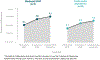
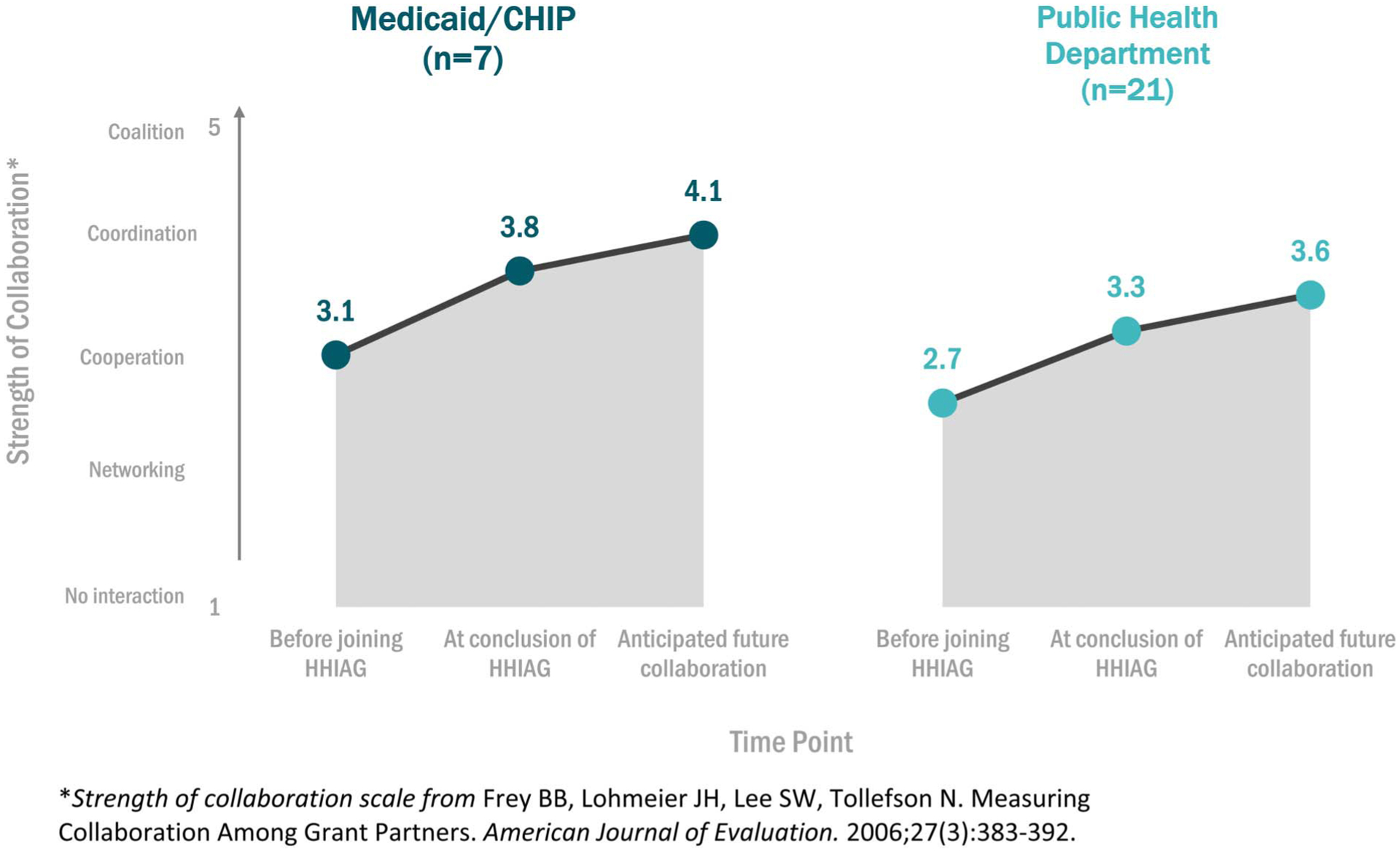
Medicaid is the single largest source of health care coverage for people living with HIV (PLWH) in the United States. Therefore, high-quality HIV care and associated viral suppression among Medicaid beneficiaries have the potential to greatly impact the HIV epidemic. The HIV Health Improvement Affinity Group (HHIAG) supported state efforts to improve health outcomes for PLWH enrolled in Medicaid through new or enhanced collaborations between state public health departments and state Medicaid agencies.
Methods:
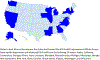
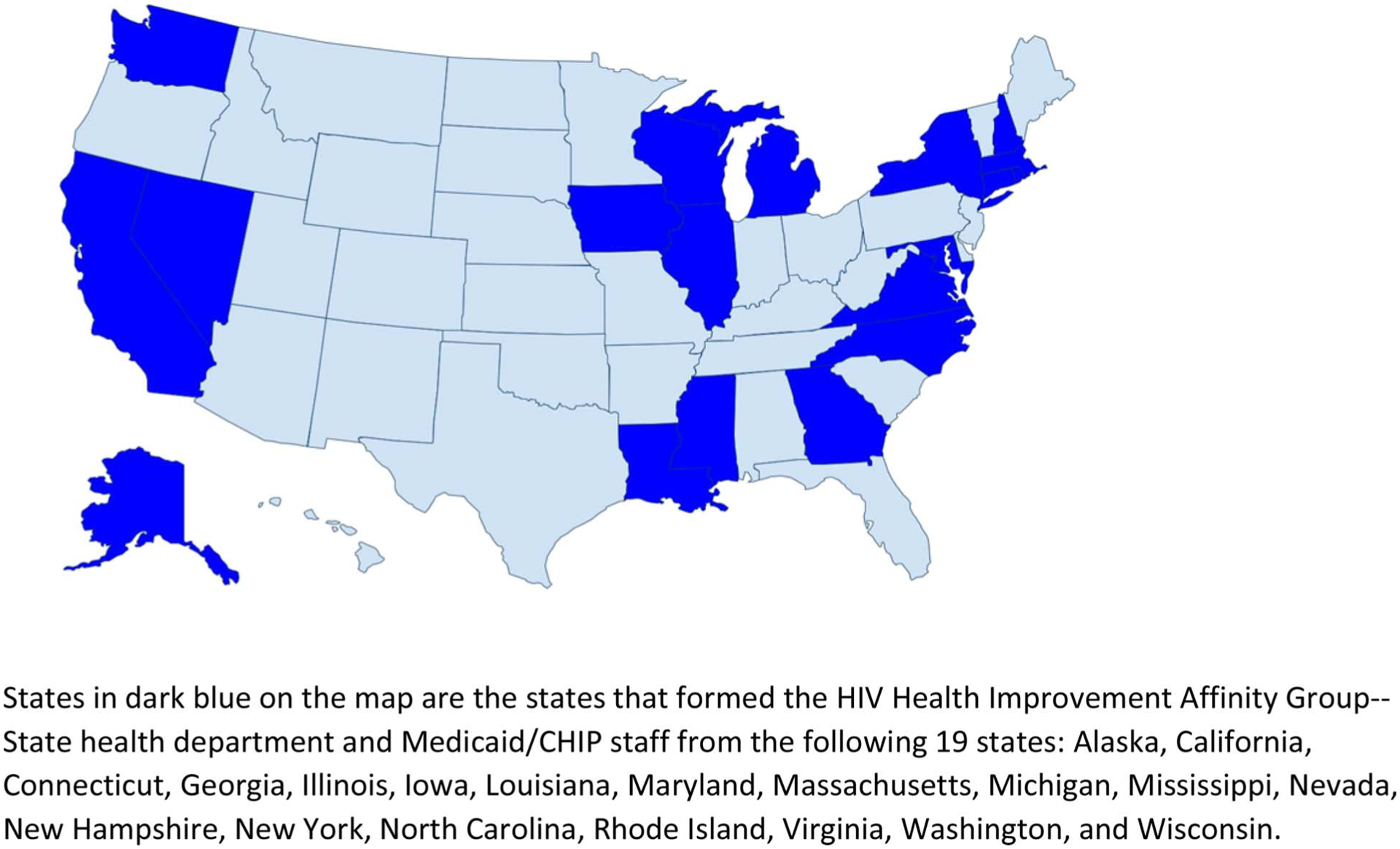
Supported by multiple federal health agencies for 1 year, state health department and Medicaid staff from 19 states participated in state-to-state learning and sharing of promising approaches. This evaluation assessed the HHIAG’s processes, short-term outcomes, and lessons learned through review of state materials, a web survey, and telephone interviews.
Results:
Of the 19 states, 13 (68%) ultimately established new, or refined existing, data-sharing agreements between Medicaid and public health departments. Nearly all states with data-sharing agreements successfully matched the data or streamlined the data-matching process (n = 12/13). Two-thirds of states (67%, n = 8/12) with matched data generated an HIV care continuum for state Medicaid/Children’s Health Insurance Program beneficiaries; 75% (n = 6/8) of these states also initiated quality improvement activities.
Conclusions:
The HHIAG created an unique opportunity for multiple federal agencies and states to collaborate and implement data-driven, state-specific solutions to improve care delivery and, ultimately, clinical outcomes for PLWH. The HHIAG model has the potential to be replicated to address other public health issues that cross agency and institutional boundaries, such as hepatitis C.
-
Subjects:
-
Source:J Acquir Immune Defic Syndr. 82(Suppl 1):S62-S68
-
Pubmed ID:31425398
-
Pubmed Central ID:PMC8318603
-
Document Type:
-
Funding:
-
Volume:82
-
Collection(s):
-
Main Document Checksum:urn:sha256:43c200e4637ef6402786c5892e91de8ed2b374e4f3ef1bebdc615217b9f58d93
-
Download URL:
-
File Type:
 [PDF
- 423.40 KB
]
[PDF
- 423.40 KB
]
Supporting Files


File Language:
English
ON THIS PAGE

CDC STACKS serves as an archival repository of CDC-published products including
scientific findings,
journal articles, guidelines, recommendations, or other public health information authored or
co-authored by CDC or funded partners.
As a repository, CDC STACKS retains documents in their original published format to ensure public access to scientific information.
As a repository, CDC STACKS retains documents in their original published format to ensure public access to scientific information.
You May Also Like
COLLECTION
CDC Public Access