


Factoring-in Agglomeration of Carbon Nanotubes and Nanofibers for Better Prediction of Their Toxicity Versus Asbestos
Supporting Files

-
2012/04/10
-
File Language:
English
Details
-
Journal Article:Particle and Fibre Toxicology
-
Personal Author:
-
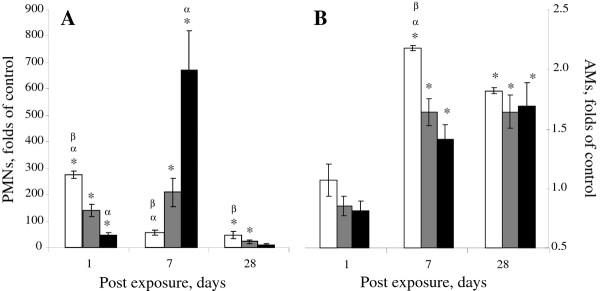
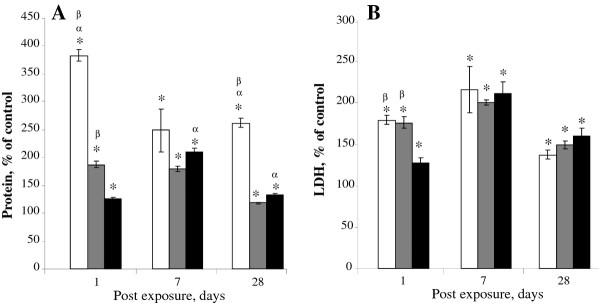
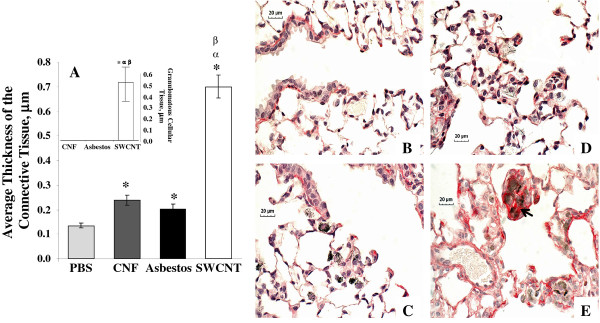
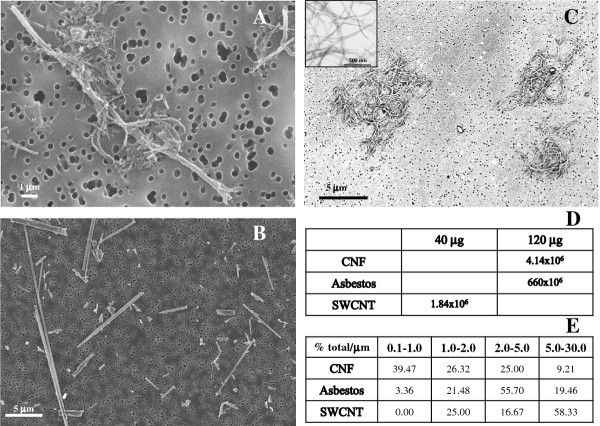
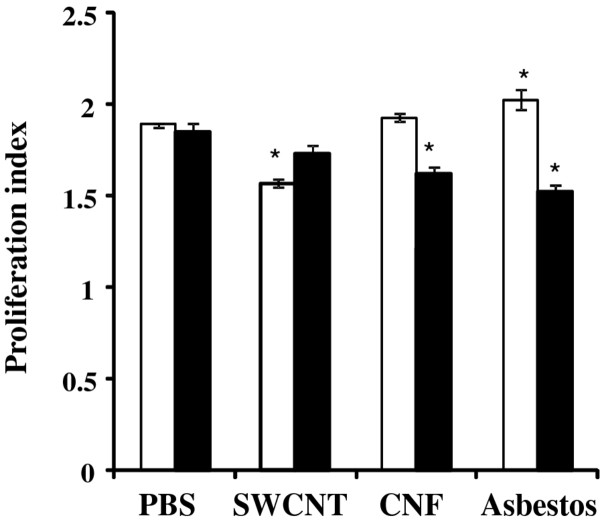
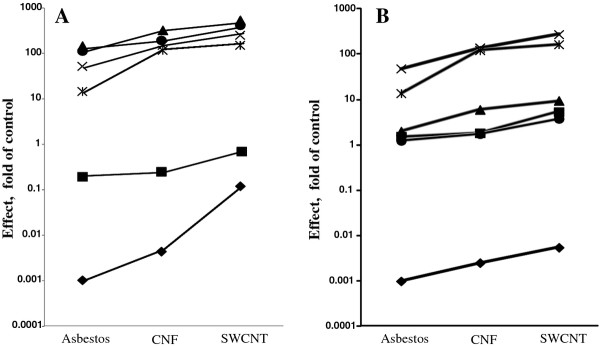
Description:Carbon nanotubes (CNT) and carbon nanofibers (CNF) are allotropes of carbon featuring fibrous morphology. The dimensions and high aspect ratio of CNT and CNF have prompted the comparison with naturally occurring asbestos fibers which are known to be extremely pathogenic. While the toxicity and hazardous outcomes elicited by airborne exposure to single-walled CNT or asbestos have been widely reported, very limited data are currently available describing adverse effects of respirable CNF. Results: Here, we assessed pulmonary inflammation, fibrosis, oxidative stress markers and systemic immune responses to respirable CNF in comparison to single-walled CNT (SWCNT) and asbestos. Pulmonary inflammatory and fibrogenic responses to CNF, SWCNT and asbestos varied depending upon the agglomeration state of the particles/fibers. Foci of granulomatous lesions and collagen deposition were associated with dense particle-like SWCNT agglomerates, while no granuloma formation was found following exposure to fiber-like CNF or asbestos. The average thickness of the alveolar connective tissue - a marker of interstitial fibrosis - was increased 28 days post SWCNT, CNF or asbestos exposure. Exposure to SWCNT, CNF or asbestos resulted in oxidative stress evidenced by accumulations of 4-HNE and carbonylated proteins in the lung tissues. Additionally, local inflammatory and fibrogenic responses were accompanied by modified systemic immunity, as documented by decreased proliferation of splenic T cells ex vivo on day 28 post exposure. The accuracies of assessments of effective surface area for asbestos, SWCNT and CNF (based on geometrical analysis of their agglomeration) versus estimates of mass dose and number of particles were compared as predictors of toxicological outcomes. Conclusions: We provide evidence that effective surface area along with mass dose rather than specific surface area or particle number are significantly correlated with toxicological responses to carbonaceous fibrous nanoparticles. Therefore, they could be useful dose metrics for risk assessment and management. [Description provided by NIOSH]
-
Subjects:
-
Keywords:
-
Source:Part Fibre Toxicol 2012 Apr; 9:10
-
ISSN:1743-8977
-
Pubmed ID:22490147
-
Pubmed Central ID:PMC3379937
-
Document Type:
-
Funding:
-
Genre:
-
Place as Subject:
-
CIO:
-
Division:
-
Topic:
-
Location:
-
Pages in Document:19 pdf pages
-
Contributor:Schwegler-Berry, Diane
-
Volume:9
-
NIOSHTIC Number:nn:20040992
-
Contact Point Address:Anna A Shvedova, Pathology and Physiology Research Branch, Health Effects Laboratory Division, National Institute for Occupational Safety and Health, M/L 2015, 1095 Willowdale Road, Morgantown, WV 26505, USA
-
Email:ats1@cdc.gov
-
CAS Registry Number:
-
Federal Fiscal Year:2012
-
NORA Priority Area:
-
Performing Organization:University of Pittsburgh at Pittsburgh
-
Peer Reviewed:True
-
Collection(s):
-
Main Document Checksum:urn:sha-512:f4e29e5449531784413f00e0995ee931de7cc2f3798df207a315d1b46ea3556f09af3df659b6c5209bf8542c3bfb9a2319bc200e1e01b9fa47075196cca45f76
-
Download URL:
-
File Type:
 [PDF
- 3.97 MB
]
[PDF
- 3.97 MB
]
Supporting Files


File Language:
English
ON THIS PAGE










CDC STACKS serves as an archival repository of CDC-published products including
scientific findings,
journal articles, guidelines, recommendations, or other public health information authored or
co-authored by CDC or funded partners.
As a repository, CDC STACKS retains documents in their original published format to ensure public access to scientific information.
As a repository, CDC STACKS retains documents in their original published format to ensure public access to scientific information.
You May Also Like