


Association of State-Level Earned Income Tax Credits With Rates of Reported Child Maltreatment, 2004–2017
Supporting Files

-
8 2022
-
File Language:
English
Details
-
Alternative Title:Child Maltreat
-
Personal Author:
-
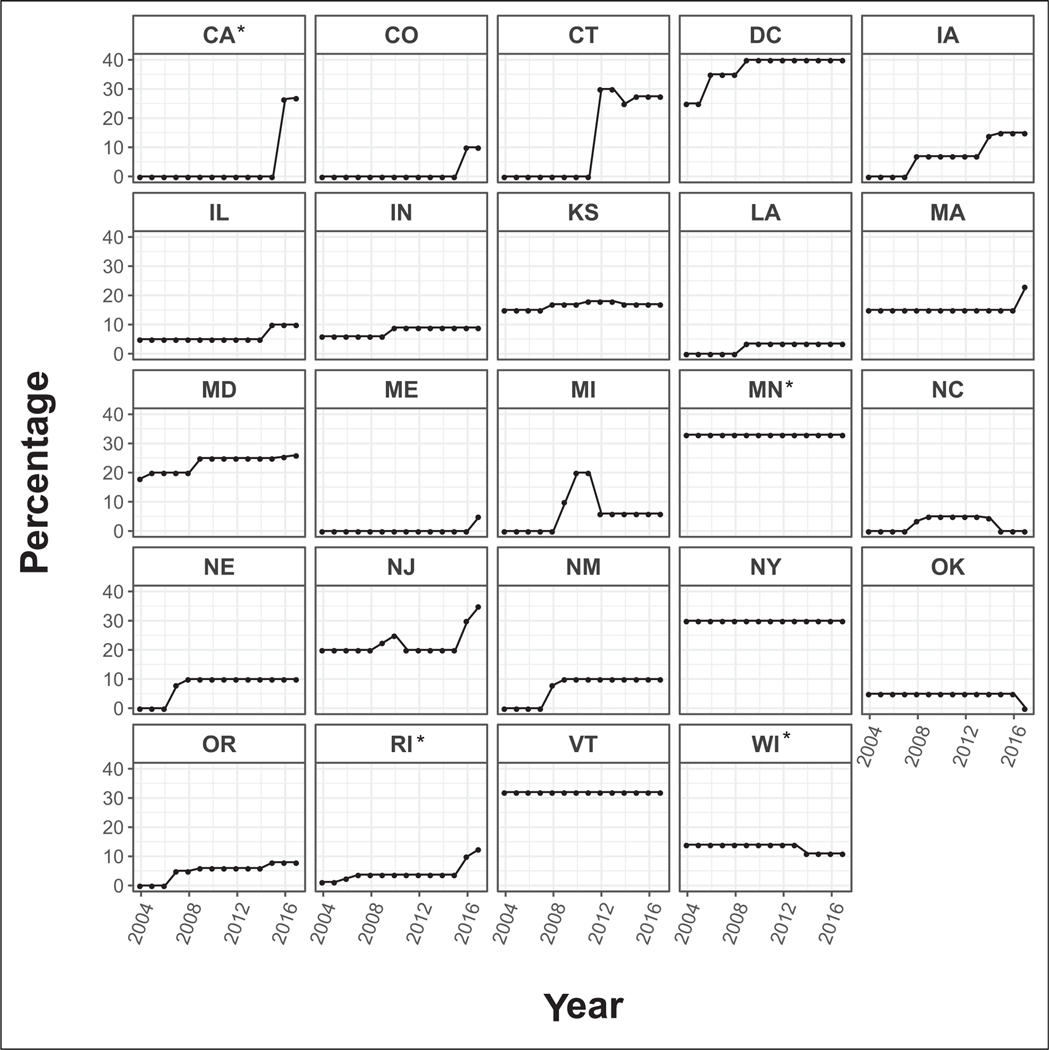
Description:Poverty is an important predictor of child maltreatment. Social policies that strengthen the economic security of low-income families, such as the Earned Income Tax Credit (EITC), may reduce child maltreatment by impeding the pathways through which poverty leads to it. We used variations in the presence and generosity of supplementary EITCs offered at the state level and administrative child maltreatment data from the National Child Abuse and Neglect Data System (NCANDS) to examine the effect of EITC policies on state-level rates of child maltreatment from 2004 through 2017. Two-way fixed effects models indicated that a 10-percentage point increase in the generosity of refundable state EITC benefits was associated with 241 fewer reports of neglect per 100,000 children (95% Confidence Interval [CI] [-449, -33]). An increase in EITC generosity was associated with fewer reports of neglect both among children ages 0-5 (-324 per 100,000; 95% CI [-582, -65]) and children ages 6-17 (-201 per 100,000; 95% CI [-387, -15]). Findings also suggested associations between the EITC and reductions in other types of maltreatment (physical abuse, emotional abuse); however, those did not gain statistical significance. Economic support policies may reduce the risk of child maltreatment, especially neglect, and improve child wellbeing.
-
Subjects:
-
Source:Child Maltreat. 27(3):325-333
-
Pubmed ID:33464121
-
Pubmed Central ID:PMC8286976
-
Document Type:
-
Funding:
-
Volume:27
-
Issue:3
-
Collection(s):
-
Main Document Checksum:urn:sha256:bfe0fdc6014399f130917562be54c760dbca7d7a229fda215fae6b0e2d2da95c
-
Download URL:
-
File Type:
 [PDF
- 506.64 KB
]
[PDF
- 506.64 KB
]


File Language:
English
ON THIS PAGE

CDC STACKS serves as an archival repository of CDC-published products including
scientific findings,
journal articles, guidelines, recommendations, or other public health information authored or
co-authored by CDC or funded partners.
As a repository, CDC STACKS retains documents in their original published format to ensure public access to scientific information.
As a repository, CDC STACKS retains documents in their original published format to ensure public access to scientific information.
You May Also Like
COLLECTION
CDC Public Access