



Hospitalization of Adolescents Aged 12–17 Years with Laboratory-Confirmed COVID-19 — COVID-NET, 14 States, March 1, 2020–April 24, 2021
Supporting Files
Public Domain

-
-
By Show All

-
Series:
File Language:
English
Details
-
Journal Article:Morbidity and Mortality Weekly Report (MMWR)
-
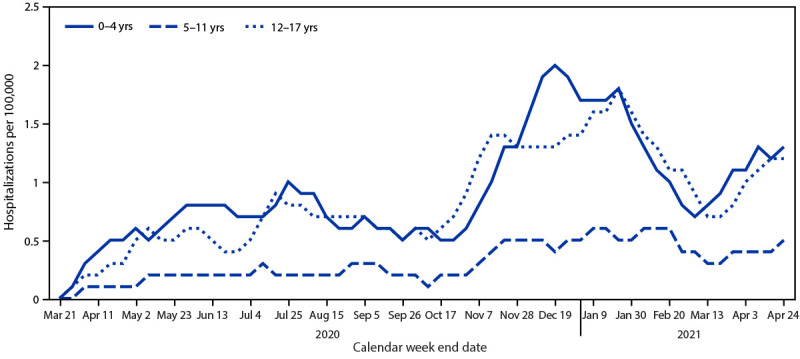
Description:Most COVID-19-associated hospitalizations occur in older adults, but severe disease that requires hospitalization occurs in all age groups, including adolescents aged 12-17 years (1). On May 10, 2021, the Food and Drug Administration expanded the Emergency Use Authorization for Pfizer-BioNTech COVID-19 Vaccine to include persons aged 12-15 years, and CDC's Advisory Committee on Immunization Practices recommended it for this age group on May 12, 2021.* Before that time, COVID-19 vaccines had been available only to persons aged ≥16 years. Understanding and describing the Epidemiology of COVID-19-associated hospitalizations in adolescents and comparing it with adolescent hospitalizations associated with other vaccine-preventable respiratory Viruses, such as influenza, offers evidence of the benefits of expanding the recommended age range for vaccination and provides a baseline and context from which to assess vaccination impact. Using the CoronaVirus Disease 2019-Associated Hospitalization Surveillance Network (COVID-NET), CDC examined COVID-19-associated hospitalizations among adolescents aged 12-17 years, including demographic and clinical characteristics of adolescents admitted during January 1-March 31, 2021, and hospitalization rates (hospitalizations per 100,000 persons) among adolescents during March 1, 2020-April 24, 2021. Among 204 adolescents who were likely hospitalized primarily for COVID-19 during January 1-March 31, 2021, 31.4% were admitted to an intensive care unit (ICU), and 4.9% required invasive mechanical ventilation; there were no associated deaths. During March 1, 2020-April 24, 2021, weekly adolescent hospitalization rates peaked at 2.1 per 100,000 in early January 2021, declined to 0.6 in mid-March, and then rose to 1.3 in April. Cumulative COVID-19-associated hospitalization rates during October 1, 2020-April 24, 2021, were 2.5-3.0 times higher than were influenza-associated hospitalization rates from three recent influenza seasons (2017-18, 2018-19, and 2019-20) obtained from the Influenza Hospitalization Surveillance Network (FluSurv-NET). Recent increased COVID-19-associated hospitalization rates in March and April 2021 and the potential for severe disease in adolescents reinforce the importance of continued COVID-19 Prevention measures, including vaccination and correct and consistent wearing of masks by persons not yet fully vaccinated or when required by laws, rules, or regulations.|.
-
Subjects:
-
ISSN:0149-2195 (print) ; 1545-861X (digital)
-
Pubmed ID:34111061
-
Pubmed Central ID:PMC8191866
-
Document Type:
-
Place as Subject:
-
Pages in Document:7 pdf pages
-
Volume:70
-
Issue:23
-
Download URL:
-
File Type:
 [PDF - 170.56 KB]
-
Collection(s):
-
Main Document Checksum:urn:sha-512:cd15507ab456d99f11e4c2762204549652c39693bfd1dabbc8d7e1e84cabce279a984007b4ef4985477a3ddcd89c7a64a198514b47b22fea165ac5761dc6d385
Supporting Files


File Language:
English
 Was this page helpful?
 Found an issue?




CDC STACKS serves as an archival repository of CDC-published products including
scientific findings, journal articles, guidelines, recommendations, or other public health information authored or
co-authored by CDC or funded partners.
As a repository, CDC STACKS retains documents in their original published format to ensure public access to scientific information.
As a repository, CDC STACKS retains documents in their original published format to ensure public access to scientific information.
You May Also Like
COLLECTION
Morbidity and Mortality Weekly Report (MMWR)