


Identifying opioid dose reductions and discontinuation among patients with chronic opioid therapy
Supporting Files

-
3 2021
-
File Language:
English
Details
-
Alternative Title:Pharmacoepidemiol Drug Saf
-
Personal Author:
-
Description:Purpose:
To identify and systematically categorize opioid dose reductions and discontinuations in large administrative datasets.
Methods:
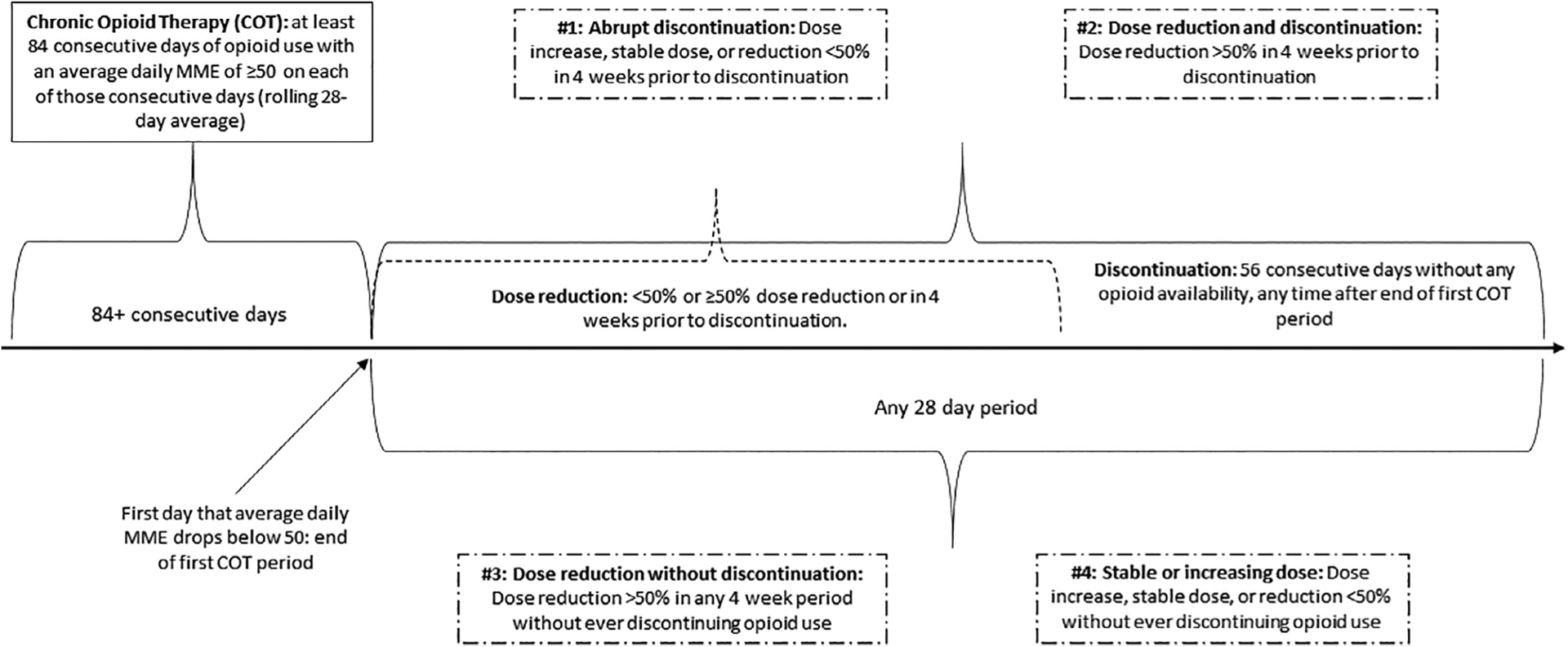
Using a dataset of Oregon Medicaid beneficiaries linked with prescription drug monitoring program (PDMP) data between 2014 and 2017, we identified patients with high-dose chronic opioid therapy (COT), ≥84 consecutive days with an average daily MME of ≥50 on each of those days. We categorized patients into four mutually exclusive groups based on the trajectory of opioid use in the year after COT: abrupt discontinuation, dose reduction and discontinuation, dose reduction without discontinuation, and stable or increasing dose. Finally, we examined prescription patterns in each category.
Results:
Among individuals with high-dose COT, 7636 (37.1%) had an abrupt discontinuation, 2577 (12.5%) had a dose reduction and discontinuation, 7739 (37.6%) had a dose reduction without discontinuation, and 2623 (12.8%) had a stable or increasing dose in the year following the COT episode. Among those who discontinued opioid use (n = 10 213, 49.6%), three in four (74.8%) did so without evidence of tapering. Patients who discontinued opioid use were younger, had higher daily MME during COT, and were more likely to have filled a benzodiazepine or had a multiple provider or multiple pharmacy episode compared to patients who did not discontinue opioid use.
Conclusions:
Dose reductions and discontinuations after a COT episode can be identified in large administrative datasets. Those with a discontinuation were more likely to have riskier prescription profiles during their COT episode.
-
Subjects:
-
Source:Pharmacoepidemiol Drug Saf. 30(3):395-399
-
Pubmed ID:32844498
-
Pubmed Central ID:PMC8213356
-
Document Type:
-
Funding:
-
Volume:30
-
Issue:3
-
Collection(s):
-
Main Document Checksum:urn:sha256:e046d2fc256a44c15c1186c8752d5d747338b3d568202336ff997511a6c04110
-
Download URL:
-
File Type:
 [PDF
- 199.81 KB
]
[PDF
- 199.81 KB
]
Supporting Files


File Language:
English
ON THIS PAGE

CDC STACKS serves as an archival repository of CDC-published products including
scientific findings,
journal articles, guidelines, recommendations, or other public health information authored or
co-authored by CDC or funded partners.
As a repository, CDC STACKS retains documents in their original published format to ensure public access to scientific information.
As a repository, CDC STACKS retains documents in their original published format to ensure public access to scientific information.
You May Also Like
COLLECTION
CDC Public Access