


“Hurt people hurt people”: Relations between adverse experiences and patterns of cyber and in-person aggression and victimization among urban adolescents
Supporting Files

-
July 2021
-
File Language:
English
Details
-
Alternative Title:Aggress Behav
-
Personal Author:
-
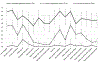
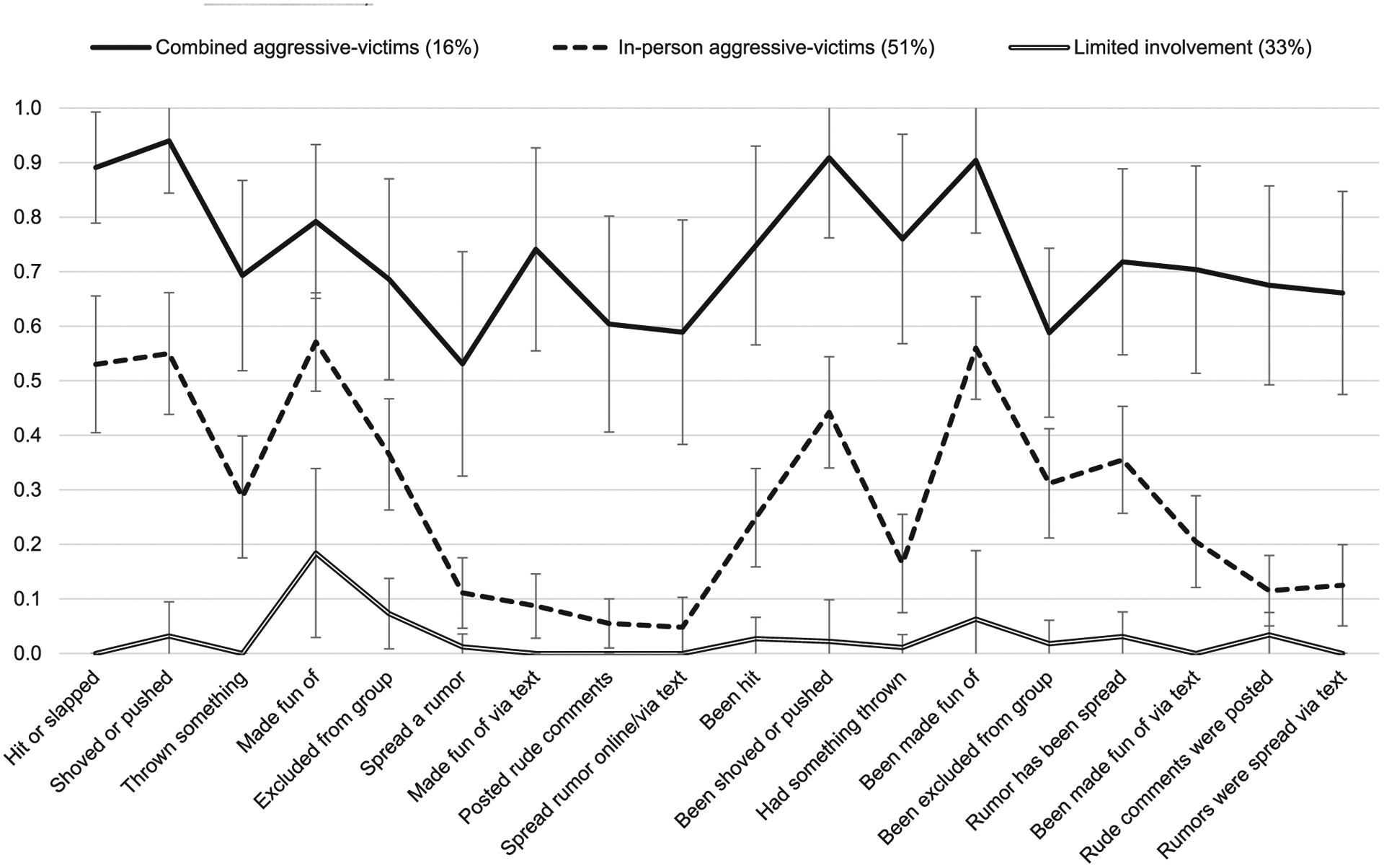
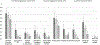
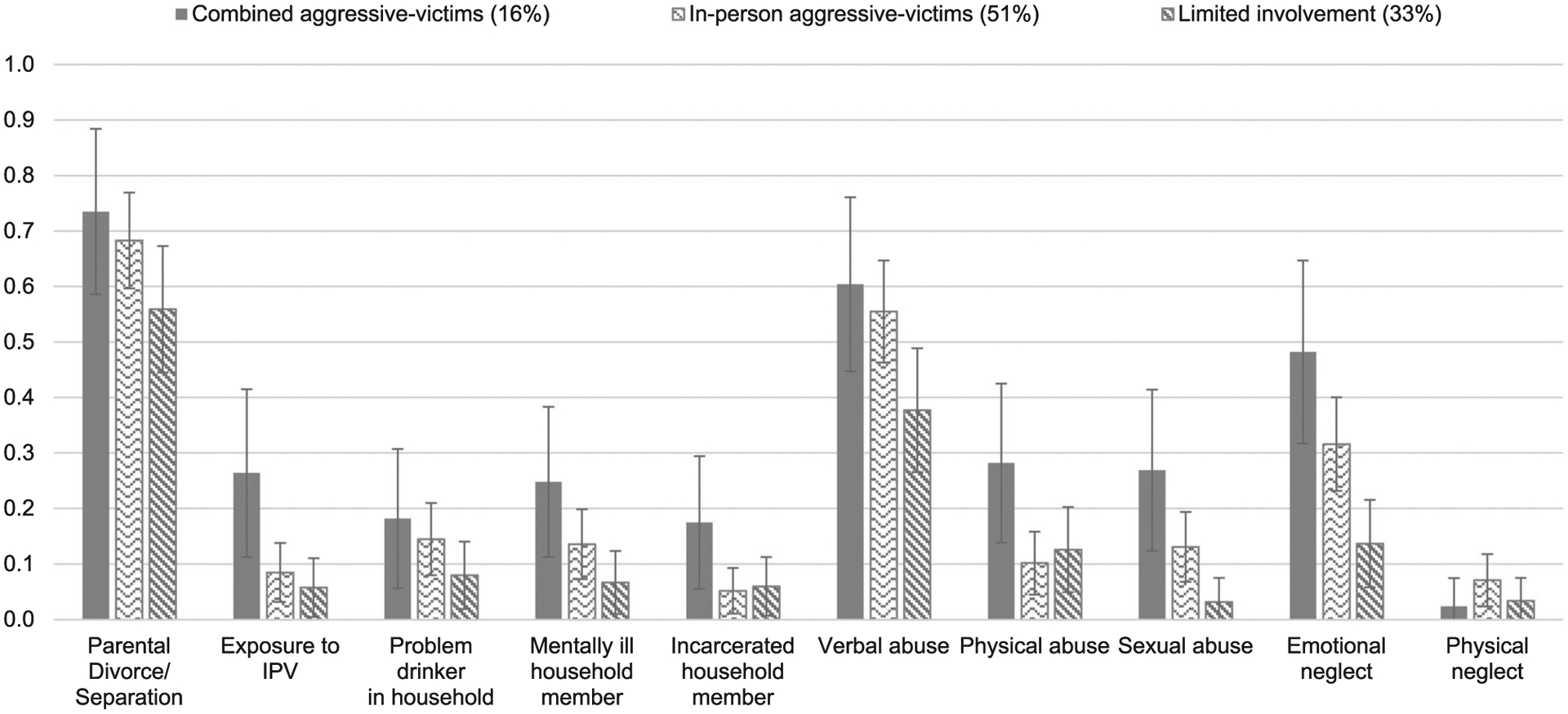
Description:This study identified subgroups of adolescents with distinct patterns of involvement with overt and relational in-person and cyber aggression and victimization. We also assessed subgroup similarities and differences in exposure to adverse childhood experiences (ACEs), exposure to community violence, and trauma symptoms. Using latent class analysis, we identified three subgroups among 265 adolescents (M| = 14.3 years; 57% female; 96% African American) residing in three urban high-burden communities that included youth who reported: (a) combined (cyber and in-person) aggression and victimization (17%), (b) in-person aggression and victimization (51%), and (c) adolescents with limited involvement (32%). Youth in the combined aggressive-victims subgroup had the highest probability of endorsing exposure to community violence, trauma symptoms, and a higher number of ACEs overall as well as higher rates of both verbal and physical abuse compared to the other subgroups. Our results indicated that the adolescents who reported the highest frequencies of aggressive behavior were also the most victimized and traumatized. These findings provide context to aggressive behavior among adolescents living in high-burden, urban communities and underscore the need for trauma-informed prevention interventions.
-
Subjects:
-
Source:Aggress Behav. 47(4):483-492
-
Pubmed ID:33844292
-
Pubmed Central ID:PMC8192443
-
Document Type:
-
Funding:
-
Volume:47
-
Issue:4
-
Collection(s):
-
Main Document Checksum:urn:sha256:d296f87808955789eb0a569803834a1bd8e591ed082b71dac01f7a520ebad4bc
-
Download URL:
-
File Type:
 [PDF
- 668.21 KB
]
[PDF
- 668.21 KB
]
Supporting Files


File Language:
English
ON THIS PAGE

CDC STACKS serves as an archival repository of CDC-published products including
scientific findings,
journal articles, guidelines, recommendations, or other public health information authored or
co-authored by CDC or funded partners.
As a repository, CDC STACKS retains documents in their original published format to ensure public access to scientific information.
As a repository, CDC STACKS retains documents in their original published format to ensure public access to scientific information.
You May Also Like
COLLECTION
CDC Public Access