



Maternal Food Restriction-induced Intrauterine Growth Restriction in a Rat Model Leads to Sex-specific Adipogenic Programming
Supporting Files

-
12 2020
-
File Language:
English
Details
-
Alternative Title:FASEB J
-
Personal Author:
-
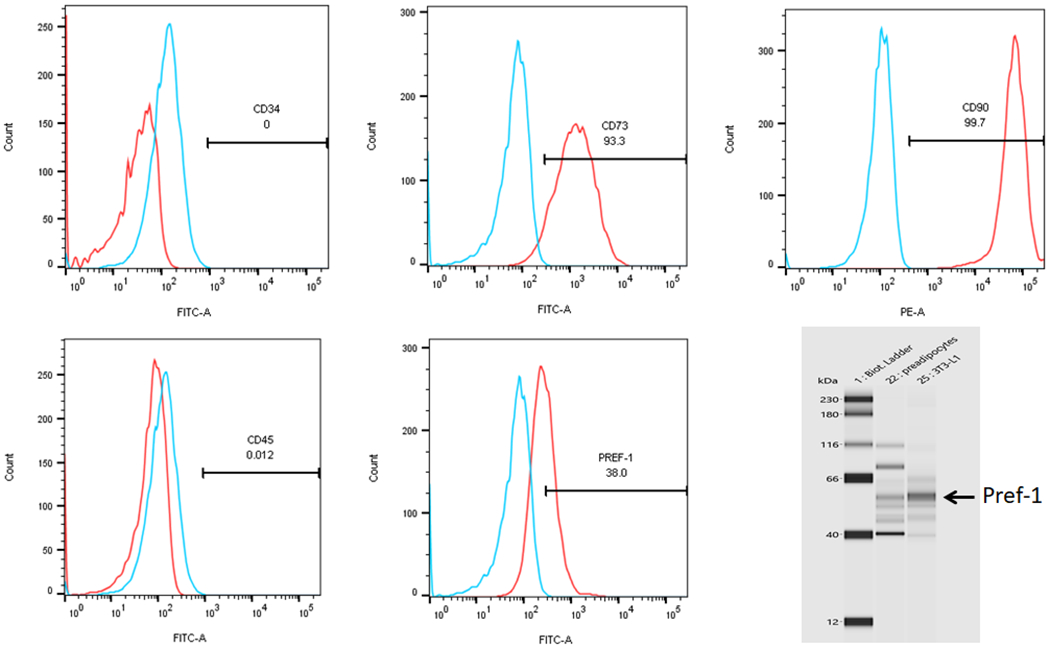
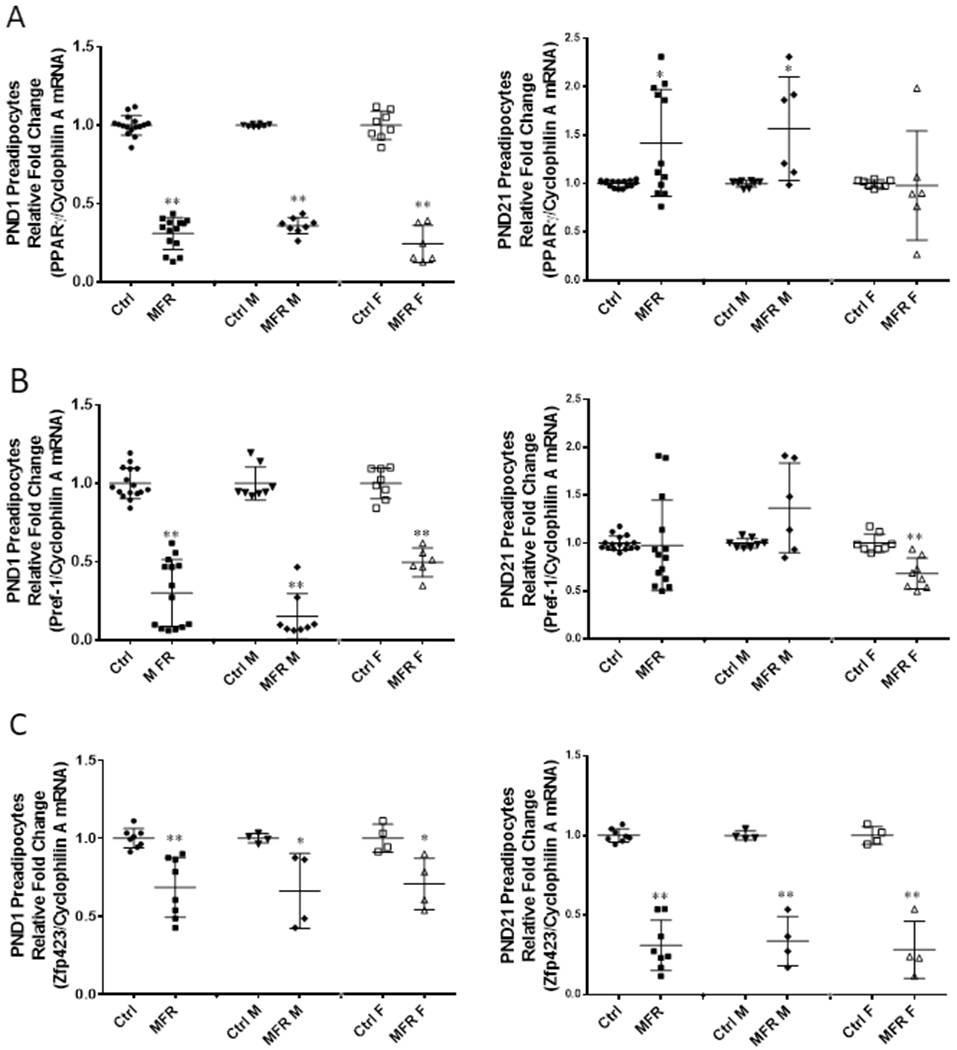
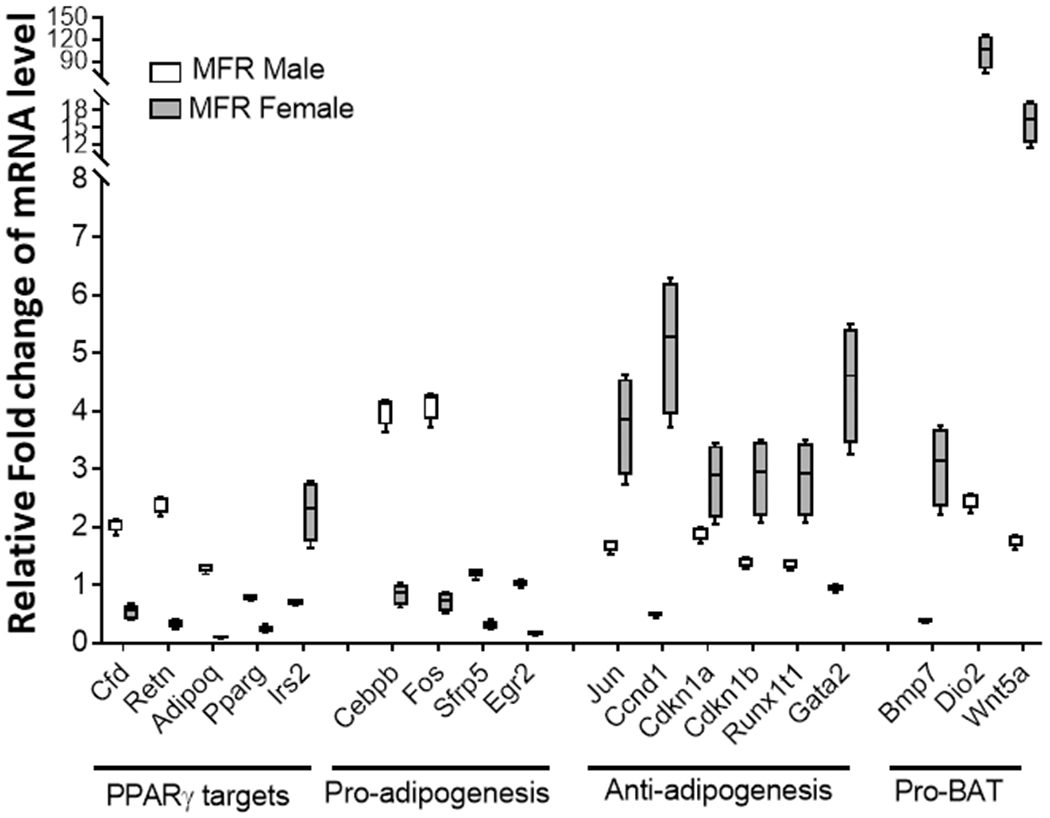
Description:Intrauterine growth restriction (IUGR) leads to offspring obesity. In a maternal food restriction (MFR) during pregnancy-related IUGR rat model, bone marrow stem cells showed enhanced adipogenic programming; however, the effect of IUGR on white adipose tissue (WAT) progenitors is unknown. Here, by mRNA and functional profiling, we determined sex-specific adipogenic programming of WAT progenitors isolated from pups on the postnatal day (PND) 1 and 21. On PND1, PPARγ and Pref-1 expression was significantly downregulated in preadipocytes of both MFR males and females; however, at PND21, preadipocytes of MFR males showed upregulation in these genes. Even following adipogenic induction, both male and female MFR adipocytes exhibited lower PPARγ, ADRP, and adiponectin levels at PND1; however, at PND21 MFR male adipocytes showed an upward trend in the expression of these genes. An adipogenesis-specific RT-PCR array showed that male MFR adipocytes were programmed to exhibit stronger adipogenic propensity than females. Last, serum sex hormone and adipocyte estrogen/testosterone receptor expression profiles provide preliminary insights into the possible mechanism underlying sex-specific adipogenic programming in the IUGR offspring. In summary, IUGR programs WAT preadipocytes to greater adipogenic potential in males. Although the altered adipogenic programming following MFR was detectable at PND1, the changes were more pronounced at PND21, suggesting a potential role of postnatal nutrition in facilitating the sex-specific adipogenic programming in the IUGR offspring.
-
Subjects:
-
Keywords:
-
Source:FASEB J. 34(12):16073-16085
-
Pubmed ID:33047380
-
Pubmed Central ID:PMC8121157
-
Document Type:
-
Funding:R21 HD071731/HD/NICHD NIH HHSUnited States/ ; HD071731/HHS ; NIH ; National Heart, Lung, and Blood Institute (NHLBI)/ ; R01 HL151769/HL/NHLBI NIH HHSUnited States/ ; HD058948/HHS ; NIH ; National Heart, Lung, and Blood Institute (NHLBI)/ ; HL152915/HHS ; NIH ; National Heart, Lung, and Blood Institute (NHLBI)/ ; R41 HL152915/HL/NHLBI NIH HHSUnited States/ ; R03 HD058948/HD/NICHD NIH HHSUnited States/ ; HD127237/HHS ; NIH ; National Heart, Lung, and Blood Institute (NHLBI)/ ; R21 HL107118/HL/NHLBI NIH HHSUnited States/ ; K01 IP000050/IP/NCIRD CDC HHSUnited States/ ; R01 HL127237/HL/NHLBI NIH HHSUnited States/ ; HL107118/HHS ; NIH ; National Heart, Lung, and Blood Institute (NHLBI)/
-
Volume:34
-
Issue:12
-
Collection(s):
-
Main Document Checksum:urn:sha-512:26e82a1bdb0209cef08a644dc43b7f8f5e6a0ec034b3422be6c3fd801afccd9a8f1b1f25a7a985775c0b7c27b6eb89e9df769d81f422ca1886a792377808ad06
-
Download URL:
-
File Type:
 [PDF
- 881.72 KB
]
[PDF
- 881.72 KB
]
Supporting Files


File Language:
English
 Was this page helpful?
 Found an issue?






CDC STACKS serves as an archival repository of CDC-published products including
scientific findings,
journal articles, guidelines, recommendations, or other public health information authored or
co-authored by CDC or funded partners.
As a repository, CDC STACKS retains documents in their original published format to ensure public access to scientific information.
As a repository, CDC STACKS retains documents in their original published format to ensure public access to scientific information.
You May Also Like
COLLECTION
CDC Public Access