



Review of GPS collar deployments and performance on nonhuman primates
Supporting Files

-
5 2020 ; 5-2020
-
Available in CDC Stacks on May 13, 2021, 12:00 AM
File Language:
English
Details
-
Alternative Title:Primates
-
Personal Author:Dore, Kerry M.
 ;
Hansen, Malene F.
;
Klegarth, Amy R.
;
Fichtel, Claudia
;
Koch, Flávia
;
Springer, Andrea
;
Kappeler, Peter
;
Parga, Joyce A.
;
Humle, Tatyana
;
Colin, Christelle
;
Raballand, Estelle
;
Huang, Zhi-Pang
;
Qi, Xiao-Guang
;
Di Fiore, Anthony
;
Link, Andrés
;
Stevenson, Pablo R.
;
Stark, Danica J.
;
Tan, Noeleen
;
Gallagher, Christa A.
;
Anderson, C. Jane
;
Campbell, Christina J.
;
Kenyon, Marina
;
Pebsworth, Paula
;
Sprague, David
;
Jones-Engel, Lisa
;
Fuentes, Agustín
;
Hansen, Malene F.
;
Klegarth, Amy R.
;
Fichtel, Claudia
;
Koch, Flávia
;
Springer, Andrea
;
Kappeler, Peter
;
Parga, Joyce A.
;
Humle, Tatyana
;
Colin, Christelle
;
Raballand, Estelle
;
Huang, Zhi-Pang
;
Qi, Xiao-Guang
;
Di Fiore, Anthony
;
Link, Andrés
;
Stevenson, Pablo R.
;
Stark, Danica J.
;
Tan, Noeleen
;
Gallagher, Christa A.
;
Anderson, C. Jane
;
Campbell, Christina J.
;
Kenyon, Marina
;
Pebsworth, Paula
;
Sprague, David
;
Jones-Engel, Lisa
;
Fuentes, Agustín
-
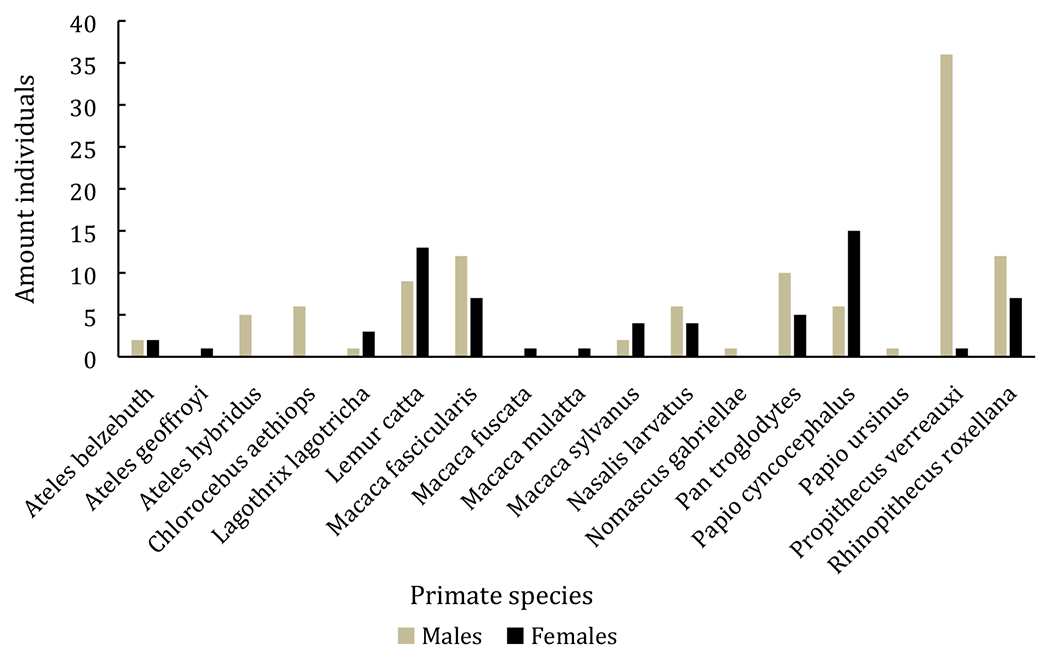
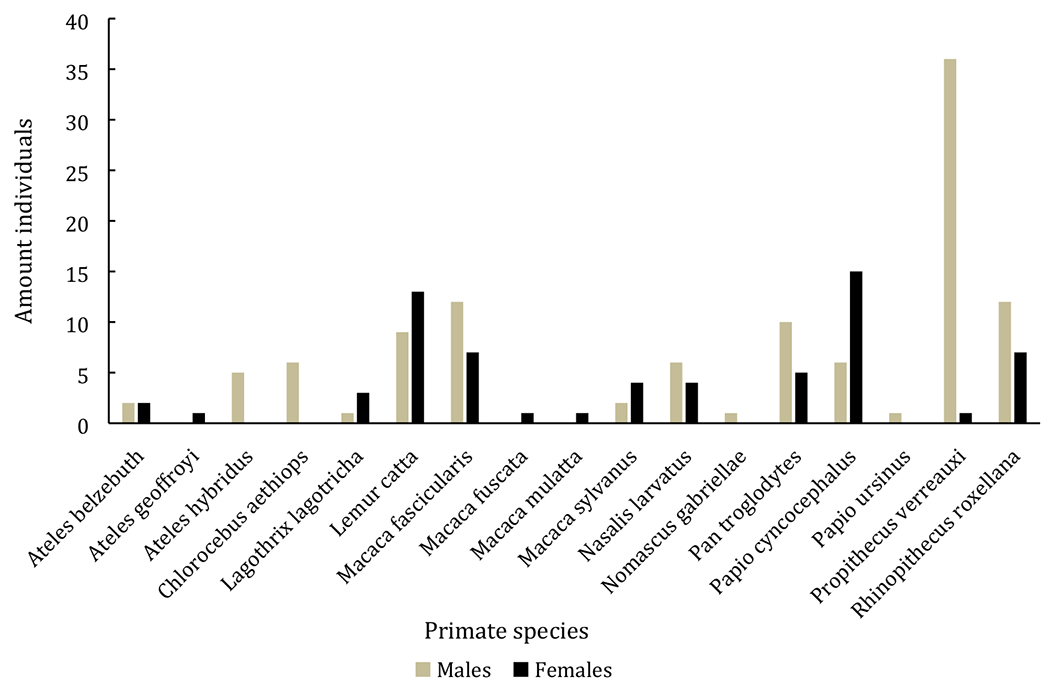
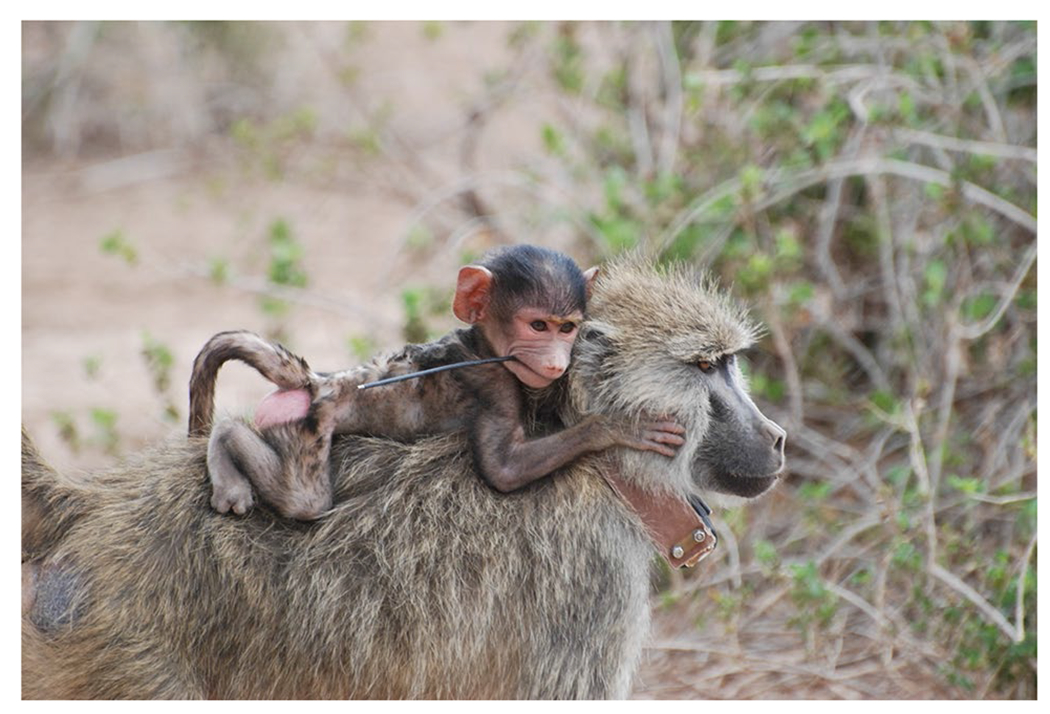
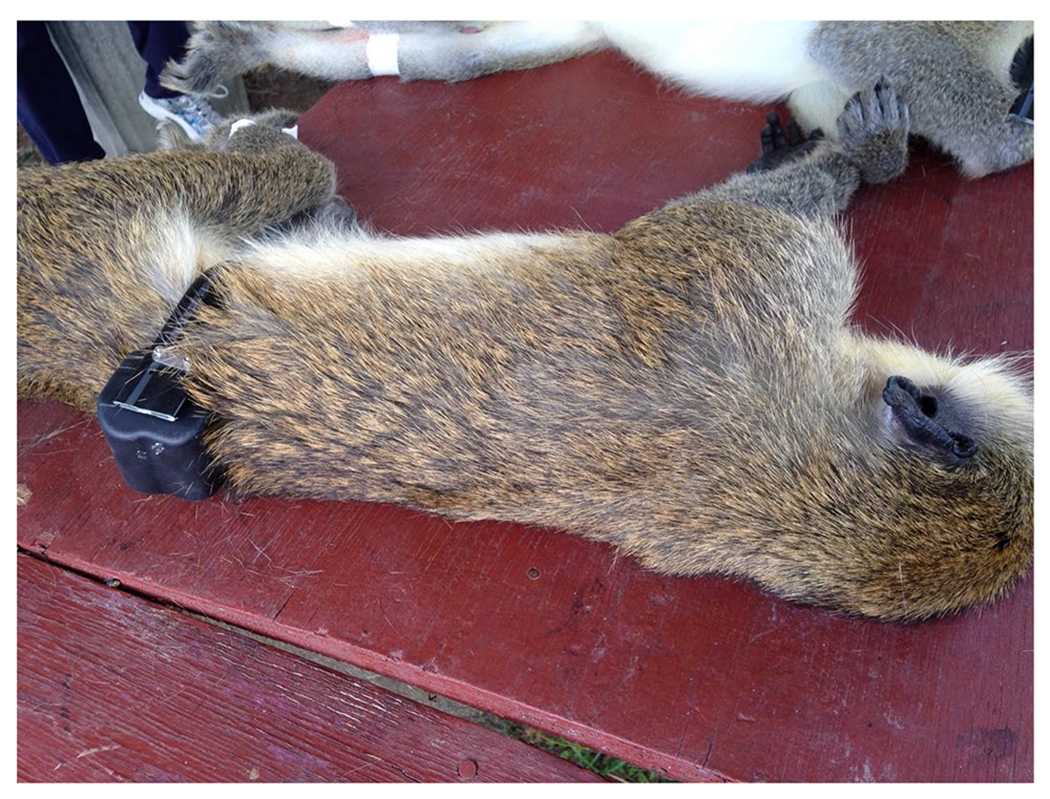
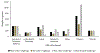
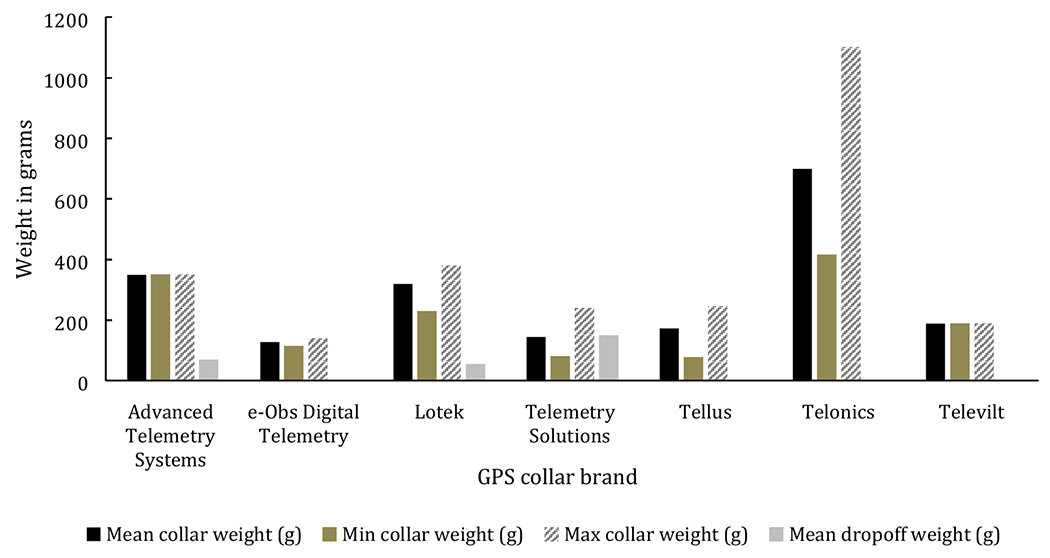
Description:Over the past 20 years, GPS collars have emerged as powerful tools for the study of nonhuman primate (hereafter, "primate") movement ecology. As the size and cost of GPS collars have decreased and performance has improved, it is timely to review the use and success of GPS collar deployments on primates to date. Here we compile data on deployments and performance of GPS collars by brand and examine how these relate to characteristics of the primate species and field contexts in which they were deployed. The compiled results of 179 GPS collar deployments across 17 species by 16 research teams show these technologies can provide advantages, particularly in adding to the quality, quantity, and temporal span of data collection. However, aspects of this technology still require substantial improvement in order to make deployment on many primate species pragmatic economically. In particular, current limitations regarding battery lifespan relative to collar weight, the efficacy of remote drop-off mechanisms, and the ability to remotely retrieve data need to be addressed before the technology is likely to be widely adopted. Moreover, despite the increasing utility of GPS collars in the field, they remain substantially more expensive than VHF collars and tracking via handheld GPS units, and cost considerations of GPS collars may limit sample sizes and thereby the strength of inferences. Still, the overall high quality and quantity of data obtained, combined with the reduced need for on-the-ground tracking by field personnel, may help defray the high equipment cost. We argue that primatologists armed with the information in this review have much to gain from the recent, substantial improvements in GPS collar technology.
-
Subjects:
-
Keywords:
-
Source:Primates. 61(3):373-387
-
Pubmed ID:31965380
-
Pubmed Central ID:PMC8118416
-
Document Type:
-
Funding:PEC 13-249/HX/HSRD VAUnited States/ ; #31622053/National Natural Science Foundation of China (CN)/ ; 0504495/National Science Foundation IGERT GLOBES program/ ; 5189-00135B/Innovationsfonden/ ; R01 AG034513/AG/NIA NIH HHSUnited States/ ; W267-13/National Geographic Society's Waitt Program/ ; PR12-012/Margot Marsh Biodiversity Foundation/ ; 2018TD-017/Department of Science and Technology of Shaanxi Prov. China/ ; BCS 1638822/National Science Foundation/ ; P51 OD010425/CD/ODCDC CDC HHSUnited States/ ; PR14-36/Margot Marsh Biodiversity Foundation/ ; 9234-12/National Geographic Young Explorer's Grant/ ; P51 OD010425/OD/NIH HHSUnited States/ ; P2C HD042828/HD/NICHD NIH HHSUnited States/ ; BCS 1062540/National Science Foundation/ ; #31730104/National Natural Science Foundation of China (CN)/
-
Volume:61
-
Issue:3
-
Download URL:
-
File Type:
 [PDF - 845.47 KB]
 -
Collection(s):
-
Main Document Checksum:urn:sha256:d295425696c8330411d28a3f252f9a80c9925d31e298af750c481fc0b6257a7b
Supporting Files


File Language:
English
 Was this page helpful?
 Found an issue?



CDC STACKS serves as an archival repository of CDC-published products including
scientific findings, journal articles, guidelines, recommendations, or other public health information authored or
co-authored by CDC or funded partners.
As a repository, CDC STACKS retains documents in their original published format to ensure public access to scientific information.
As a repository, CDC STACKS retains documents in their original published format to ensure public access to scientific information.
You May Also Like
COLLECTION
CDC Public Access