



Clinical Outcomes and Shoulder Kinematics for the “Gray Zone” Extra-articular Scapula Fracture in 5 Patients
Supporting Files

-
February 2020
-
File Language:
English
Details
-
Alternative Title:Int J Orthop
-
Personal Author:
-
Description:Aims:
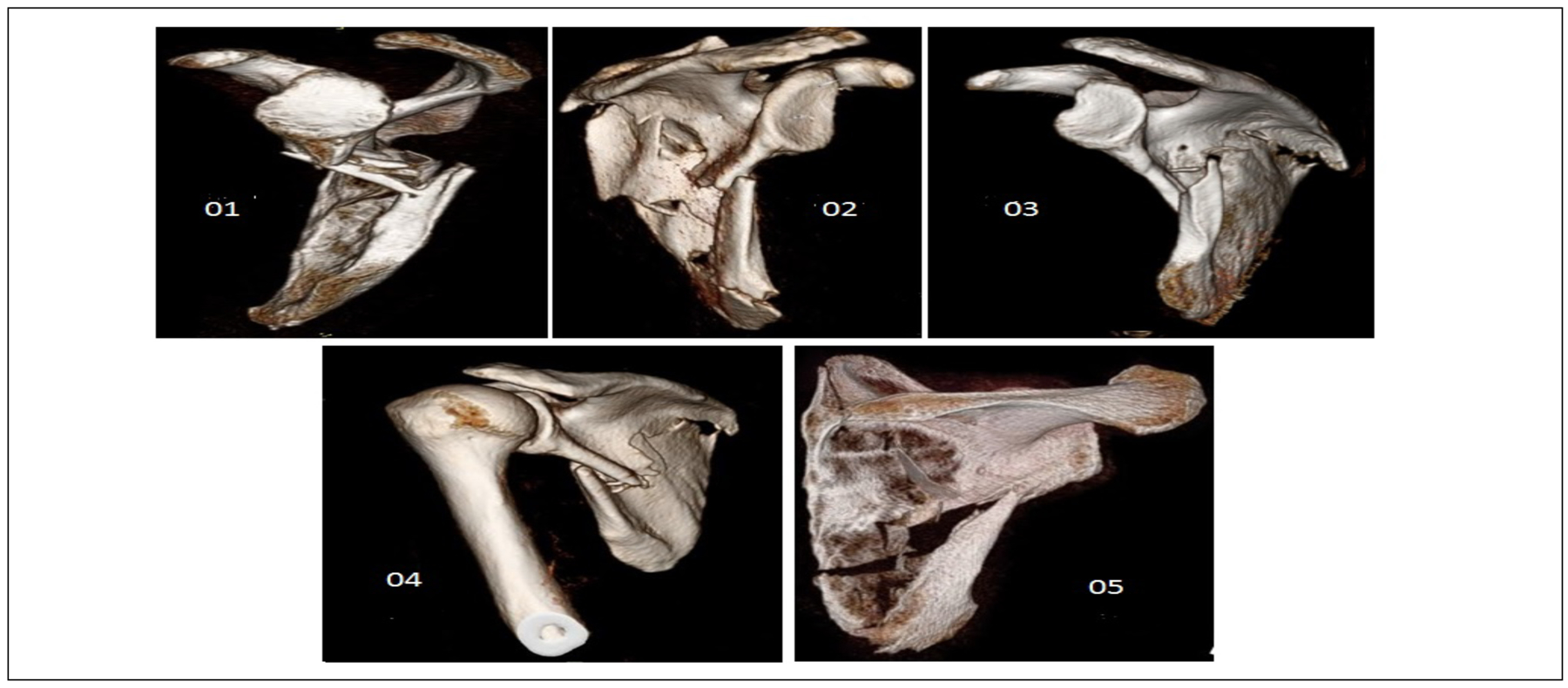
There is a subset of scapula fractures, which can be considered in the “gray zone,” where treatment guidelines are not clear-cut, based on published literature. Our paper presents the outcomes of five such scapula fractures treated non-operatively.
Methods:
Adult patients who had been treated non-operatively at our institution for an isolated scapula fracture from 2003–2012 were found using Current Procedural Terminology (CPT) codes. Based on injury imaging, these five patients had scapula fractures in the “gray zone.”
Results:
All subjects were right hand dominant. 3/5 fractures involved left, non-dominant, scapulae. Motion analysis demonstrated similar recruitment of the scapula during the glenohumeral rhythm for the fractured shoulders compared with the same arm of age matched control subjects. No significant differences occurred in either range of motion (ROM) or scapula-humeral coordination when comparing uninjured scapulae to the same arm of age matched control subjects.
Conclusions:
All subjects’ demonstrated acceptable clinical outcomes when treated non-operatively. Minor differences were seen in subjective surveys. However, the kinematic analysis showed no differences in measured scapula-humeral rhythm or range of motion. It is proposed that immediate controlled range of motion and rehabilitation be considered in these patients and could be the focus of a larger prospective study.
Level of Evidence:
Level IV (Case Series).
-
Subjects:
-
Source:Int J Orthop. 3(1)
-
Pubmed ID:32346675
-
Pubmed Central ID:PMC7188186
-
Document Type:
-
Funding:
-
Volume:3
-
Issue:1
-
Collection(s):
-
Main Document Checksum:urn:sha256:8721d48bbf2c24837ed42e9510ba74e8ccb921b0f31a65ce2776a603f5959e5e
-
Download URL:
-
File Type:
 [PDF
- 1008.03 KB
]
[PDF
- 1008.03 KB
]
Supporting Files


File Language:
English
 Was this page helpful?
 Found an issue?









CDC STACKS serves as an archival repository of CDC-published products including
scientific findings,
journal articles, guidelines, recommendations, or other public health information authored or
co-authored by CDC or funded partners.
As a repository, CDC STACKS retains documents in their original published format to ensure public access to scientific information.
As a repository, CDC STACKS retains documents in their original published format to ensure public access to scientific information.
You May Also Like
COLLECTION
CDC Public Access