



Occupational Exposure and Health Risks of Volatile Organic Compounds (VOCs) of Hotel Housekeepers Field Measurements of Exposure and Health Risks
Supporting Files

-
1 2021 ; 1-2021
-
Available in CDC Stacks on January 01, 2022, 12:00 AM

File Language:
English
Details
-
Alternative Title:Indoor Air
-
Personal Author:
-
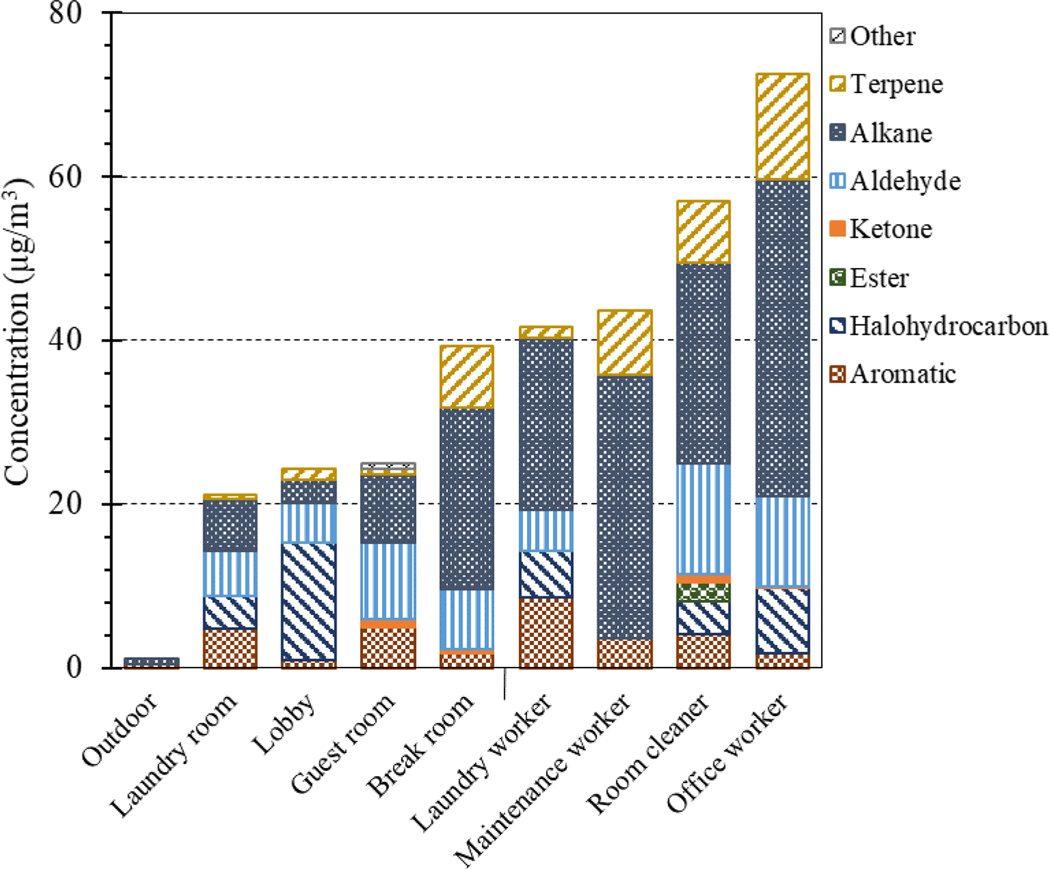
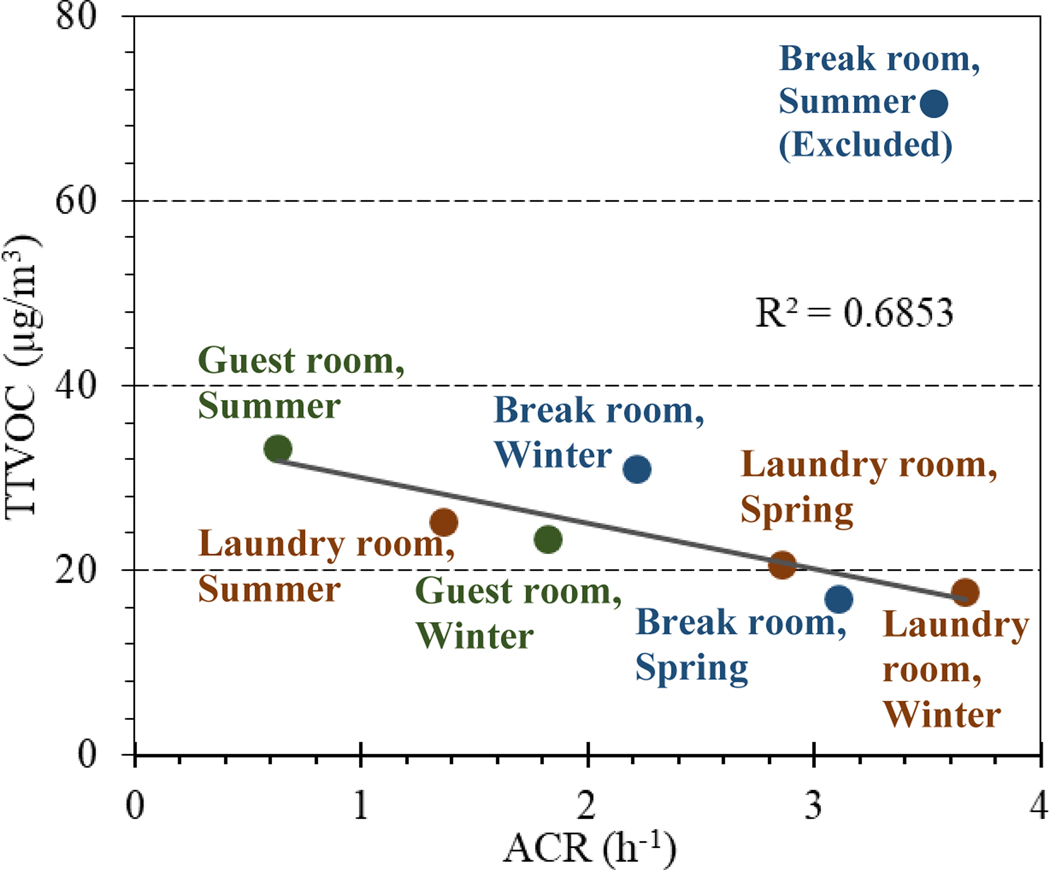
Description:Hotel housekeepers represent a large, low-income, predominantly minority, and high-risk workforce. Little is known about their exposure to chemicals, including volatile organic compounds (VOCs). This study evaluates VOC exposures of housekeepers, sources and factors affecting VOC levels, and provides preliminary estimates of VOC-related health risks. We utilized indoor and personal sampling at two hotels, assessed ventilation, and characterized the VOC composition of cleaning agents. Personal sampling of hotel staff showed a total target VOC concentration of 57 ± 36 µg/m| (mean ± SD), about twice that of indoor samples. VOCs of greatest health significance included chloroform and formaldehyde. Several workers had exposure to alkanes that could cause non-cancer effects. VOC levels were negatively correlated with estimated air change rates. The composition and concentrations of the tested products and air samples helped identify possible emission sources, which included building sources (for formaldehyde), disinfection by-products in the laundry room, and cleaning products. VOC levels and the derived health risks in this study were at the lower range found in the US buildings. The excess lifetime cancer risk (average of 4.1 × 10| ) still indicates a need to lower exposure by reducing or removing toxic constituents, especially formaldehyde, or by increasing ventilation rates.
-
Keywords:
-
Source:Indoor Air. 31(1):26-39
-
Pubmed ID:32609907
-
Pubmed Central ID:PMC8020495
-
Document Type:
-
Funding:
-
Volume:31
-
Issue:1
-
Download URL:
-
File Type:
 [PDF - 1.06 MB]
 -
Collection(s):
-
Main Document Checksum:urn:sha256:4bbf41480ba226b3a27f1787b936793ec7f4e06680a191defc05e71a8fe79852
Supporting Files


File Language:
English
 Was this page helpful?
 Found an issue?


CDC STACKS serves as an archival repository of CDC-published products including
scientific findings, journal articles, guidelines, recommendations, or other public health information authored or
co-authored by CDC or funded partners.
As a repository, CDC STACKS retains documents in their original published format to ensure public access to scientific information.
As a repository, CDC STACKS retains documents in their original published format to ensure public access to scientific information.
You May Also Like
COLLECTION
CDC Public Access