


A Collaboration among Primary Care-based Clinical Pharmacists and Community-based Health Coaches
Supporting Files

-
October 07 2020
-
File Language:
English
Details
-
Alternative Title:J Am Geriatr Soc
-
Personal Author:
-
Description:BACKGROUND/OBJECTIVE:
Medication discrepancies and adverse drug events are common following hospital discharge. This study evaluates whether a collaboration between community-based health coaches and primary care-based pharmacists was associated with a reduction in inpatient utilization following hospitalization.
DESIGN:
Retrospective cohort study using propensity score matching.
SETTING:
Urban, academic medical center and surrounding community.
PARTICIPANTS:
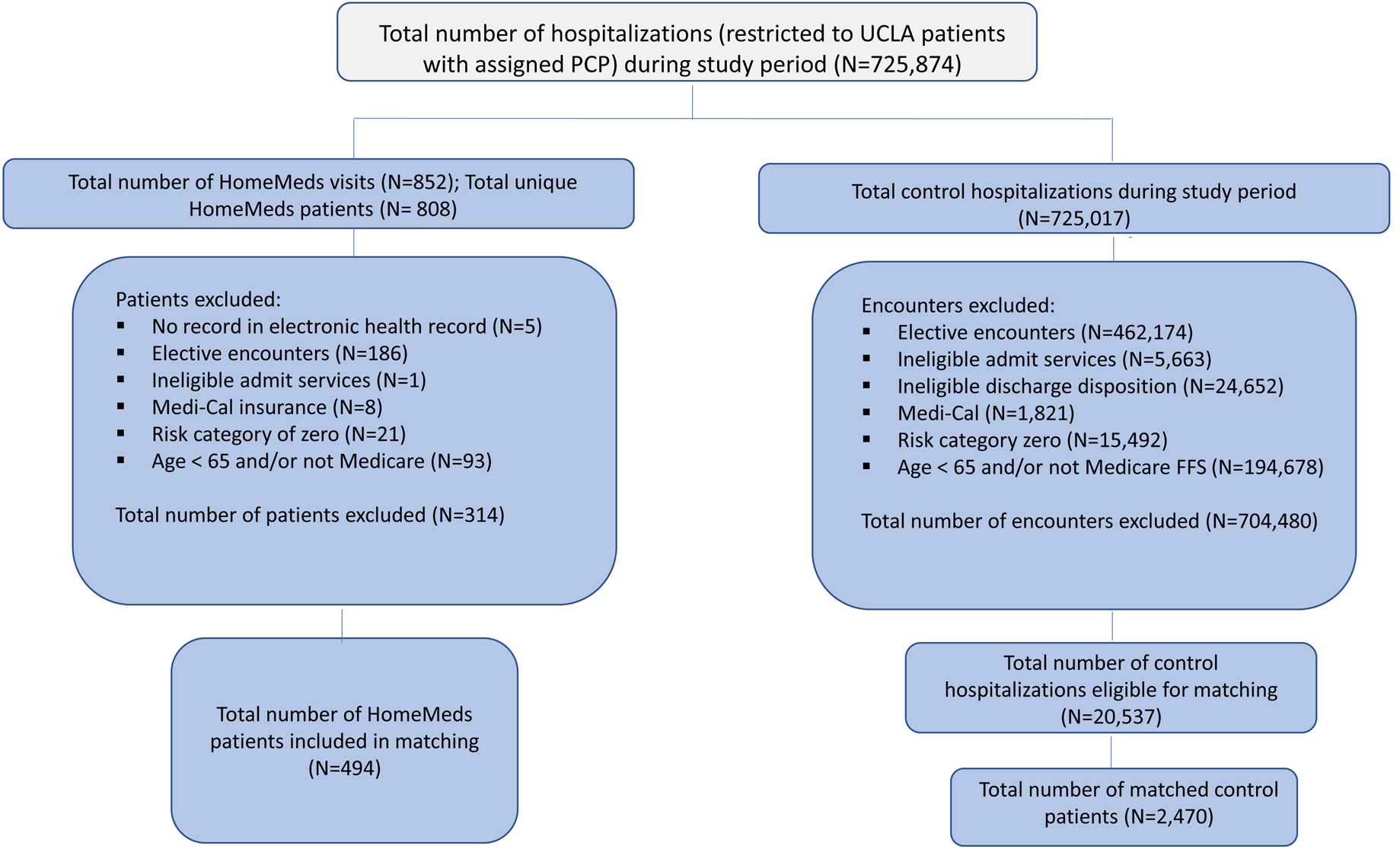
Intervention patients (n=494) were adults aged 65 or older admitted to the UCLA Ronald Reagan Medical Center during the study period and who met study inclusion criteria. A matched-control group was comprised of patients with similar demographic and clinical characteristics who were admitted to the study site during the study period, but who received usual care (n=2,470). A Greedy Algorithm approach was used to conduct the propensity score match.
INTERVENTION:
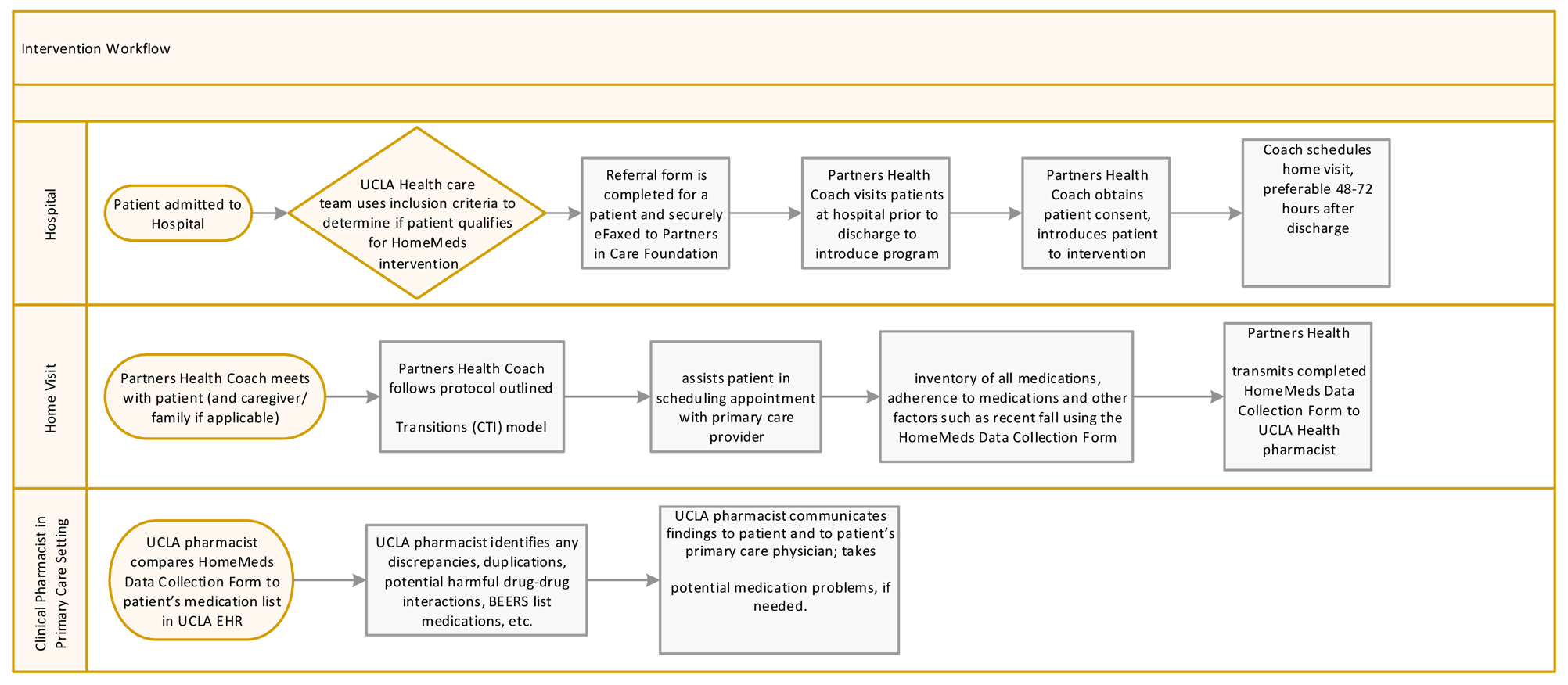
Following acute hospitalization, a health coach conducted a home visit and transmitted all medication-related information to a primary care practice-based pharmacist. The pharmacist compared this information to the patient’s electronic medical record medication list and consulted with the patient’s primary care provider to optimize medication management.
MEASUREMENTS:
30-day readmissions (primary outcome); 60 and 90-day readmissions and 30-day emergency department (ED) visits (secondary outcomes) to UCLA Health.
RESULTS:
Among 494 patients who received the intervention, 307 (62.1%) were female with a mean age of 83.0 [IQR 76–90] years. Among 2,470 matched control patients, 1541 (62.4%) were female with a mean age of 82.7 [IQR 74.9–89.5] years. For the propensity score match, standardized mean differences were <0.1 for 23 out of 25 variables, indicating good balance. Patients who received this intervention had a significantly lower predicted probability of being readmitted within 30 days compared with matched-control patients (10.6% [CI 7.9–13.2] versus 21.4 % [19.8–23.0], p-value <0.001).
CONCLUSION:
A home visit conducted by a health coach combined with medication review by a primary care-based pharmacist may prevent subsequent inpatient utilization.
-
Subjects:
-
Source:J Am Geriatr Soc. 69(1):68-76
-
Pubmed ID:33026662
-
Pubmed Central ID:PMC8006864
-
Document Type:
-
Funding:TL1TR001883/TR/NCATS NIH HHS/United States ; UL1TR001881/TR/NCATS NIH HHS/United States ; U18DP006140/ACL/ACL HHS/United States ; TL1 TR000121/TR/NCATS NIH HHS/United States ; P30 AG021684/AG/NIA NIH HHS/United States ; TL1 TR001883/TR/NCATS NIH HHS/United States ; P30AG021684/NIH/NIA/ ; UL1 TR001881/TR/NCATS NIH HHS/United States ; R18DK105464/DK/NIDDK NIH HHS/United States ; U18DP006140/CC/CDC HHS/United States ; TL1TR000121/TR/NCATS NIH HHS/United States ; R18 DK105464/DK/NIDDK NIH HHS/United States ; U18 DP006140/DP/NCCDPHP CDC HHS/United States
-
Volume:69
-
Issue:1
-
Collection(s):
-
Main Document Checksum:urn:sha256:4bf20512802b43b7b271881dc2e2de119f7df41c2c1ed9e29222bca4662f4b76
-
Download URL:
-
File Type:
 [PDF
- 589.10 KB
]
[PDF
- 589.10 KB
]
Supporting Files


File Language:
English
ON THIS PAGE


CDC STACKS serves as an archival repository of CDC-published products including
scientific findings,
journal articles, guidelines, recommendations, or other public health information authored or
co-authored by CDC or funded partners.
As a repository, CDC STACKS retains documents in their original published format to ensure public access to scientific information.
As a repository, CDC STACKS retains documents in their original published format to ensure public access to scientific information.
You May Also Like
COLLECTION
CDC Public Access