



Glove permeation of chemicals: The state of the art of current practice, Part 1: Basics and the permeation standards
Supporting Files

-
November 04 2019
File Language:
English
Details
-
Alternative Title:J Occup Environ Hyg
-
Personal Author:
-
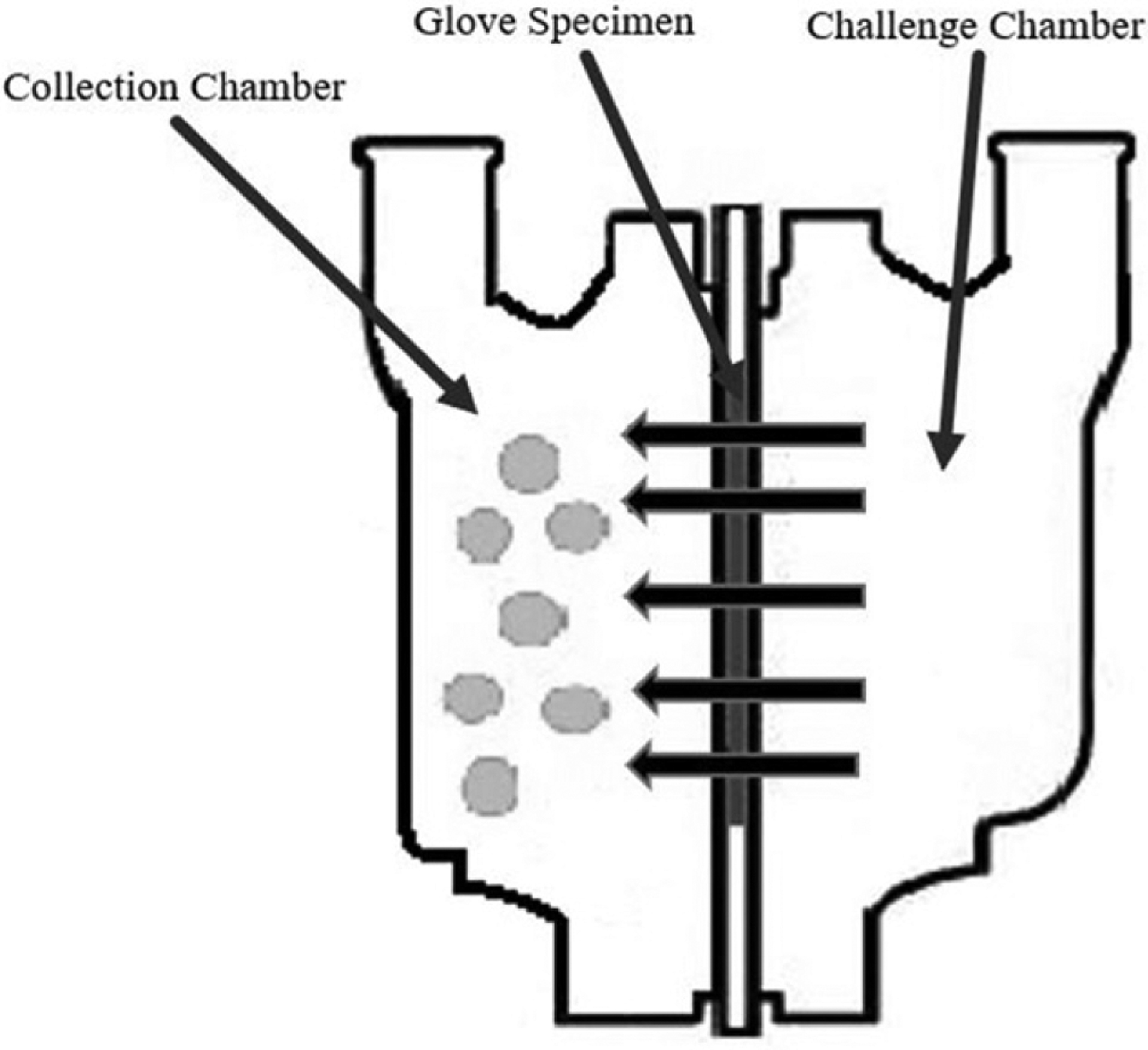
Description:Skin exposure to chemicals in the workplace environment is a major concern, the hands being the major exposure sites. Employers purchase gloves that have permeation data generated from permeation "standards" of the American Society for Testing and Materials International (ASTM International), European Committee for Standardization (EN), and the International Organization for Standardization (ISO) that test pieces of glove material and allow a user-defined temperature. The relevant standards based on continuous contact are ASTM F739, ASTM D6978, EN 374, EN 16523, and ISO 6529. The aim was to analyze the current state of the scientific literature on glove permeation in the 21| century up to December 2018. The introduction sets out the background, objectives and rationale of the review and its methodology followed by presentation of basic glove chemical resistance terms and Fick's first law of diffusion, the details of the major permeation standards, their comparison, their critique, their research gaps; the scientific literature on whole glove permeation, and final conclusions. The major recommendation was to harmonize all the permeation standards and perform them at realistic work conditions, especially temperature. The whole glove system would be most useful for testing the thinnest gloves.
-
Subjects:
-
Source:J Occup Environ Hyg. 16(12):827-839
-
Pubmed ID:31684851
-
Pubmed Central ID:PMC8005623
-
Document Type:
-
Funding:
-
Volume:16
-
Issue:12
-
Collection(s):
-
Main Document Checksum:urn:sha256:dddac0152ba284dcf12645504dcb2b3d2960c5cb0195d6fc2f709ca05991080c
-
Download URL:
-
File Type:
 [PDF
- 720.54 KB
]
[PDF
- 720.54 KB
]
Supporting Files


File Language:
English
 Was this page helpful?
 Found an issue?


CDC STACKS serves as an archival repository of CDC-published products including
scientific findings,
journal articles, guidelines, recommendations, or other public health information authored or
co-authored by CDC or funded partners.
As a repository, CDC STACKS retains documents in their original published format to ensure public access to scientific information.
As a repository, CDC STACKS retains documents in their original published format to ensure public access to scientific information.
You May Also Like
COLLECTION
CDC Public Access