



An investigation of resurgence of reinforced behavioral variability in humans
Supporting Files

-
11 2020

File Language:
English
Details
-
Alternative Title:J Exp Anal Behav
-
Personal Author:
-
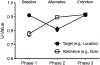
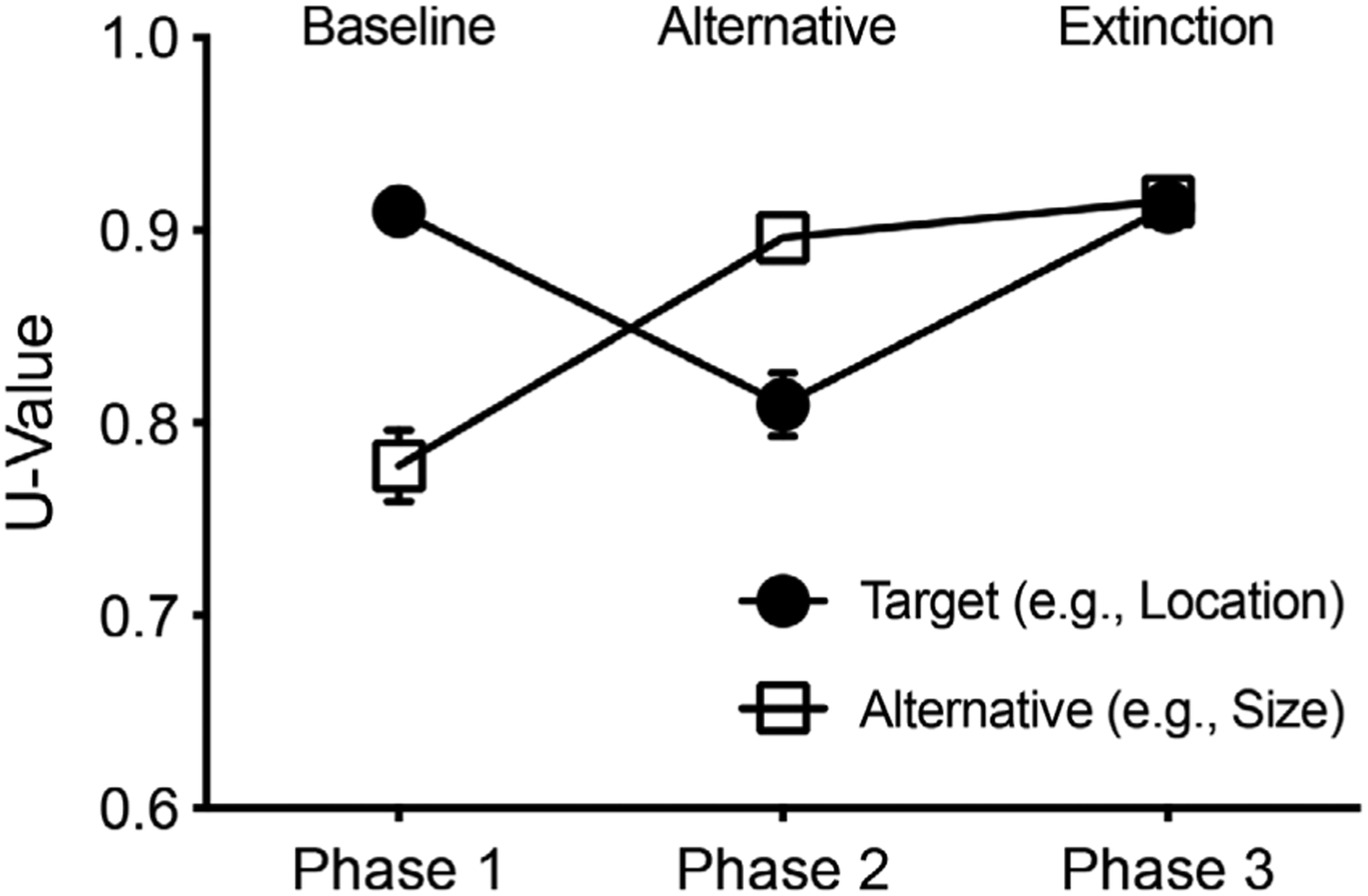
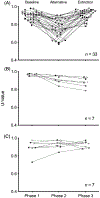
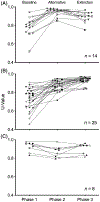
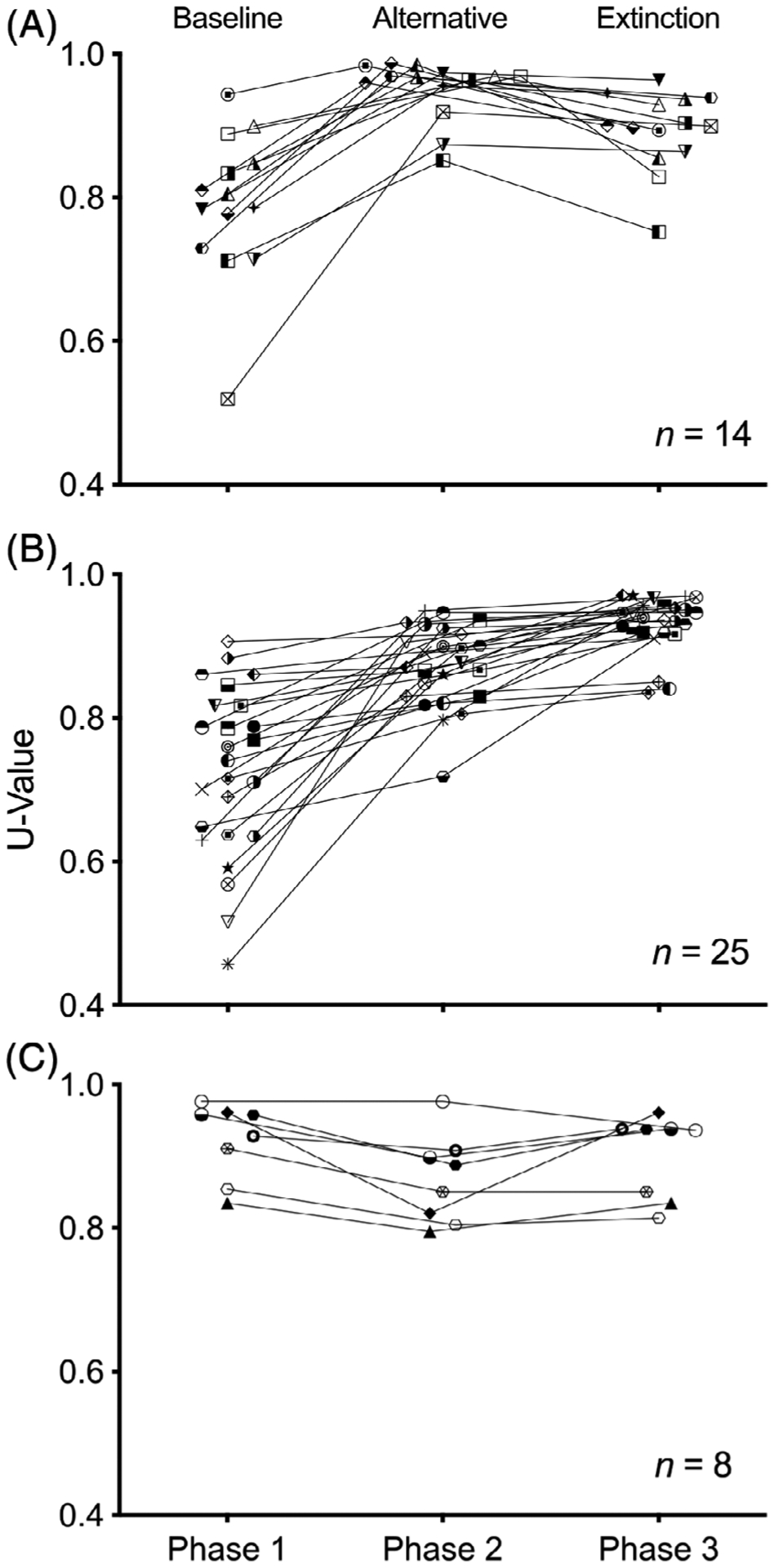
Description:The present study examined resurgence of reinforced variability in college students, who completed a 3-phase computer-based variability task. In the first phase, baseline, points were delivered for drawing rectangles that sufficiently differed from previous rectangles in terms of a target dimension (size or location, counterbalanced) but were sufficiently similar in terms of the alternative dimension. In the second phase, alternative, points were only delivered for rectangles that were sufficiently different in terms of the alternative dimension, but repetitive in terms of the target dimension. In the third phase, extinction, no points were delivered. In baseline, participants made rectangles that were highly varied in terms of the target dimension and less varied in terms of the alternative dimension, and vice versa in the alternative phase. During extinction, levels of variability increased for the target dimension, providing evidence for resurgence of reinforced variability of a specific dimension of behavior. However, levels of variability also remained high for the alternative dimension, indicating that extinction-induced response variability may also have impacted the results. Although future research is needed to explore other explanations, the results of this study replicate prior research with pigeons and provide some support for the notion of variability as an operant.
-
Subjects:
-
Keywords:
-
Source:J Exp Anal Behav. 114(3):381-393
-
Pubmed ID:33179789
-
Pubmed Central ID:PMC7967018
-
Document Type:
-
Funding:
-
Volume:114
-
Issue:3
-
Collection(s):
-
Main Document Checksum:urn:sha256:3788b0a970e2369c7901a64406095e08ddc2692b22bb97bc4892b4f9ce8d7747
-
Download URL:
-
File Type:
 [PDF
- 547.65 KB
]
[PDF
- 547.65 KB
]
Supporting Files


File Language:
English
 Was this page helpful?
 Found an issue?



CDC STACKS serves as an archival repository of CDC-published products including
scientific findings,
journal articles, guidelines, recommendations, or other public health information authored or
co-authored by CDC or funded partners.
As a repository, CDC STACKS retains documents in their original published format to ensure public access to scientific information.
As a repository, CDC STACKS retains documents in their original published format to ensure public access to scientific information.
You May Also Like
COLLECTION
CDC Public Access