



Oral Human Papillomavirus Infection in Children during the First 6 Years of Life, Finland
Supporting Files
Public Domain

-
January 29 2021
File Language:
English
Details
-
Alternative Title:Emerg Infect Dis
-
Personal Author:
-
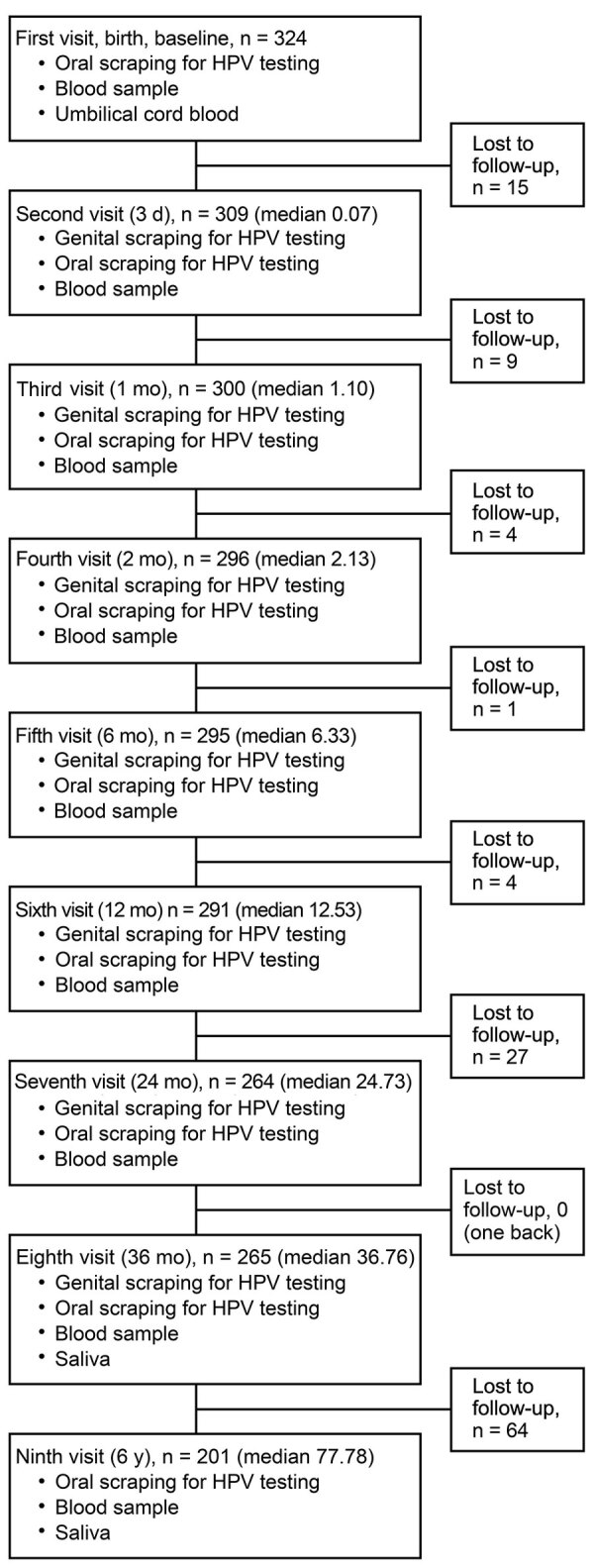
Description:Human papillomavirus (HPV) infections are found in children, but transmission modes and outcomes are incompletely understood. We evaluated oral samples from 331 children in Finland who participated in the Finnish Family HPV Study from birth during 9 follow-up visits (mean time 51.9 months). We tested samples for 24 HPV genotypes. Oral HPV prevalence for children varied from 8.7% (at a 36-month visit) to 22.8% (at birth), and 18 HPV genotypes were identified. HPV16 was the most prevalent type to persist, followed by HPV18, HPV33, and HPV6. Persistent, oral, high-risk HPV infection for children was associated with oral HPV carriage of the mother at birth and seroconversion of the mother to high-risk HPV during follow-up (odds ratio 1.60-1.92, 95% CI 1.02-2.74). Children acquire their first oral HPV infection at an early age. The HPV status of the mother has a major impact on the outcome of oral HPV persistence for her offspring.
-
Subjects:
-
Source:Emerg Infect Dis. 27(3):759-766
-
Pubmed ID:33513331
-
Pubmed Central ID:PMC7920652
-
Document Type:
-
Place as Subject:
-
Location:
-
Volume:27
-
Issue:3
-
Download URL:
-
File Type:
 [PDF - 787.07 KB]
 -
Collection(s):
-
Main Document Checksum:urn:sha256:47f1b6491672556b28b9f9f0bb3e3cd346cbe3f65ce627e3d288154c2c5d57db
Supporting Files


File Language:
English
 Was this page helpful?
 Found an issue?

CDC STACKS serves as an archival repository of CDC-published products including
scientific findings, journal articles, guidelines, recommendations, or other public health information authored or
co-authored by CDC or funded partners.
As a repository, CDC STACKS retains documents in their original published format to ensure public access to scientific information.
As a repository, CDC STACKS retains documents in their original published format to ensure public access to scientific information.
You May Also Like
COLLECTION
Emerging Infectious Diseases