



Social and Medical Risk Factors Associated with Supportive Needs in the First Year Following Localized Prostate Cancer Treatment
Supporting Files

-
2 2021 ; 2-2021
-
Available in CDC Stacks on February 01, 2022, 12:00 AM
File Language:
English
Details
-
Alternative Title:J Cancer Surviv
-
Personal Author:
-
Description:Purpose:
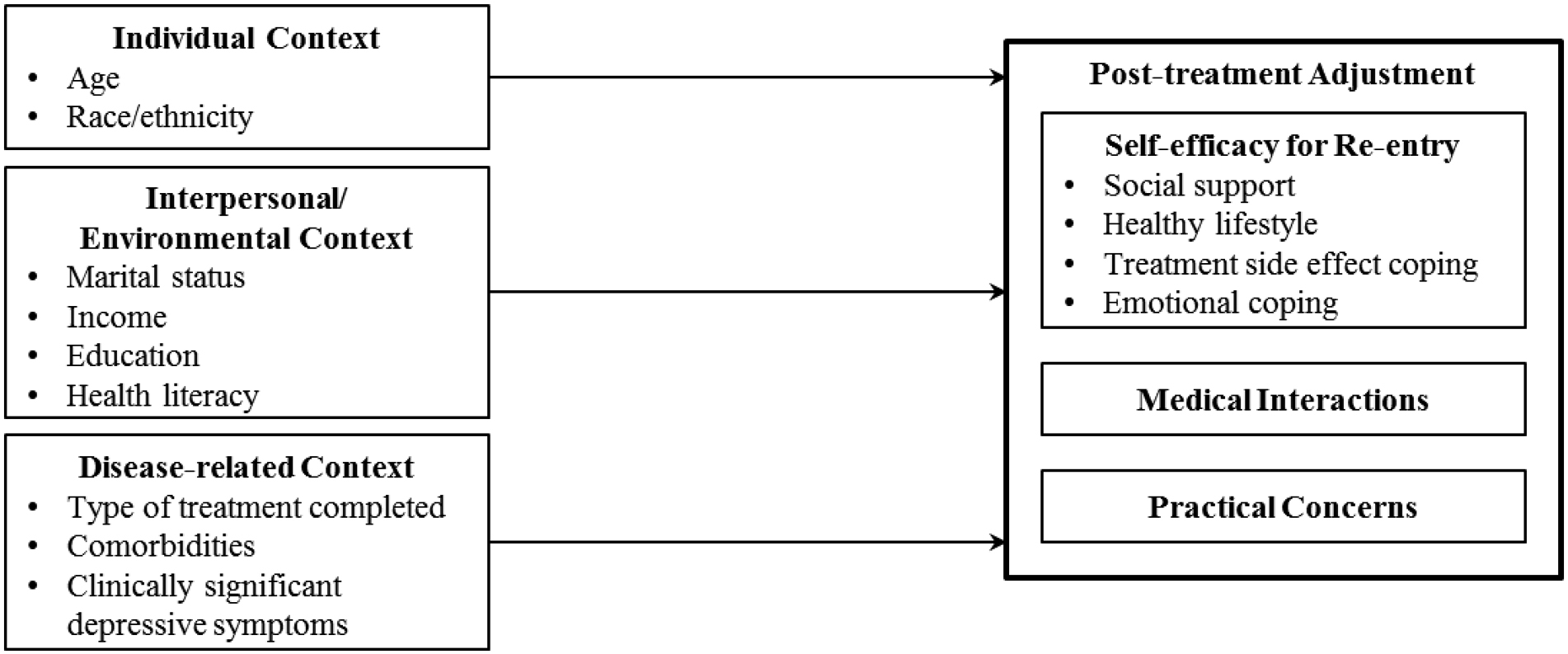
Individuals who completed treatment for prostate cancer (PCa) often report poor coping and practical concerns when adapting to new roles in their lives—and strong patient-provider communication is critical for this period. However, there is limited research identifying factors associated with supportive needs after the completion of PCa treatment. This study aimed to identify the social and medical risk factors associated with supportive needs for adapting among individuals who completed treatment for localized PCa.
Methods:
Using baseline data from a study evaluating a web-based support system for patients in the first year following treatment for localized PCa, self-efficacy for re-entry (e.g., maintaining relationships, symptom management), medical interactions, and practical concerns (e.g., insurance, exercise) were assessed. Multivariable regression analyses were completed to identify risk factors for low readiness.
Results:
Participants (N=431) with lower health literacy or income, or with depressive symptoms had lower self-efficacy for re-entry, more negative interactions with medical providers, and more practical concerns (ps<.05). Lastly, Non-Hispanic White participants reported greater readiness compared to all other races (ps<.05).
Conclusions:
Multiple social and medical risk factors are associated with greater supportive needs when adapting to new roles after PCa treatment. Understanding the risk factors for supportive needs in this period is critical. Future research is needed to help providers identify and support individuals at risk for poorer coping and greater practical concerns after treatment completion.
Implications for Cancer Survivors:
Identifying individuals with greater supportive needs following treatment for localized PCa treatment will help ensure successful adaptation to new roles. -
Subjects:
-
Source:J Cancer Surviv. 15(1):110-118
-
Pubmed ID:32681305
-
Pubmed Central ID:PMC7872345
-
Document Type:
-
Funding:U01OH011690/CC/CDC HHSUnited States/ ; P30 CA072720/CA/NCI NIH HHSUnited States/ ; U01 OH011690/OH/NIOSH CDC HHSUnited States/ ; R01 CA224918/CA/NCI NIH HHSUnited States/ ; U01OH011690/ACL/ACL HHSUnited States/ ; R01 CA158019/CA/NCI NIH HHSUnited States/ ; UL1 TR003017/TR/NCATS NIH HHSUnited States/ ; P30 CA006927/CA/NCI NIH HHSUnited States/ ; T32 CA009035/CA/NCI NIH HHSUnited States/
-
Volume:15
-
Issue:1
-
Download URL:
-
File Type:
 [PDF - 475.66 KB]
 -
Collection(s):
-
Main Document Checksum:urn:sha256:46f9f7c8e6e0fd9f070f2f1fdff8eb195501cffc73919e075832c30c4233e43a
Supporting Files


File Language:
English
 Was this page helpful?
 Found an issue?


CDC STACKS serves as an archival repository of CDC-published products including
scientific findings, journal articles, guidelines, recommendations, or other public health information authored or
co-authored by CDC or funded partners.
As a repository, CDC STACKS retains documents in their original published format to ensure public access to scientific information.
As a repository, CDC STACKS retains documents in their original published format to ensure public access to scientific information.
You May Also Like
COLLECTION
CDC Public Access