



“Talk About Cancer and Build Healthy Communities”: How Visuals Are Starting the Conversation About Breast Cancer Within African-American Communities
Supporting Files

-
4 2021 ; 4-2021
-
Available in CDC Stacks on 2021-04-01T00:00:00Z

File Language:
English
Details
-
Alternative Title:Int Q Community Health Educ
-
Personal Author:
-
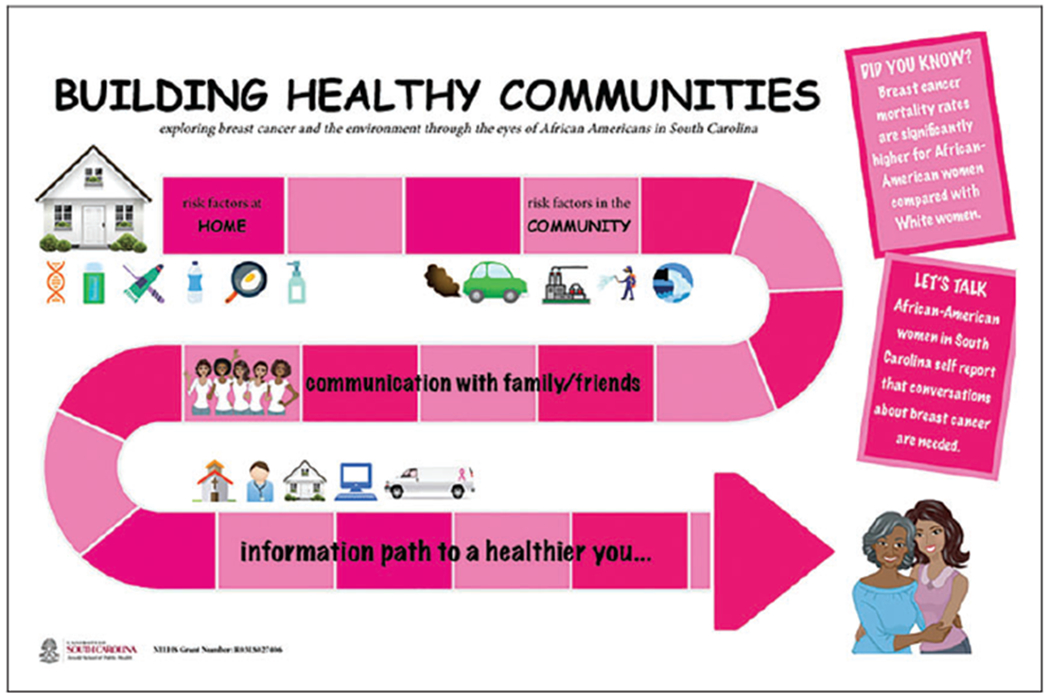
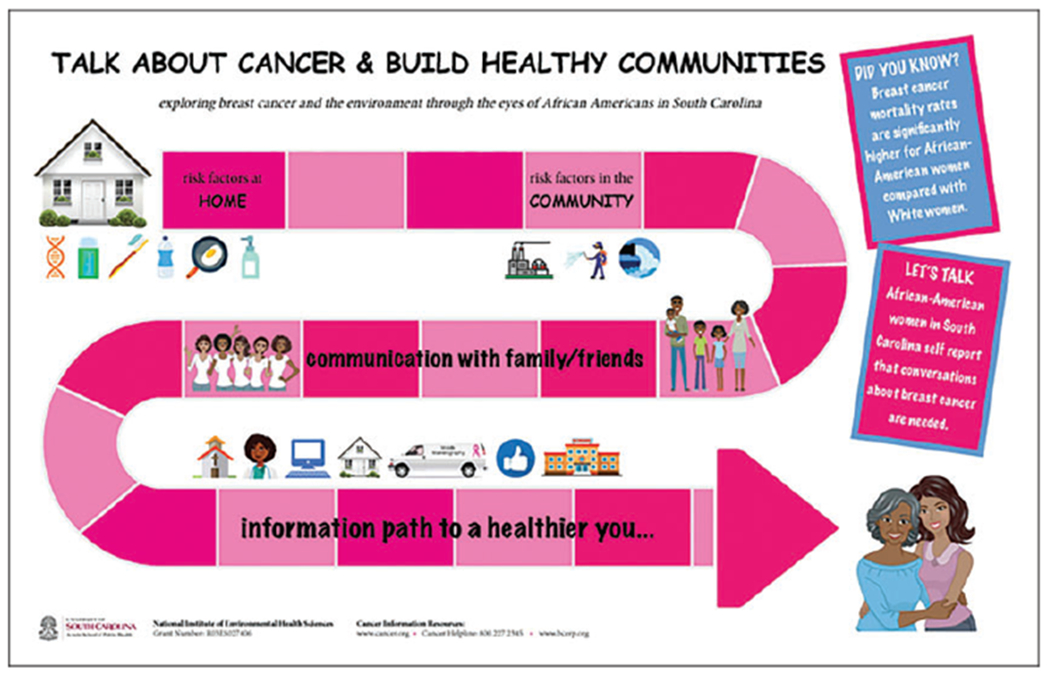
Description:African-American (AA) women are at higher risk of breast cancer mortality than women of other races. Factors influencing breast cancer risk, including exogenous environmental exposures, and debate around timing of exposure and dose-response relationship, can cause misunderstanding. Collaboration with priority populations encourages culturally relevant health messaging that imparts source reliability, influences message adoption, and improves understanding. Through six focus groups with AA individuals in rural and urban counties in the southeastern United States, this study used a community-engaged participatory approach to design an innovative visual tool for disseminating breast cancer information. Results demonstrated that participants were generally aware of environmental breast cancer risks and were willing to share new knowledge with families and community members. Recommended communication channels included pastors, healthcare providers, social media, and the Internet. Participants agreed that a collaboratively designed visual tool serves as a tangible, focused "conversation starter" to promote community prevention and education efforts.
-
Keywords:
-
Source:Int Q Community Health Educ. 41(3):267-274
-
Pubmed ID:32660340
-
Pubmed Central ID:PMC7854839
-
Document Type:
-
Funding:
-
Volume:41
-
Issue:3
-
Download URL:
-
File Type:
 [PDF - 301.79 KB]
 -
Collection(s):
-
Main Document Checksum:urn:sha256:ef8ca115b9c8cb0b5b9e8e0123e0bd10bba441e18aeb6ada80d58f537242c983
Supporting Files


File Language:
English
 Was this page helpful?
 Found an issue?


CDC STACKS serves as an archival repository of CDC-published products including
scientific findings, journal articles, guidelines, recommendations, or other public health information authored or
co-authored by CDC or funded partners.
As a repository, CDC STACKS retains documents in their original published format to ensure public access to scientific information.
As a repository, CDC STACKS retains documents in their original published format to ensure public access to scientific information.
You May Also Like
COLLECTION
CDC Public Access