


Alcohol and Drug Overdose and the Influence of Pain Conditions in an Addiction Treatment Sample
Supporting Files

-
2019 Jan/Feb
-
File Language:
English
Details
-
Alternative Title:J Addict Med
-
Personal Author:
-
Description:Purpose:
Overdose from alcohol and/or drugs kills tens of thousands of Americans annually, with a large number of deaths attributed to opioid pain medications. Addiction treatment patients are known to be at high risk for overdose; however, the relationship between pain and overdose history within this group is understudied, especially in relation to alcohol overdoses. In the present study we evaluated whether non-fatal overdose history was more likely among addiction treatment patients with pain, and examined the characteristics of overdoses among those with and without pain.
Methods:
We analyzed cross-sectional data from 739 patients at a large residential addiction treatment center (Median age = 37, 25.7% female). We used two stepped binary regression models to evaluate whether demographics, pain type (chronic, acute, or both), depression symptoms, and opioid misuse were associated with lifetime history of non-fatal (1) alcohol and (2) drug overdose (lifetime yes/no) and conducted follow-up analyses examining overdose characteristics.
Results:
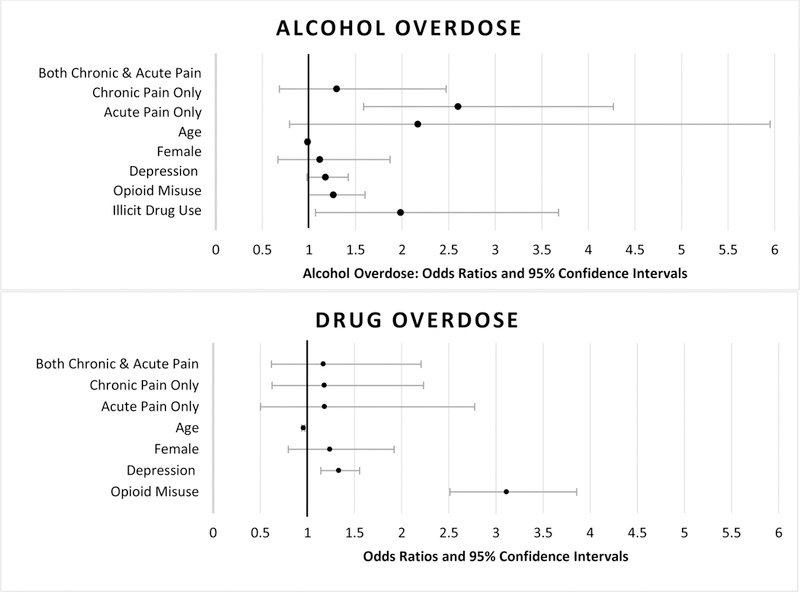
In adjusted analyses, history of chronic pain (OR = 2.60; 95% CI [1.59, 4.27]) and illicit drug use (OR = 1.99; 95% CI [1.07, 3.68]) were associated with an increased likelihood of non-fatal alcohol overdose. Opioid misuse (OR = 3.11; 95% CI [2.51, 3.86]), depression symptoms (OR = 1.33; 95% CI [1.14, 1.55]), and younger age (OR = 0.96; 95% CI [0.94, 0.97]) were associated with increased likelihood of drug overdose. Those with pain reported a higher number of lifetime alcohol overdoses and were more likely to combine numerous drugs with alcohol prior to overdose.
Conclusions:
Pain conditions may play an under-recognized role in the overdose epidemic, particularly alcohol-related overdose. Addiction treatment and overdose prevention interventions should incorporate appropriate assessment and treatment of pain including education about the risks of polysubstance use, particularly combining alcohol with sedatives and prescription pain relievers.
-
Subjects:
-
Source:J Addict Med. 13(1):61-68
-
Pubmed ID:30161038
-
Pubmed Central ID:PMC6533535
-
Document Type:
-
Funding:
-
Volume:13
-
Issue:1
-
Collection(s):
-
Main Document Checksum:urn:sha256:77a8035f03d7d47c995d4c6bb11ec029cc79fe9fa6f72d531f15e443e0b055a2
-
Download URL:
-
File Type:
 [PDF
- 425.56 KB
]
[PDF
- 425.56 KB
]
Supporting Files


File Language:
English
ON THIS PAGE

CDC STACKS serves as an archival repository of CDC-published products including
scientific findings,
journal articles, guidelines, recommendations, or other public health information authored or
co-authored by CDC or funded partners.
As a repository, CDC STACKS retains documents in their original published format to ensure public access to scientific information.
As a repository, CDC STACKS retains documents in their original published format to ensure public access to scientific information.
You May Also Like
COLLECTION
CDC Public Access