


i
Quality of age data in the Sierra Leone Ebola database
-
April 07 2020
Source: Pan Afr Med J. 2020; 35
 [PDF-324.67 KB]
Details:
-
Alternative Title:Pan Afr Med J
-
Personal Author:
-
Description:Introduction
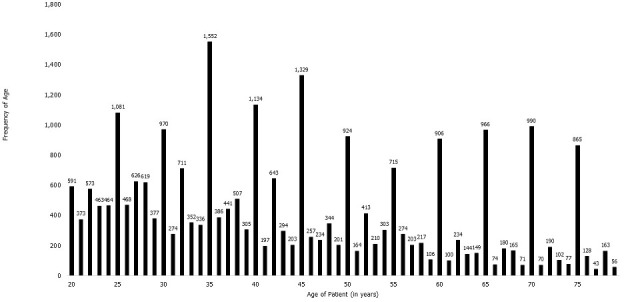
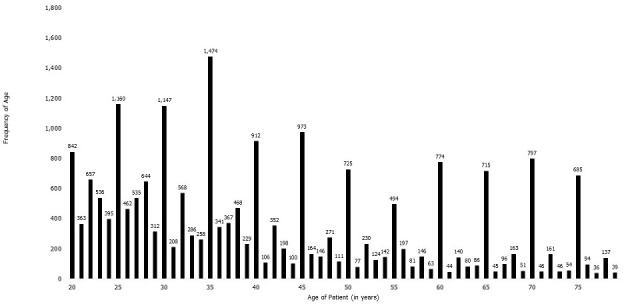
While it is suspected that some ages were misreported during the 2014-2016 West African Ebola outbreak, an analysis examining age data quality has not been conducted. The study objective was to examine age heaping and terminal digit preference as indicators for quality of age data collected in the Sierra Leone Ebola Database (SLED).
Methods
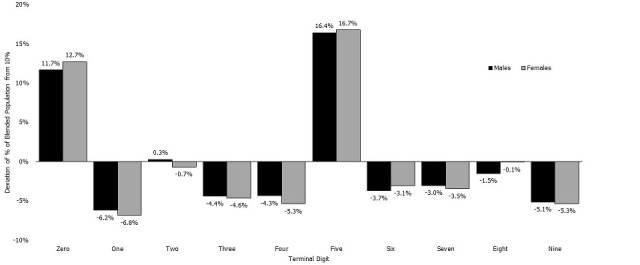
Age data quality for adult patients was analyzed within SLED for the Viral Hemorrhagic Fever (VHF) database and the laboratory testing dataset by calculating Whipple´s index and Myers´s blended index, stratified by sex and region.
Results
Age data quality was low in both the VHF database (Whipple´s index for the 5-year range, 229.2) and the laboratory testing dataset (Whipple´s index for the 5-year range, 236.4). Age was reported more accurately in the Western Area and least accurately in the Eastern Province. Age data for females were less accurate than for males.
Conclusion
Age data quality was low in adult patients during the 2014-2016 Ebola outbreak in Sierra Leone, which may reduce its use as an identifying or stratifying variable. These findings inform future analyses using this database and describe a phenomenon that has relevance in data collection methods and analyses for future outbreaks in developing countries.
-
Subjects:
-
Source:
-
Pubmed ID:32637002
-
Pubmed Central ID:PMC7321682
-
Document Type:
-
Place as Subject:
-
Collection(s):
-
Main Document Checksum:
-
Download URL:
-
File Type:
Supporting Files
-

xml 
jpeg 
jpeg 
gif 
jpeg 
gif 
jpeg 
gif 
jpeg



More +
You May Also Like
 [PDF - 1010.38 KB]
 [PDF - 865.32 KB]
 Email
CDC-INFO
Email
CDC-INFO