


Dietary intake of fats and fatty acids in the Korean population: Korea National Health and Nutrition Examination Survey, 2013
Supporting Files
Public Domain

-
Nov 23 2015
-
Details
-
Alternative Title:Nutr Res Pract
-
Personal Author:
-
Description:BACKGROUND/OBJECTIVES
The aim of this study was to estimate average total fat and fatty acid intakes as well as identify major food sources using data from the Korea National Health and Nutrition Examination Survey (KNHANES) VI-1 (2013).
SUBJECTS/METHODS
Total fat and fatty acid intakes were estimated using 24-hour dietary recall data on 7,048 participants aged ≥ 3 years from the KNHANES VI-1 (2013). Data included total fat, saturated fatty acid (SFA), monounsaturated fatty acid (MUFA), polyunsaturated fatty acid (PUFA), n-3 fatty acid (n-3 FA), and n-6 fatty acid (n-6 FA) levels. Population means and standard errors of the mean were weighted in order to produce national estimates and separated based on sex, age, income, as well as residential region. Major food sources of fat, SFA, MUFA, PUFA, n-3 FA, and n-6 FA were identified based on mean consumption amounts of fat and fatty acids in each food.
RESULTS
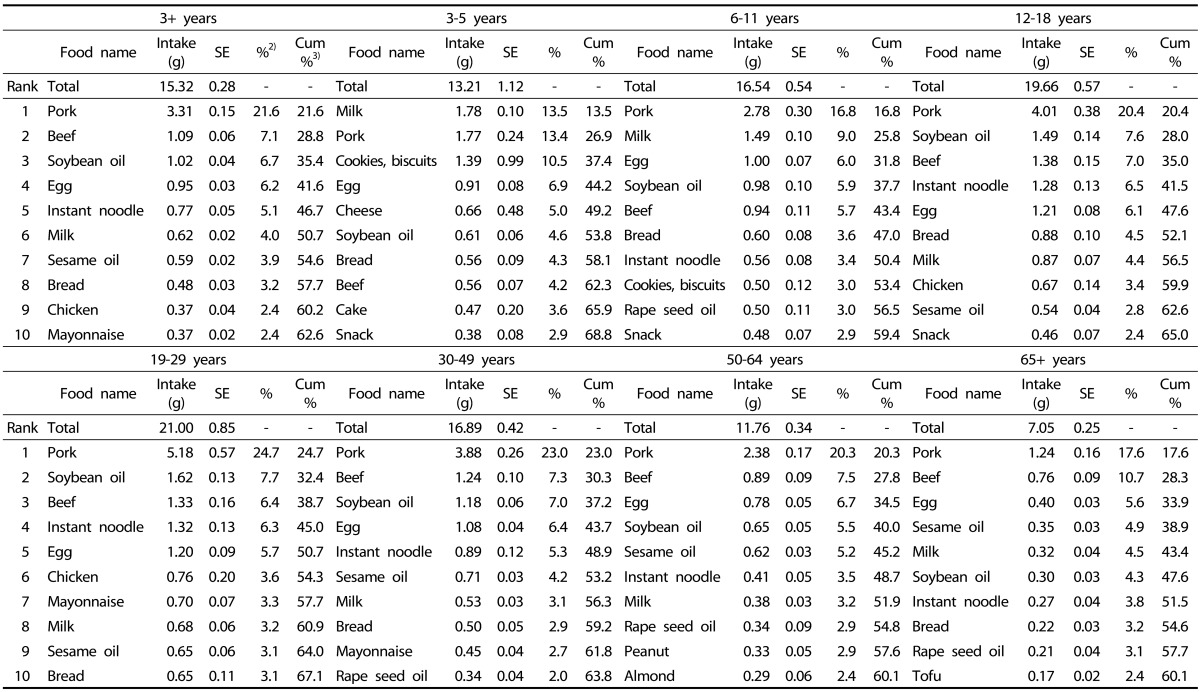
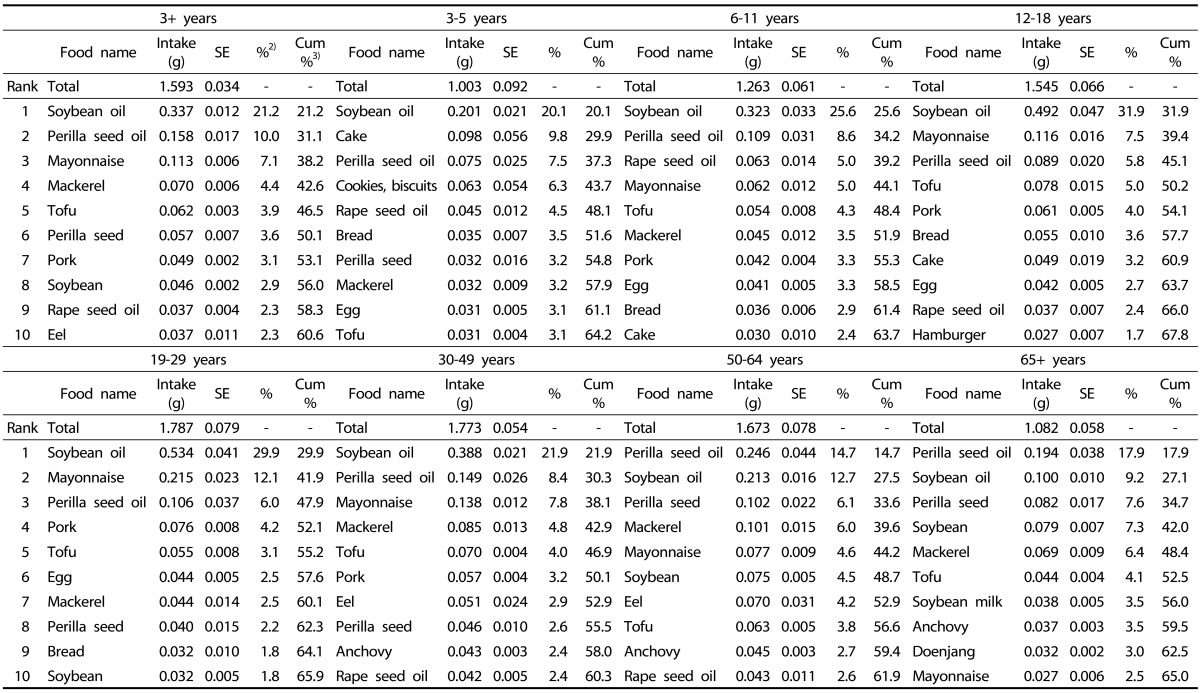
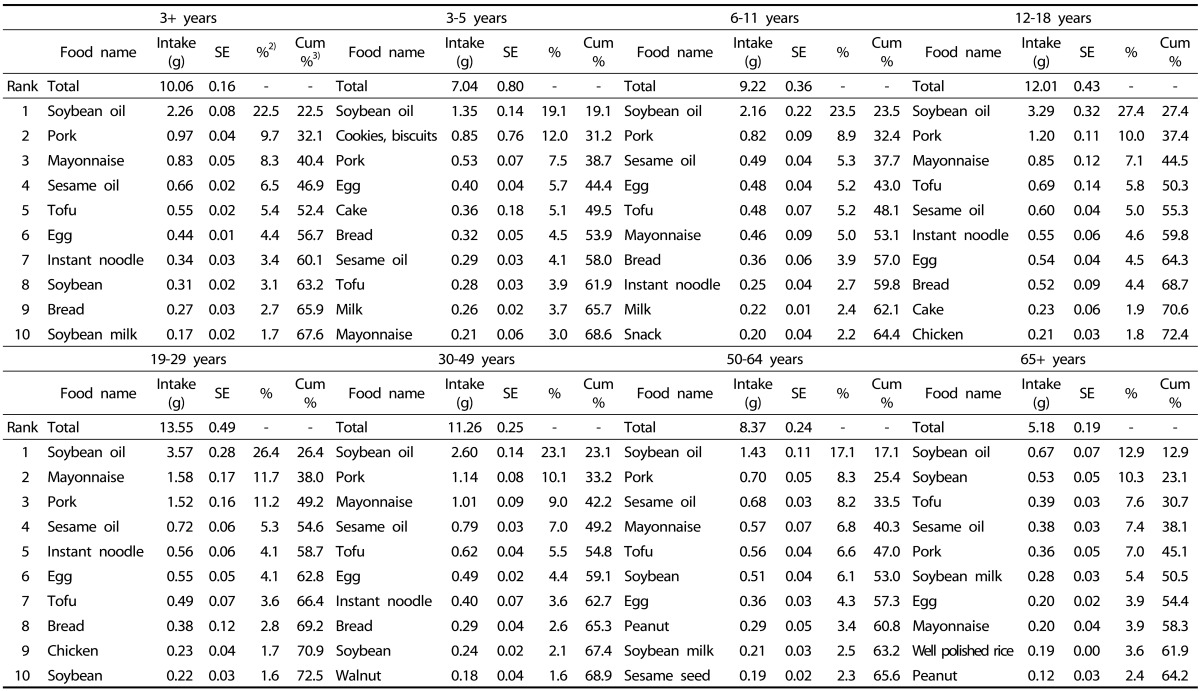
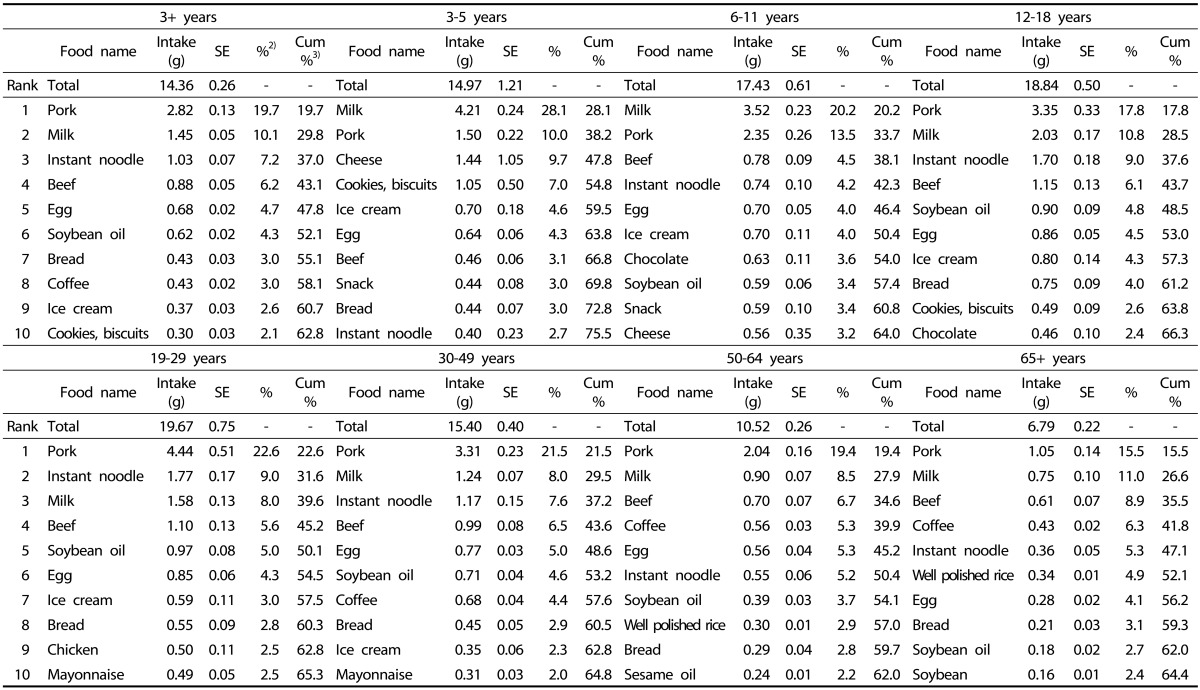
The mean intake of total fat was 48.0 g while mean intakes of SFA, MUFA, PUFA, n-3 FA, and n-6 FA were 14.4 g, 15.3 g, 11.6 g, 1.6 g, and 10.1 g, respectively. Intakes of MUFA and SFA were each higher than that of PUFA in all age groups. Pork was the major source of total fat, SFA, and MUFA, and soybean oil was the major source of PUFA. Milk and pork were major sources of SFA in subjects aged 3-11 years and ≥ 12 years, respectively. Perilla seed oil and soybean oil were main sources of n-3 FA in subjects aged ≥ 50 years and aged < 50 years, respectively.
CONCLUSIONS
Estimation of mean fatty acid intakes of this study using nationally represented samples of the Korean population could be useful for developing and evaluating national nutritional policies.
-
Subjects:
-
Source:Nutr Res Pract. 2015; 9(6):650-657.
-
Pubmed ID:26634055
-
Pubmed Central ID:PMC4667207
-
Document Type:
-
Volume:9
-
Issue:6
-
Collection(s):
-
Main Document Checksum:urn:sha256:90acaabba6358340a903399eca0853fb651e2424535e35bd5c1252e5b1cfc3ae
-
Download URL:
-
File Type:
 [PDF
- 280.09 KB
]
[PDF
- 280.09 KB
]
Supporting Files


ON THIS PAGE




CDC STACKS serves as an archival repository of CDC-published products including
scientific findings,
journal articles, guidelines, recommendations, or other public health information authored or
co-authored by CDC or funded partners.
As a repository, CDC STACKS retains documents in their original published format to ensure public access to scientific information.
As a repository, CDC STACKS retains documents in their original published format to ensure public access to scientific information.
You May Also Like
COLLECTION
CDC Public Access