


i
Linked Domain Architectures Allow for Specialization of Function in the FtsK/SpoIIIE ATPases of ESX Secretion Systems
-
Jun 27 2014
Source: J Mol Biol. 2014; 427(5):1119-1132. -
Alternative Title:J Mol Biol
-
Personal Author:
-
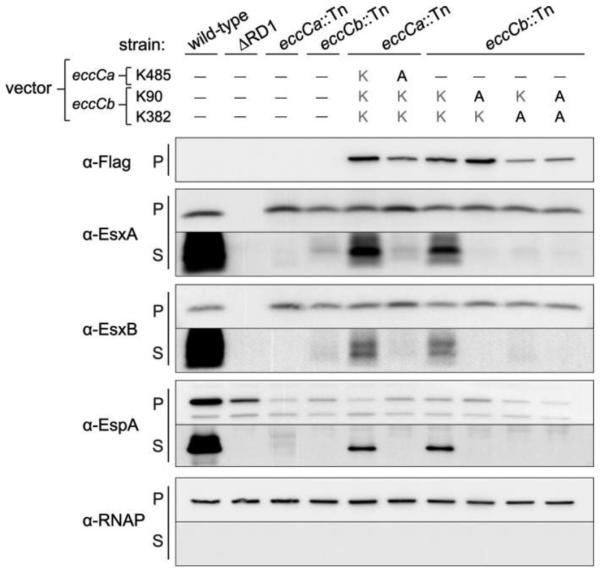
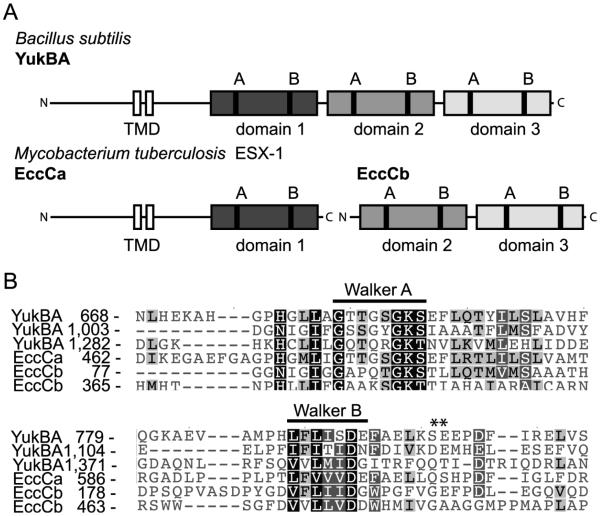
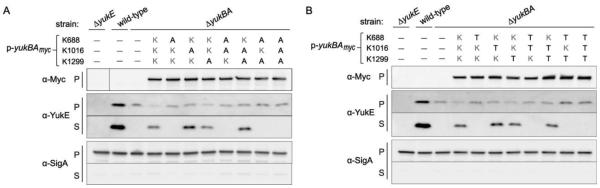
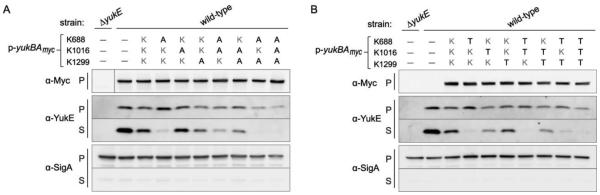
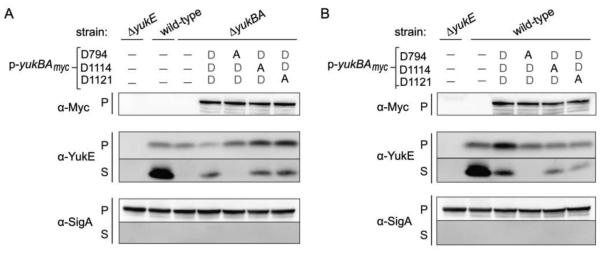
Description:Among protein secretion systems, there are specialized ATPases that serve different functions such as substrate recognition, substrate unfolding, and assembly of the secretory machinery. ESX (early secretory antigen target 6 kDa secretion) protein secretion systems require FtsK/SpoIIIE family ATPases but the specific function of these ATPases is poorly understood. The ATPases of ESX secretion systems have a unique domain architecture among proteins of the FtsK/SpoIIIE family. All well-studied FtsK family ATPases to date have one ATPase domain and oligomerize to form a functional molecular machine, most commonly a hexameric ring. In contrast, the ESX ATPases have three ATPase domains, encoded either by a single gene or by two operonic genes. It is currently unknown which of the ATPase domains is catalytically functional and whether each domain plays the same or a different function. Here we focus on the ATPases of two ESX systems, the ESX-1 system of Mycobacterium tuberculosis and the yuk system of Bacillus subtilis. We show that ATP hydrolysis by the ESX ATPase is required for secretion, suggesting that this enzyme at least partly fuels protein translocation. We further show that individual ATPase domains play distinct roles in substrate translocation and complex formation. Comparing the single-chain and split ESX ATPases, we reveal differences in the requirements of these unique secretory ATPases.
-
Subjects:
-
Pubmed ID:24979678
-
Pubmed Central ID:PMC4277743
-
Document Type:
-
Funding:
-
Collection(s):
-
Main Document Checksum:
-
Download URL:
-
File Type:
-

gif 
jpeg 
gif 
jpeg 
gif 
jpeg 
bin 
gif 
jpeg 
gif 
jpeg 
gif 
jpeg 
gif 
jpeg
 [PDF-1.05 MB]
Details:
Supporting Files


More +
You May Also Like
 [PDF - 2.76 MB]
 [PDF - 3.32 MB]
 Email
CDC-INFO
Email
CDC-INFO