


Exposure to Bisphenol A and Other Phenols in Neonatal Intensive Care Unit Premature Infants
Supporting Files
Public Domain

-
Dec 10 2008
-
Details
-
Alternative Title:Environ Health Perspect
-
Personal Author:
-
Description:Objective
We previously demonstrated that exposure to polyvinyl chloride plastic medical devices containing di(2-ethylhexyl) phthalate (DEHP) was associated with higher urinary concentrations of several DEHP metabolites in 54 premature infants in two neonatal intensive care units than in the general population. For 42 of these infants, we evaluated urinary concentrations of several phenols, including bisphenol A (BPA), in association with the use of the same medical devices.
Measurements
We measured the urinary concentrations of free and total (free plus conjugated) species of BPA, triclosan, benzophenone-3, methyl paraben, and propyl paraben.
Results
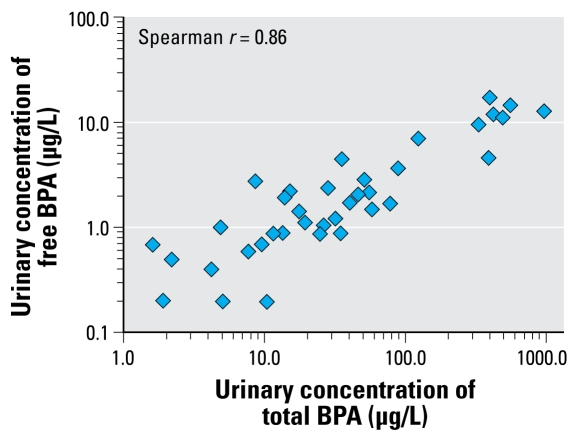
The percentage of BPA present as its conjugated species was > 90% in more than three-quarters of the premature infants. Intensity of use of products containing DEHP was strongly associated with BPA total concentrations but not with any other phenol. Adjusting for institution and sex, BPA total concentrations among infants in the group of high use of DEHP-containing products were 8.75 times as high as among infants in the low use group (p < 0.0001). Similarly, after adjusting for sex and DEHP-containing product use category, BPA total concentrations among infants in Institution A were 16.6 times as high as those among infants in Institution B (p < 0.0001).
Conclusion
BPA geometric mean urinary concentration (30.3 μg/L) among premature infants undergoing intensive therapeutic medical interventions was one order of magnitude higher than that among the general population. Conjugated species were the primary urinary metabolites of BPA, suggesting that premature infants have some capacity to metabolize BPA. The differences in exposure to BPA by intensity of use of DEHP-containing medical products highlight the need for further studies to determine the specific source(s) of exposure to BPA.
-
Subjects:
-
Source:Environ Health Perspect. 2009; 117(4):639-644.
-
Document Type:
-
Volume:117
-
Issue:4
-
Collection(s):
-
Main Document Checksum:urn:sha-512:313729384337b66eb5e5bfb37b7dd838efaab3ad633c0ccd5ca12d5add1636eff060356e100ec94e7aa862c923a8f166cc6231e76b80f478bb20a27d97d9eba0
-
Download URL:
-
File Type:
 [PDF
- 266.27 KB
]
[PDF
- 266.27 KB
]
Supporting Files


ON THIS PAGE

CDC STACKS serves as an archival repository of CDC-published products including
scientific findings,
journal articles, guidelines, recommendations, or other public health information authored or
co-authored by CDC or funded partners.
As a repository, CDC STACKS retains documents in their original published format to ensure public access to scientific information.
As a repository, CDC STACKS retains documents in their original published format to ensure public access to scientific information.
You May Also Like
COLLECTION
CDC Public Access