


Work-Related Asthma in Korea - Findings from the Korea Work-Related Asthma Surveillance (KOWAS) Program, 2004-2009
Supporting Files
Public Domain

-
2014/09/19
-
File Language:
English
Details
-
Journal Article:Allergy, Asthma and Immunology Research
-
Personal Author:
-
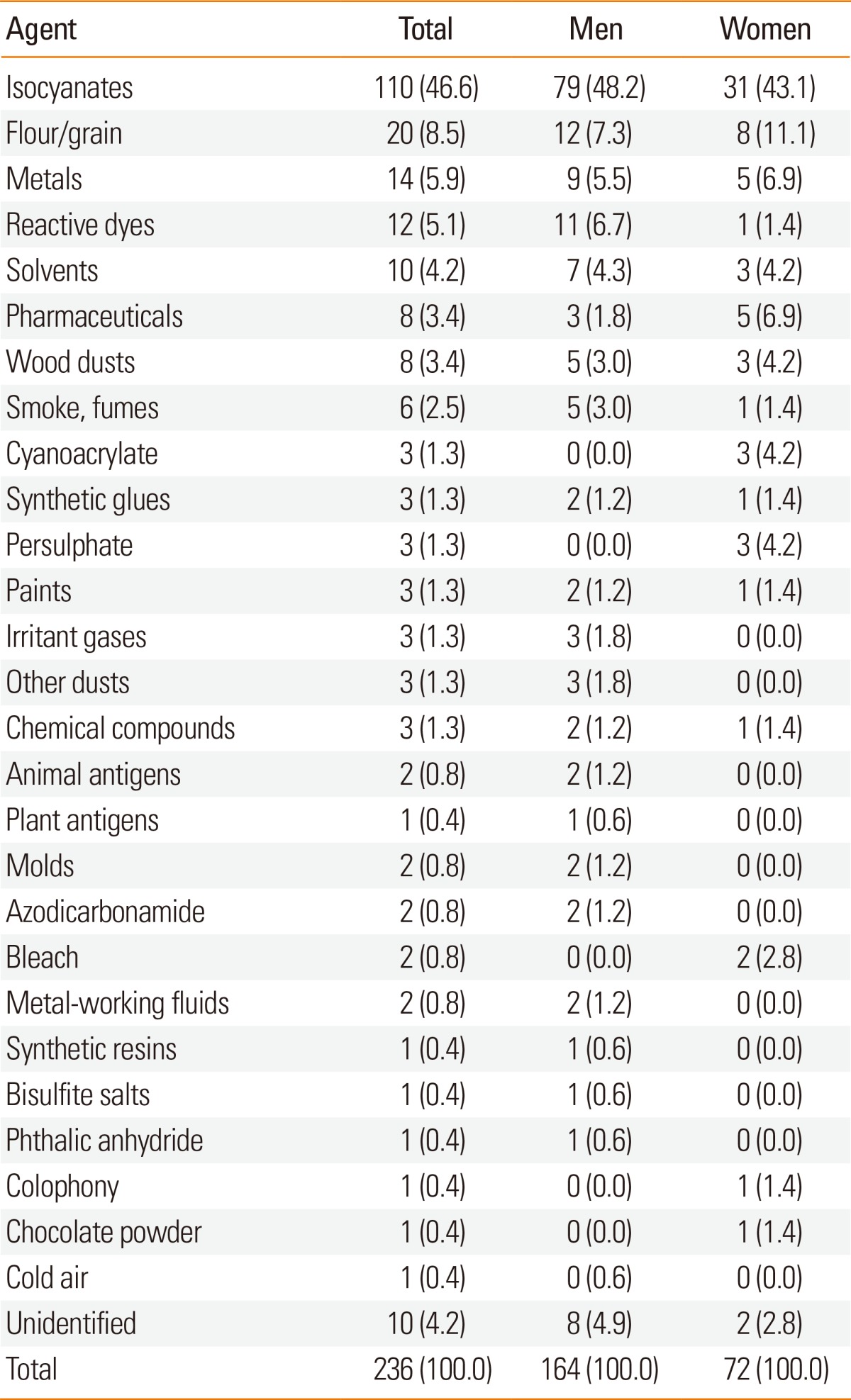
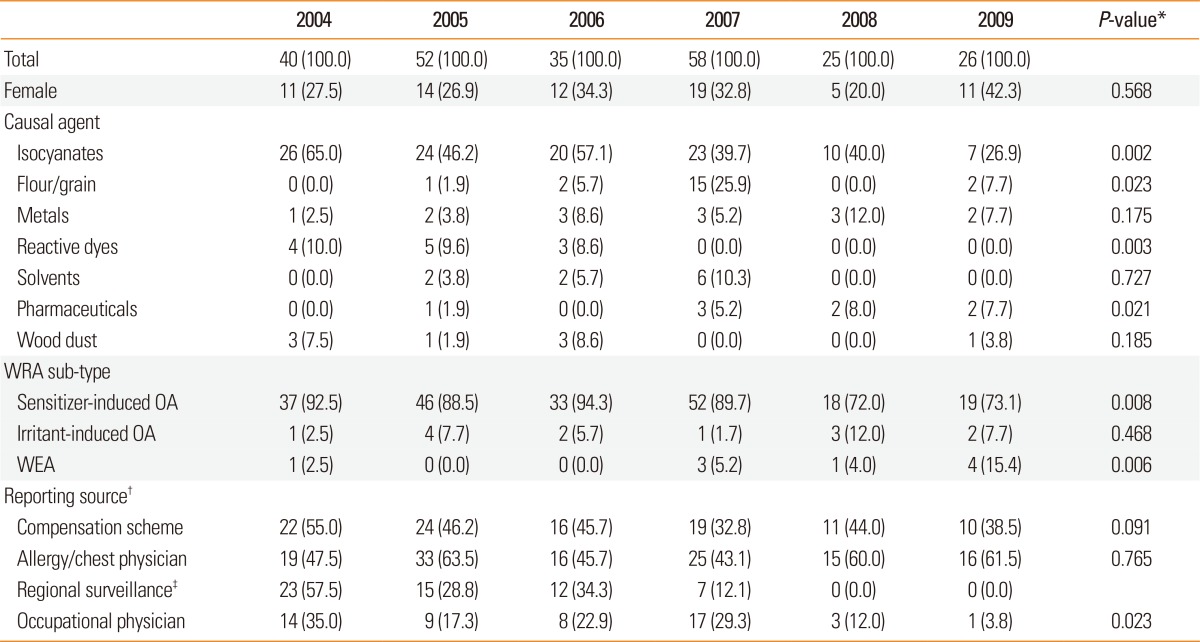
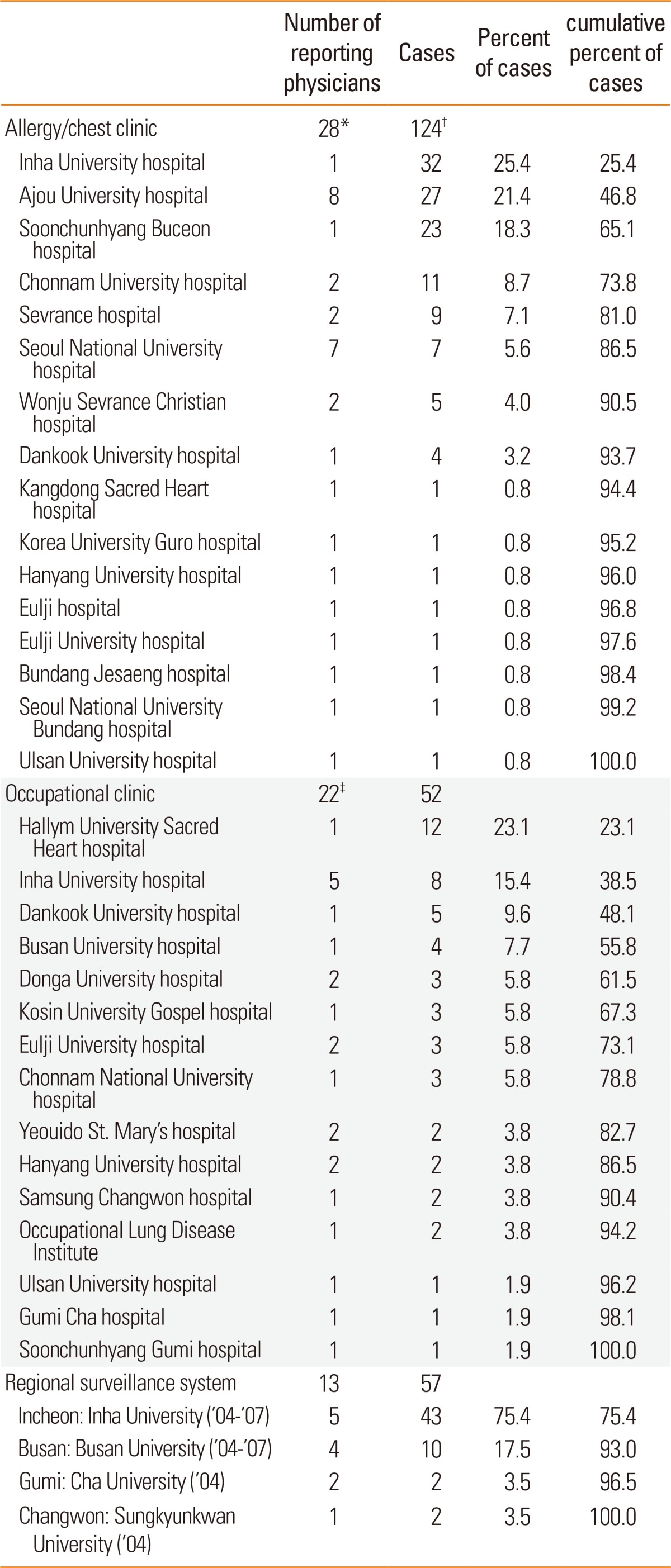
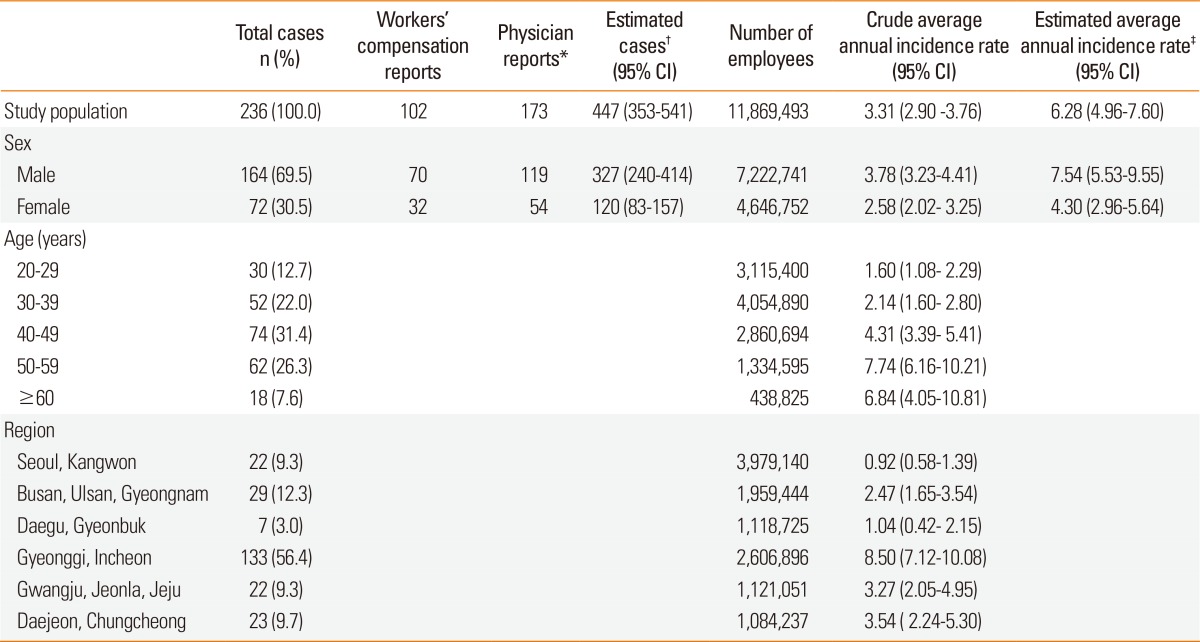
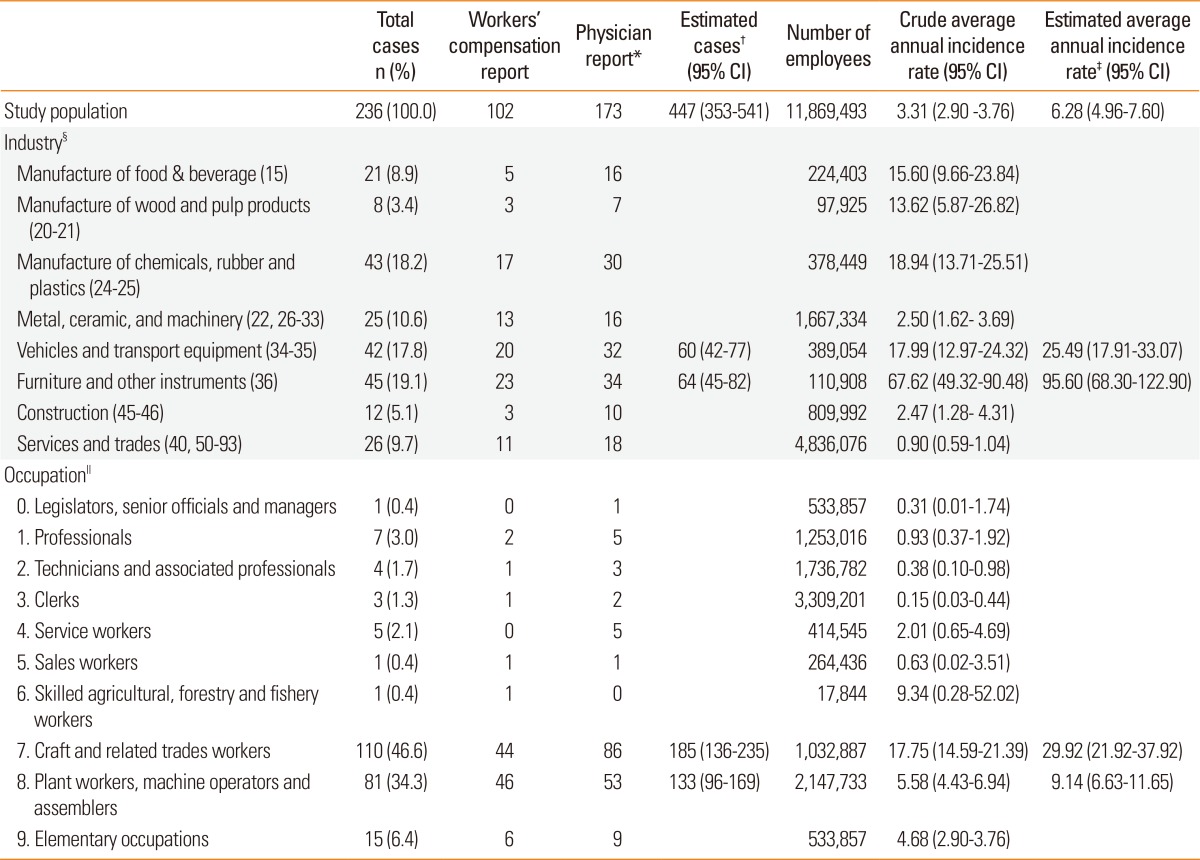
Description:Purpose: To determine the incidence and epidemiological characteristics of work-related asthma in Korea. Methods: During 2004-2009, the Korea Work-Related Asthma Surveillance (KOWAS) program collected data on new cases of work-related asthma from occupational physicians, allergy and chest physicians, regional surveillance systems, and workers' compensation schemes. The incidence was calculated on the basis of industry, occupation, sex, age, and region. In addition, the distribution of causal agents was determined. Results: During the study period, 236 cases of work-related asthma were reported, with 77 cases from more than 1 source. A total of 22.0% (n=52) were reported by occupational physicians, 52.5% (n=124) by allergy and chest physicians, 24.2% (n=57) by regional surveillance systems, and 43.2% (n=102) by workers' compensation schemes. The overall average annual incidence was 3.31 cases/million workers, with a rate of 3.78/million among men and 2.58/million among women. The highest incidence was observed in the 50-59-year age group (7.74/million), in the Gyeonggi/Incheon suburb of Seoul (8.50/million), in the furniture and other instrument manufacturing industries (67.62/million), and among craft and related trades workers (17.75/million). The most common causal agents were isocyanates (46.6%), flour/grain (8.5%), metal (5.9%), reactive dyes (5.1%), and solvents (4.2%). Conclusions: The incidence of work-related asthma in Korea was relatively low, and varied according to industry, occupation, gender, age, and region. Data provided by workers' compensation schemes and physician reports have been useful for determining the incidence and causes of work-related asthma. [Description provided by NIOSH]
-
Subjects:
-
Keywords:Author Keywords: Work-related Asthma; Incidence; Surveillance; Industry; Occupation Bronchial-asthma; Epidemiology; Workers; Work-environment; Surveillance-programs; Humans; Men; Women; Age-groups; Demographic-characteristics; Statistical-analysis; Surveillance-programs; Exposure-levels; Respiratory-system-disorders; Pulmonary-system; Pulmonary-function; Pulmonary-system-disorders; Statistical-analysis; Epidemiology;
-
Source:Allergy Asthma Immunol Res 2015 Jan; 7(1):51-59
-
ISSN:2092-7355
-
Document Type:
-
Genre:
-
Place as Subject:
-
CIO:
-
Division:
-
Topic:
-
Location:
-
Pages in Document:9 pdf pages
-
Volume:7
-
Issue:1
-
NIOSHTIC Number:nn:20045536
-
Contact Point Address:Jaechul Song, Department of Occupational and Environmental Medicine, Hanyang University College of Medicine, 222 Wangsimni-ro, Seongdong-gu, Seoul 133-791, Korea
-
Email:jsong@hanyang.ac.kr
-
Federal Fiscal Year:2015
-
NORA Priority Area:
-
Peer Reviewed:True
-
Collection(s):
-
Main Document Checksum:urn:sha-512:3b6b42061b81e9da92e7d9900d219fcf552d932bf942fa08164d89bf77d184865bc66261683f94634841f16201272692f25b737e352387b8e320852b5ff2ce6f
-
Download URL:
-
File Type:
 [PDF
- 323.04 KB
]
[PDF
- 323.04 KB
]
Supporting Files


File Language:
English
ON THIS PAGE




CDC STACKS serves as an archival repository of CDC-published products including
scientific findings,
journal articles, guidelines, recommendations, or other public health information authored or
co-authored by CDC or funded partners.
As a repository, CDC STACKS retains documents in their original published format to ensure public access to scientific information.
As a repository, CDC STACKS retains documents in their original published format to ensure public access to scientific information.
You May Also Like